Uncategorized
MOTS-c Peptide: Benefits, Dosage & What It Does

Apr
MOTS-c Peptide: Benefits, Dosage, and Why It Is One of the Most Exciting Compounds in Longevity Science
MOTS-c peptide is not a household name yet — but in the world of longevity research, metabolic science, and performance biology, it is generating some of the most compelling data of any compound currently under investigation. Discovered less than a decade ago, the MOTS-c peptide has already demonstrated remarkable potential across multiple areas of health: insulin sensitivity, fat metabolism, physical endurance, cellular stress resistance, and even the biology of ageing itself.
If you have not heard of MOTS-c peptide before, this guide will change that. And if you have heard of it but are not entirely sure what it does or whether it belongs in your protocol — by the end of this article, you will have a clear, evidence-based answer.
What Is MOTS-c Peptide?
MOTS-c peptide — which stands for Mitochondrial Open Reading Frame of the 12S rRNA Type-c — is a mitochondria-derived peptide (MDP) that was first identified and described by researchers at the University of Southern California in 2015. It is encoded not by nuclear DNA, as most proteins are, but by the mitochondrial genome — the separate, ancient genetic code housed within the mitochondria themselves.
This origin makes MOTS-c peptide genuinely unique. It is one of only a small number of peptides known to be produced directly by the mitochondria and to function as a systemic signalling molecule — travelling from the mitochondria into the nucleus, into the bloodstream, and to distant tissues throughout the body.
The MOTS-c peptide consists of 16 amino acids and acts primarily as a metabolic regulator, coordinating the body’s response to energy stress and metabolic demand. Think of it as the mitochondria’s own messenger — signalling the rest of the body to adapt, become more efficient, and respond more effectively to the metabolic challenges of exercise, fasting, ageing, and disease.
How Does MOTS-c Peptide Work?
The primary mechanism through which MOTS-c peptide operates is the activation of AMPK — AMP-activated protein kinase. AMPK is one of the most important metabolic enzymes in the human body. It functions as a cellular energy sensor, detecting when energy (ATP) levels are low and activating a cascade of responses designed to restore energy balance: increasing glucose uptake, stimulating fat oxidation, improving insulin sensitivity, and promoting mitochondrial biogenesis.
AMPK activation is also the primary mechanism behind metformin — the most widely prescribed diabetes drug in the world, and one of the most studied compounds in longevity research. The fact that the MOTS-c peptide activates the same pathway as metformin — but does so through a naturally occurring, mitochondria-derived mechanism — has generated enormous excitement among researchers exploring alternatives to pharmaceutical metabolic intervention.
Beyond AMPK, the MOTS-c peptide also:
- Translocates to the cell nucleus under conditions of metabolic stress, where it directly regulates gene expression related to stress response and metabolic adaptation — an extraordinary capability for a peptide of its size
- Reduces reactive oxygen species (ROS) — the damaging free radicals produced by mitochondrial energy production — protecting cells from oxidative damage
- Improves folate cycle function — supporting one-carbon metabolism, which plays a critical role in DNA synthesis, methylation, and cellular repair
- Modulates the immune response — emerging research suggests MOTS-c peptide plays a role in immune regulation, with implications for inflammatory and autoimmune conditions
Key MOTS-c Peptide Benefits Documented in Research
1. Improved Insulin Sensitivity and Glucose Metabolism
One of the most consistently demonstrated MOTS-c peptide benefits in research is its ability to improve insulin sensitivity and glucose uptake in cells. Studies have shown that MOTS-c peptide administration restores insulin sensitivity in mice fed a high-fat diet — reversing diet-induced insulin resistance and improving blood glucose regulation.
This MOTS-c peptide benefit has profound implications not just for individuals with metabolic dysfunction or type 2 diabetes, but for athletes and active individuals seeking to optimise how efficiently their bodies utilise carbohydrates for energy.
2. Fat Loss and Metabolic Optimisation
Directly connected to its insulin-sensitising effects, MOTS-c peptide demonstrates significant anti-obesity activity in research models. By activating AMPK and improving mitochondrial fat oxidation, the MOTS-c peptide increases the rate at which the body burns fat for fuel — particularly in metabolically resistant fat stores.
Research published in Cell Metabolism demonstrated that MOTS-c peptide administration prevented diet-induced obesity in mouse models, reduced fat mass, and improved overall metabolic markers without any reduction in food intake. The MOTS-c peptide achieved these fat loss effects by fundamentally improving the efficiency of mitochondrial energy metabolism — not by suppressing appetite or increasing thermogenesis through stimulant-like mechanisms.
3. Enhanced Physical Performance and Endurance
Perhaps the most striking MOTS-c peptide benefit uncovered so far relates to physical performance. A 2019 study published in Nature Communications demonstrated that MOTS-c peptide administration significantly improved exercise capacity in aged mice — with the MOTS-c-treated group showing markedly superior endurance, grip strength, and physical performance compared to controls.
What makes this MOTS-c peptide finding particularly remarkable is that the improvements in exercise performance were seen in aged subjects — suggesting the MOTS-c peptide may be capable of partially reversing the age-related decline in physical capacity that occurs as mitochondrial function deteriorates with age. For older athletes, or anyone experiencing a plateau in performance despite consistent training, the MOTS-c peptide represents a genuinely compelling area of investigation.
4. Cellular Stress Resistance and Longevity
The MOTS-c peptide plays a central role in the body’s response to cellular stress — the kind of oxidative, metabolic, and thermal stress that accumulates with age and contributes to cellular ageing and disease. By reducing ROS production, activating stress-response pathways, and supporting mitochondrial function, the MOTS-c peptide helps cells maintain their integrity and function under conditions that would otherwise accelerate their deterioration.
Research has found that circulating levels of MOTS-c peptide are significantly higher in healthy centenarians — individuals who live to 100 or beyond — compared to age-matched individuals with poorer health outcomes. This association between elevated MOTS-c peptide levels and exceptional longevity is not proof of causation, but it is a compelling data point that has intensified research interest in the MOTS-c peptide’s role in the biology of ageing.
5. Cardiovascular Protection
Emerging research on the MOTS-c peptide suggests it may offer protective effects on the cardiovascular system. Studies have indicated that MOTS-c peptide reduces cardiac cell death following ischaemia-reperfusion injury — the cellular damage that occurs when blood flow is restored to tissue after a period of deprivation. The MOTS-c peptide’s antioxidant and metabolic regulatory properties appear to support cardiac cell survival under these demanding conditions.
6. Bone Health and Osteoporosis Prevention
A 2019 study investigating the MOTS-c peptide in the context of osteoporosis found that MOTS-c peptide treatment preserved bone density and reduced bone loss in ovariectomised mice — a standard model for post-menopausal osteoporosis. This MOTS-c peptide benefit is particularly relevant for older women and for anyone seeking to maintain bone integrity alongside other longevity and anti-aging interventions.
MOTS-c Peptide and Exercise: A Unique Synergy
One of the most intriguing aspects of the MOTS-c peptide is its relationship with exercise. Research has shown that physical exercise itself increases circulating levels of MOTS-c peptide in humans — suggesting that MOTS-c peptide is part of the body’s natural adaptive response to exercise stress.
This raises a fascinating possibility: MOTS-c peptide supplementation may work synergistically with regular exercise, amplifying the mitochondrial and metabolic adaptations that exercise already produces. Rather than replacing the exercise response, the MOTS-c peptide may enhance and accelerate it — making it particularly interesting for athletes and active individuals looking to extract more benefit from their training investment.
Some researchers have described the MOTS-c peptide as an “exercise mimetic” — a compound that partially replicates the metabolic benefits of exercise at the cellular level. For individuals who are unable to exercise at the intensity required to achieve full metabolic adaptation due to age, injury, or illness, this property of the MOTS-c peptide is of significant clinical interest.
MOTS-c Peptide Dosage Guide
The following MOTS-c peptide dosage information is based on current research protocols and is provided for reference purposes only. It does not constitute medical advice. Consult a qualified healthcare professional before beginning any MOTS-c peptide protocol.
Standard Research Dosage:
- Dose: 5mg to 10mg per administration
- Frequency: 2 to 3 times per week subcutaneously
- Cycle Length: 4 to 8 weeks, followed by a break period
- Timing: Many users administer MOTS-c peptide before training sessions to leverage its synergy with exercise-induced metabolic adaptation
MOTS-c Peptide Administration: MOTS-c peptide is administered by subcutaneous injection following standard reconstitution with bacteriostatic water. Given the relatively larger dose compared to many peptides, a standard insulin syringe is appropriate for MOTS-c peptide administration.
Storage: Lyophilized MOTS-c peptide vials should be stored at 2 to 8 degrees Celsius prior to reconstitution. Once reconstituted, store refrigerated and use within 30 days.
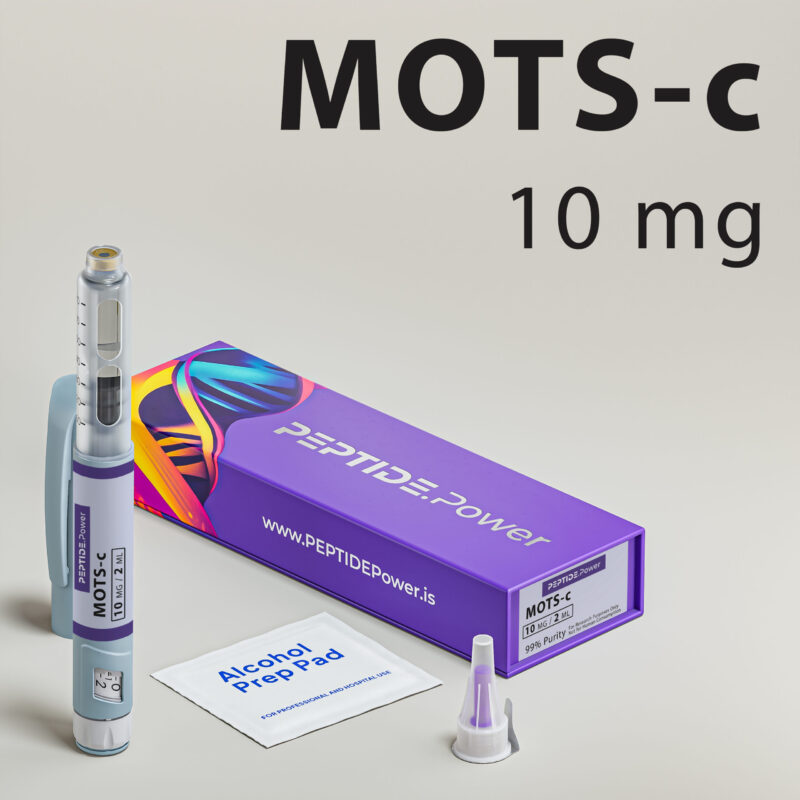
MOTS-c Peptide vs Other Metabolic Peptides
How does the MOTS-c peptide compare to other compounds used for metabolic optimisation?
MOTS-c peptide vs AOD-9604: AOD-9604 targets fat loss specifically through lipolysis — the direct breakdown of fat cells. The MOTS-c peptide works more broadly, improving overall mitochondrial metabolic efficiency. For pure fat loss, AOD-9604 may produce more immediate results. For comprehensive metabolic optimisation including insulin sensitivity, endurance, and longevity, the MOTS-c peptide offers a broader range of benefits.
MOTS-c peptide vs Humanin: Both MOTS-c peptide and Humanin are mitochondria-derived peptides with overlapping protective functions. Humanin focuses more heavily on neuroprotection and insulin resistance, while MOTS-c peptide has a stronger profile in exercise performance, fat metabolism, and direct AMPK activation. They are considered complementary rather than interchangeable.
MOTS-c peptide vs Semaglutide: Semaglutide operates through GLP-1 receptor agonism to reduce appetite and slow gastric emptying — a fundamentally different mechanism from the MOTS-c peptide’s mitochondrial AMPK activation. Semaglutide produces more dramatic weight loss results in clinical trials. The MOTS-c peptide is more relevant for metabolic optimisation, performance enhancement, and longevity rather than aggressive weight reduction.
Who Should Consider MOTS-c Peptide?
The MOTS-c peptide is most relevant for:
- Athletes and active individuals seeking to enhance mitochondrial efficiency, endurance capacity, and recovery from metabolic stress
- Individuals over 40 experiencing age-related metabolic decline, reduced exercise capacity, or deteriorating body composition despite consistent training
- Those with insulin resistance or metabolic syndrome — either as a standalone intervention or alongside pharmaceutical metabolic support
- Longevity-focused individuals building a comprehensive anti-aging protocol that addresses mitochondrial function as a central hallmark of ageing
- Biohackers exploring the frontier of mitochondrial medicine and performance biology
You can explore MOTS-c peptide alongside our broader Wellness & Anti-Aging range or consider it as part of our Longevity Stack for a comprehensive cellular health protocol.
Frequently Asked Questions
Q: What is MOTS-c peptide used for? A: The MOTS-c peptide is used in research protocols targeting metabolic optimisation, insulin sensitivity improvement, fat loss, physical endurance enhancement, cellular stress resistance, and longevity. It activates AMPK — the same metabolic pathway as metformin — through a naturally occurring mitochondrial mechanism.
Q: Is MOTS-c peptide the same as a GLP-1 peptide? A: No. MOTS-c peptide and GLP-1 agonists like semaglutide operate through entirely different mechanisms. MOTS-c peptide works through mitochondrial AMPK activation to improve metabolic efficiency. GLP-1 agonists reduce appetite and slow gastric emptying through gut hormone receptor activation. They represent different tools for different metabolic goals.
Q: How is MOTS-c peptide administered? A: MOTS-c peptide is administered by subcutaneous injection following reconstitution with bacteriostatic water. Standard dosing in research protocols is 5mg to 10mg administered 2 to 3 times weekly.
Q: Does MOTS-c peptide help with weight loss? A: Research in animal models demonstrates that MOTS-c peptide prevents diet-induced obesity, reduces fat mass, and improves metabolic efficiency. These effects are driven by AMPK activation and improved mitochondrial fat oxidation rather than appetite suppression. Human clinical trials are ongoing.
Q: Can MOTS-c peptide improve exercise performance? A: Research published in Nature Communications demonstrated significant improvements in exercise capacity in aged subjects following MOTS-c peptide administration. The MOTS-c peptide’s ability to enhance mitochondrial efficiency and activate exercise-adaptive pathways makes it particularly relevant for athletes and older individuals seeking to improve or maintain physical performance.
Q: Where can I buy MOTS-c peptide? A: TitanForge Peptides supplies MOTS-c peptide at independently verified 99%+ purity with a full Certificate of Analysis. Shop MOTS-c peptide here.
