peptide administration and usage
How to Reconstitute Retatrutide: Step-by-Step Guide
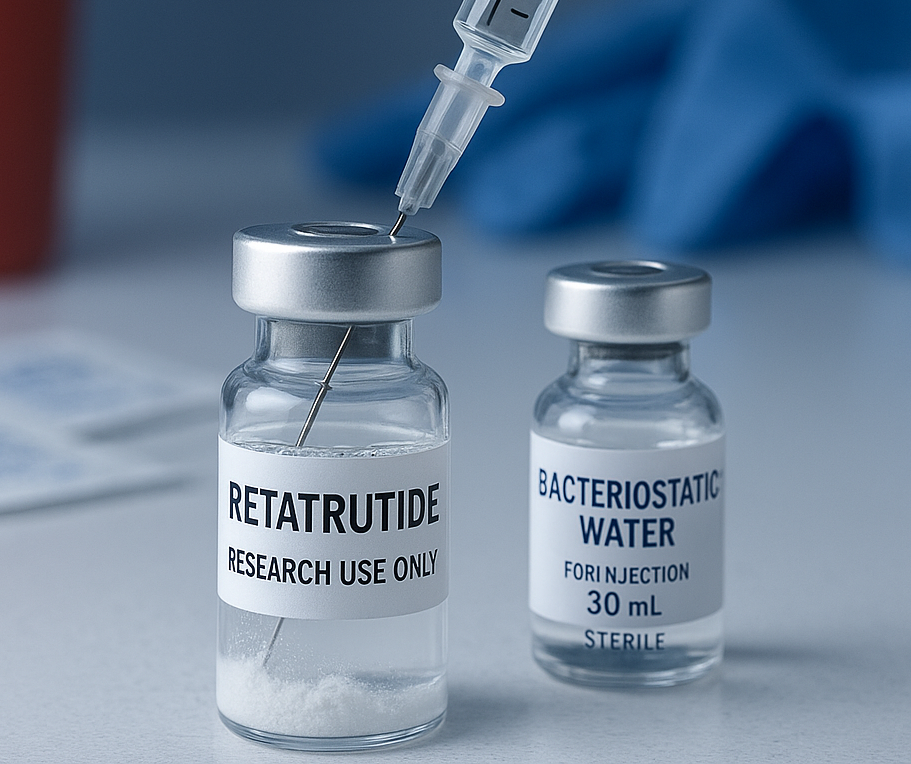
Apr
How to Reconstitute Retatrutide: The Complete Step-by-Step Guide (2026)
Retatrutide is one of the most anticipated research compounds in metabolic science right now — a triple receptor agonist targeting GLP-1, GIP, and glucagon receptors simultaneously, currently progressing through Phase 3 clinical trials with preliminary data showing average body weight reductions of up to 24%. As retatrutide research grows rapidly and access to research-grade retatrutide expands, knowing exactly how to reconstitute retatrutide correctly has become one of the most searched practical questions in the field.
Reconstituting retatrutide properly is not complicated — but it is precise. The steps for how to reconstitute retatrutide correctly determine the stability, potency, and usability of your retatrutide solution from the first use through to the last. This guide covers everything you need to know about how to reconstitute retatrutide — from the equipment required and the exact bac water ratios to dose calculations, storage requirements, and the most critical mistakes to avoid when mixing retatrutide.
Important note: TitanForge Peptides retatrutide is supplied as a research-grade compound for in vitro laboratory use only. This guide is provided for informational and research reference purposes only. It does not constitute medical advice and should not be interpreted as guidance for human self-administration.
What Is Retatrutide and Why Does It Require Reconstitution?
Retatrutide — also referred to by its development code LY3437943 — is a synthetic peptide developed by Eli Lilly that simultaneously activates three incretin and metabolic hormone receptors: the glucagon-like peptide-1 receptor (GLP-1R), the glucose-dependent insulinotropic polypeptide receptor (GIPR), and the glucagon receptor (GCGR). This triple agonist mechanism distinguishes retatrutide from both semaglutide (GLP-1 only) and tirzepatide (GLP-1 and GIP dual agonist) — adding glucagon receptor activation to the dual incretin mechanism for enhanced energy expenditure and superior metabolic efficacy.
Research-grade retatrutide is supplied as a lyophilized powder — a freeze-dried compound that is chemically stable for storage but requires reconstitution before use. The process of how to reconstitute retatrutide involves dissolving the lyophilized retatrutide powder in bacteriostatic water to create a sterile liquid solution at a precise, known concentration.
Understanding how to reconstitute retatrutide correctly is essential because the reconstitution process directly determines:
- The concentration of the retatrutide solution and therefore the accuracy of every dose drawn from the vial
- The stability and shelf life of the reconstituted retatrutide solution
- The sterility of the retatrutide solution throughout its usage window
- The preservation of retatrutide’s biological activity from first use to last
Equipment Required to Reconstitute Retatrutide
Before beginning the process of how to reconstitute retatrutide, gather all required equipment:
- Retatrutide lyophilized powder vial — TitanForge Peptides research-grade retatrutide
- Bacteriostatic water — pharmaceutical grade, 0.9% benzyl alcohol, 10ml or 30ml vial
- Insulin syringes — 29 to 31 gauge, 0.5ml or 1ml capacity with fine needle
- Alcohol swabs — at least two per reconstitution session
- Sharps container — for safe, compliant needle disposal
- Permanent marker — to label the reconstituted retatrutide vial with date and concentration
- Calculator — to verify retatrutide dose calculations before drawing
Ensure your working surface is clean and uncluttered. Wash hands thoroughly with soap and water before handling any sterile equipment involved in the retatrutide reconstitution process.
Why Bacteriostatic Water Is Used to Reconstitute Retatrutide
Bacteriostatic water — abbreviated as bac water — is the correct and only recommended diluent for reconstituting retatrutide in a multi-dose research protocol. Bac water is sterile water for injection containing 0.9% benzyl alcohol as a bacteriostatic preservative.
When reconstituting retatrutide, bac water serves two critical functions that plain sterile water cannot:
Multi-dose contamination prevention: Every needle insertion into a reconstituted retatrutide vial introduces a contamination risk. The benzyl alcohol in bac water inhibits bacterial growth between uses — protecting the retatrutide solution across multiple draws from the same vial over days or weeks.
Extended retatrutide shelf life after reconstitution: Retatrutide reconstituted with bacteriostatic water remains stable and usable for up to 28 days when stored correctly at 2 to 8°C. Retatrutide reconstituted with plain sterile water without preservative should be used within 24 hours — making it entirely impractical for research protocols requiring multiple administrations.
Never substitute plain sterile water, normal saline, or any other diluent when reconstituting retatrutide. Only pharmaceutical-grade bacteriostatic water is appropriate for how to reconstitute retatrutide correctly in a multi-dose research context.
How to Reconstitute Retatrutide: Step-by-Step
Step 1 — Plan Your Retatrutide Reconstitution Volume
Before beginning the retatrutide reconstitution process, decide how much bacteriostatic water to add to your retatrutide vial. This is the most important decision in how to reconstitute retatrutide — it determines the concentration of your retatrutide solution and therefore the volume you draw for each dose.
The recommended retatrutide reconstitution ratios are:
| Retatrutide Vial Size | Bac Water Volume | Retatrutide Concentration | 2mg Dose Volume | 4mg Dose Volume |
|---|---|---|---|---|
| 5mg retatrutide vial | 1ml bac water | 5,000 mcg per ml | 0.4ml | 0.8ml |
| 5mg retatrutide vial | 2ml bac water | 2,500 mcg per ml | 0.8ml | 1.6ml |
| 10mg retatrutide vial | 1ml bac water | 10,000 mcg per ml | 0.2ml | 0.4ml |
| 10mg retatrutide vial | 2ml bac water | 5,000 mcg per ml | 0.4ml | 0.8ml |
The 2ml bac water per 5mg retatrutide vial ratio is the most practical starting point for retatrutide reconstitution — producing a 2,500 mcg/ml concentration where dose volumes are manageable and measurable with a standard insulin syringe.
Step 2 — Clean All Vial Tops Before Reconstituting Retatrutide
Using a fresh alcohol swab, thoroughly wipe the rubber stopper of your retatrutide vial and the rubber stopper of your bacteriostatic water vial. Allow both stoppers to air dry completely — typically 10 to 15 seconds — before inserting any needle.
This step is non-negotiable in the retatrutide reconstitution process. Contamination introduced through an uncleaned stopper affects the entire reconstituted retatrutide vial and cannot be reversed.
Step 3 — Draw Bacteriostatic Water Into the Syringe
Insert a clean, sterile insulin syringe needle through the rubber stopper of the bacteriostatic water vial. Draw the predetermined volume of bac water into the syringe barrel — for the standard retatrutide reconstitution ratio, draw 2ml of bac water. If using a 1ml syringe, draw in two sequential stages.
Invert the bac water vial if needed to prevent drawing air into the syringe — maintaining the needle tip below the water line throughout the draw.
Step 4 — Add Bacteriostatic Water to the Retatrutide Vial
Insert the needle through the rubber stopper of the retatrutide vial. This step requires the most care in the entire retatrutide reconstitution process.
Do not inject the bac water directly onto the retatrutide powder. Direct forceful injection onto the lyophilized retatrutide powder causes mechanical disruption of the peptide structure and can reduce biological activity. Instead, angle the needle tip so the bac water flows slowly and gently down the inner glass wall of the retatrutide vial — allowing it to trickle over the retatrutide powder naturally rather than hitting it with force.
Release the bac water slowly and steadily. Do not rush this step of the retatrutide reconstitution.
Step 5 — Allow the Retatrutide to Dissolve
After adding bac water to the retatrutide vial, do not shake the vial. Shaking reconstituting retatrutide causes foaming and mechanical agitation that can damage the retatrutide peptide structure and introduce air bubbles that complicate accurate dosing.
Instead, hold the retatrutide vial gently between your fingers and swirl slowly in a circular motion — allowing the lyophilized retatrutide powder to dissolve naturally into the bac water. Retatrutide typically dissolves completely within 1 to 5 minutes of gentle swirling.
The fully reconstituted retatrutide solution should appear as a clear, colourless liquid with no visible particles, cloudiness, or foam. If the retatrutide solution remains cloudy or contains visible particulates after 5 minutes of gentle swirling, do not proceed — this indicates a potential issue with the retatrutide compound or the reconstitution process.
Step 6 — Label the Reconstituted Retatrutide Vial Immediately
Using a permanent marker, label your reconstituted retatrutide vial with:
- Date of retatrutide reconstitution — this starts the 28-day shelf life clock
- Retatrutide concentration — e.g. 2,500 mcg/ml
- Volume remaining — update this after each use to track remaining retatrutide solution
Step 7 — Store the Reconstituted Retatrutide Vial Correctly
Place the labelled reconstituted retatrutide vial upright in the refrigerator at 2 to 8°C immediately after completing the retatrutide reconstitution process. Keep the reconstituted retatrutide away from direct light — the back of the refrigerator away from the light source is ideal, or wrap the vial in aluminium foil for additional light protection.
Never freeze reconstituted retatrutide. Freezing a reconstituted retatrutide solution causes ice crystal formation that physically destroys the retatrutide peptide structure and permanently eliminates biological activity. The 28-day shelf life of reconstituted retatrutide cannot be extended by freezing.
Retatrutide Dose Calculation After Reconstitution
Once you have completed the retatrutide reconstitution process, calculating your retatrutide dose volume is straightforward:
Formula: Dose volume (ml) = Desired retatrutide dose (mcg) ÷ Retatrutide concentration (mcg/ml)
Using 5mg retatrutide + 2ml bac water = 2,500 mcg/ml concentration:
| Desired Retatrutide Dose | Calculation | Draw Volume |
|---|---|---|
| 1mg (1,000 mcg) | 1,000 ÷ 2,500 | 0.4ml |
| 2mg (2,000 mcg) | 2,000 ÷ 2,500 | 0.8ml |
| 4mg (4,000 mcg) | 4,000 ÷ 2,500 | 1.6ml |
| 6mg (6,000 mcg) | 6,000 ÷ 2,500 | 2.4ml |
| 8mg (8,000 mcg) | 8,000 ÷ 2,500 | 3.2ml |
Always verify your retatrutide dose calculation before drawing from the reconstituted vial. A calculation error at this stage results in significant inaccuracy in retatrutide dosing across the entire research protocol.
Retatrutide Storage: Before and After Reconstitution
| Retatrutide State | Storage Temperature | Shelf Life |
|---|---|---|
| Lyophilized retatrutide powder | -20°C (freezer) | Up to 24 months from manufacture |
| Lyophilized retatrutide powder | 2–8°C (refrigerator) | Up to 3 months |
| Reconstituted retatrutide (with bac water) | 2–8°C (refrigerator) | Up to 28 days |
| Reconstituted retatrutide | Frozen | Never freeze — destroys peptide |
| Reconstituted retatrutide | Room temperature | Up to 8 hours maximum |
Retatrutide vs Tirzepatide vs Semaglutide: Reconstitution Differences
Researchers moving between GLP-1 class compounds often ask whether the retatrutide reconstitution process differs meaningfully from how to reconstitute tirzepatide or semaglutide. Here is a direct comparison:
| Factor | Retatrutide | Tirzepatide | Semaglutide |
|---|---|---|---|
| Diluent | Bacteriostatic water | Bacteriostatic water | Bacteriostatic water |
| Reconstitution method | Slow wall-directed injection | Slow wall-directed injection | Slow wall-directed injection |
| Shake vial? | Never — swirl only | Never — swirl only | Never — swirl only |
| Shelf life after reconstitution | Up to 28 days refrigerated | Up to 28 days refrigerated | Up to 28 days refrigerated |
| Solution appearance | Clear, colourless | Clear, colourless | Clear, colourless |
| Freeze reconstituted? | Never | Never | Never |
| Storage temperature | 2–8°C refrigerated | 2–8°C refrigerated | 2–8°C refrigerated |
The retatrutide reconstitution process is essentially identical to tirzepatide and semaglutide reconstitution — the same equipment, the same bac water diluent, the same gentle swirling technique, and the same storage requirements. Researchers familiar with how to reconstitute tirzepatide will find the retatrutide reconstitution process immediately familiar.
Common Mistakes When Reconstituting Retatrutide
Avoid these errors that compromise the retatrutide reconstitution process:
- Shaking the retatrutide vial — Always swirl gently. Shaking reconstituting retatrutide damages the peptide and causes foaming
- Injecting bac water directly onto retatrutide powder — Always direct bac water down the inner wall of the retatrutide vial
- Using the wrong diluent — Only bacteriostatic water is appropriate for reconstituting retatrutide in multi-dose protocols
- Not cleaning vial stoppers before reconstituting retatrutide — Always swab with alcohol and allow to dry first
- Freezing reconstituted retatrutide — Freezing permanently destroys the retatrutide peptide structure
- Forgetting to label the reconstituted retatrutide vial — Always label with date and concentration immediately after retatrutide reconstitution
- Using cloudy or discoloured reconstituted retatrutide — Discard immediately and do not use
- Using reconstituted retatrutide past 28 days — Discard and reconstitute fresh retatrutide regardless of visual appearance
Frequently Asked Questions
Q: How do you reconstitute retatrutide? A: To reconstitute retatrutide, add pharmaceutical-grade bacteriostatic water slowly down the inner wall of the lyophilized retatrutide vial using a sterile insulin syringe. The recommended ratio is 2ml bac water per 5mg retatrutide vial. Never shake — swirl gently until fully dissolved. Store reconstituted retatrutide refrigerated at 2 to 8°C and use within 28 days.
Q: How much bac water do you use to reconstitute retatrutide? A: The most practical retatrutide reconstitution ratio is 2ml of bacteriostatic water per 5mg retatrutide vial — producing a concentration of 2,500 mcg per ml. Adjust the bac water volume based on your vial size and preferred working concentration using the dose calculation tables provided above.
Q: How long does reconstituted retatrutide last? A: Reconstituted retatrutide mixed with bacteriostatic water is stable for up to 28 days when stored correctly at 2 to 8°C in the refrigerator and away from direct light. Never freeze reconstituted retatrutide as freezing destroys the peptide structure permanently.
Q: Can you freeze reconstituted retatrutide to extend shelf life? A: No — never freeze reconstituted retatrutide. Freezing causes ice crystal formation that physically destroys the retatrutide peptide and permanently eliminates its biological activity. The 28-day shelf life of reconstituted retatrutide stored correctly at 2 to 8°C cannot be extended by freezing.
Q: What should reconstituted retatrutide look like after mixing? A: Correctly reconstituted retatrutide should appear as a completely clear, colourless liquid with no visible particles, cloudiness, or foam. Any cloudiness, unusual colour, or visible particulates in the reconstituted retatrutide solution indicates a problem — do not use it.
Q: Is the retatrutide reconstitution process different from tirzepatide? A: No — the retatrutide reconstitution process is essentially identical to tirzepatide reconstitution. Both use bacteriostatic water as the diluent, the same slow wall-directed injection technique, gentle swirling rather than shaking, and the same 28-day refrigerated shelf life after reconstitution. Researchers familiar with reconstituting tirzepatide will find the retatrutide reconstitution process immediately familiar.
Q: Where can I buy research-grade retatrutide? A: TitanForge Peptides supplies research-grade retatrutide at independently verified 99%+ purity with a full batch-specific Certificate of Analysis. Shop retatrutide here.
