Collagen & Consumer Supplements
Collagen Peptides vs Whey Protein: Surprising Recovery Truth
Jun
Collagen Peptides vs Whey Protein: Which Is Better for Recovery? (2026)
The collagen peptides vs whey protein debate is one of the most frequently asked questions in sports nutrition — and most of the answers available online either declare one product the outright winner or hedge so heavily that the reader leaves no clearer than when they arrived. This guide delivers something more useful: a genuinely clear, evidence-based breakdown of exactly what collagen peptides and whey protein each do for recovery, why the collagen peptides vs whey protein comparison is based on a partially false premise, and the specific circumstances where each product wins — and where using both simultaneously is the most intelligent approach.
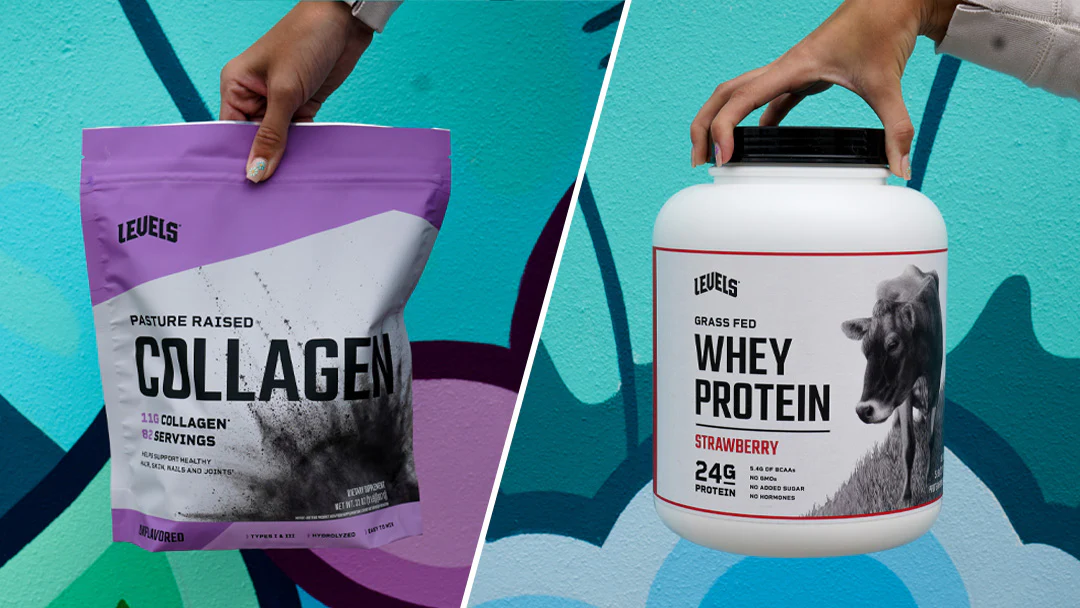
The short answer to the collagen peptides vs whey protein question is that comparing them directly as recovery supplements is like comparing a hammer to a screwdriver — both are tools, both serve important functions, but they are designed for fundamentally different jobs. Collagen peptides recover connective tissue. Whey protein recovers muscle fibres. A complete recovery protocol needs both — and understanding why changes how you approach your entire supplementation strategy.
The Core Difference in the Collagen Peptides vs Whey Protein Comparison
The collagen peptides vs whey protein comparison begins with amino acid composition — because the amino acid profile of each protein determines which biological recovery processes it can actually support.
Whey protein amino acid profile: Whey protein is rich in branched-chain amino acids — particularly leucine, which at concentrations above approximately 2.5 g per serving triggers the mTOR pathway in muscle cells and initiates muscle protein synthesis. Whey protein’s leucine-rich, complete amino acid profile makes it the most effective protein source for stimulating muscle protein synthesis — the process by which muscle fibres damaged during training are repaired and rebuilt stronger. As documented in PubMed’s leucine threshold research for muscle protein synthesis, the leucine content of whey protein is the primary driver of its muscle recovery superiority over most other protein sources.
Collagen peptides amino acid profile: Collagen peptides are dominated by glycine, proline, and hydroxyproline — amino acids that are essentially absent from muscle protein and that serve as the primary building blocks of connective tissue collagen. Collagen peptides contain virtually no leucine — meaning they produce minimal direct muscle protein synthesis stimulation compared to whey protein. However collagen peptides provide the specific amino acid substrate that the body requires for collagen synthesis in tendons, ligaments, cartilage, bone, skin, and gut tissue — substrate that whey protein simply cannot supply in biologically meaningful quantities.
This amino acid profile difference is the fundamental answer to the collagen peptides vs whey protein comparison — each protein excels at stimulating completely different recovery processes in completely different tissue types. In the collagen peptides vs whey protein question the correct answer is not which is better overall — it is which is better for which type of recovery.
Collagen Peptides vs Whey Protein for Muscle Recovery
Winner for muscle fibre recovery: Whey Protein
When the recovery question refers specifically to muscle fibre repair — the microscopic tears in myofibrils created by eccentric training that produce delayed onset muscle soreness and require repair for muscle growth — whey protein is the clear winner in the collagen peptides vs whey protein comparison.
Whey protein’s leucine-rich complete amino acid profile provides the optimal substrate for mTOR pathway activation and muscle protein synthesis — the cellular process that repairs damaged muscle fibres and builds them back stronger. A post-training whey protein dose of 20 g to 40 g providing 2.5 g to 3 g of leucine is the most evidence-backed single intervention for accelerating muscle fibre recovery after resistance training — supported by decades of research and virtually universal agreement across the sports nutrition literature.
Collagen peptides do not compete with whey protein for this specific recovery application — their amino acid profile is not designed for mTOR activation and they do not meaningfully contribute to muscle fibre protein synthesis. Any collagen peptides vs whey protein comparison that claims collagen peptides are superior for muscle recovery is not accurately representing the evidence.
Collagen Peptides vs Whey Protein for Connective Tissue Recovery
Winner for connective tissue recovery: Collagen Peptides — decisively
When the recovery question includes tendons, ligaments, cartilage, fascia, and the extracellular matrix of muscle tissue — collectively the connective tissue that training stresses alongside muscle fibres — collagen peptides win the collagen peptides vs whey protein comparison decisively and without meaningful competition from whey.
Connective tissue collagen synthesis requires glycine, proline, and hydroxyproline — amino acids that whey protein contains in negligible quantities. When athletes experience tendon pain, ligament laxity, joint discomfort, or the gradual connective tissue wear that accumulates under years of progressive overload training, the limiting nutritional factor is almost always inadequate collagen precursor amino acid supply — a problem that additional whey protein consumption cannot solve but that collagen peptides address directly.
Research from the University of California Davis, published in the American Journal of Clinical Nutrition, demonstrated that collagen peptide supplementation — 15 g taken 60 minutes before exercise alongside Vitamin C — significantly increased collagen synthesis markers in tendons and the collagen-rich extracellular matrix of muscle following training. This is a recovery benefit that whey protein cannot replicate regardless of dose — making collagen peptides the non-negotiable recovery supplement for any athlete whose connective tissue health is a performance-limiting factor.
The collagen peptides vs whey protein advantage for connective tissue recovery is particularly pronounced for athletes over 35 — where the age-related decline in endogenous collagen production creates a widening gap between connective tissue demand and connective tissue repair capacity that dietary collagen precursors directly address. The collagen peptides vs whey protein comparison for this population is not even close — collagen peptides address a recovery limitation that whey protein is pharmacologically incapable of resolving.

Collagen Peptides vs Whey Protein: The Complete Head-to-Head Comparison
| Recovery Factor | Collagen Peptides | Whey Protein |
|---|---|---|
| Muscle protein synthesis (mTOR) | ★☆☆☆☆ Minimal — low leucine | ★★★★★ Optimal — leucine-rich |
| Muscle fibre repair | ★☆☆☆☆ Minimal direct contribution | ★★★★★ Primary mechanism |
| Tendon and ligament repair | ★★★★★ Direct collagen precursor supply | ★☆☆☆☆ Insufficient glycine/proline |
| Cartilage matrix maintenance | ★★★★★ Type II collagen substrate | ★☆☆☆☆ No meaningful contribution |
| Skin collagen synthesis | ★★★★★ Direct fibroblast stimulation | ★☆☆☆☆ No specific mechanism |
| Bone matrix support | ★★★★☆ Collagen matrix substrate | ★★☆☆☆ Provides calcium-associated protein |
| Gut lining integrity | ★★★★☆ Glycine and proline support | ★★☆☆☆ Some general protein support |
| Amino acid completeness | ★★☆☆☆ Incomplete — low leucine | ★★★★★ Complete BCAA profile |
| Post-training muscle recovery | ★★☆☆☆ Not the appropriate tool | ★★★★★ Gold standard |
| Joint health | ★★★★★ Direct cartilage support | ★☆☆☆☆ No specific mechanism |
| Anti-aging skin benefits | ★★★★★ Strong RCT evidence | ★☆☆☆☆ No mechanism |
| Satiety and fullness | ★★☆☆☆ Lower satiety effect | ★★★★☆ Higher satiety — complete protein |
The collagen peptides vs whey protein comparison table makes the answer to the original question visually clear — these two products do not compete for the same recovery outcomes. The collagen peptides vs whey protein comparison is not a zero-sum choice. It is a complementary pairing where each product fills a recovery gap the other leaves open.
The Case for Using Collagen Peptides and Whey Protein Together
The most sophisticated answer to the collagen peptides vs whey protein debate — and the one that the evidence most strongly supports — is that serious athletes and recovery-focused individuals should use both products strategically rather than choosing between them. The collagen peptides vs whey protein question dissolves when you understand that a complete recovery protocol requires both muscle fibre repair (whey protein’s strength) and connective tissue repair (collagen peptides’ strength) simultaneously.
Here is what a complete collagen peptides and whey protein recovery protocol looks like:
60 minutes before training:
- 15 g collagen peptides + 50 mg to 500 mg Vitamin C — aligns with the post-exercise collagen synthesis peak for maximum connective tissue recovery
Immediately post-training:
- 25 g to 40 g whey protein — provides the leucine threshold stimulus for muscle protein synthesis in the post-training anabolic window
Before sleep (optional):
- 20 g to 40 g casein protein or a second whey dose — extends overnight muscle protein synthesis during the fasted recovery period
This collagen peptides and whey protein timing protocol is the most complete nutritional recovery framework available — covering connective tissue collagen synthesis through pre-training collagen peptides and muscle fibre protein synthesis through post-training whey protein in a single daily protocol. The collagen peptides vs whey protein debate becomes a non-debate when both are used in the roles they are specifically designed for.
For athletes who are also running performance peptide protocols — BPC-157, CJC-1295 + Ipamorelin, or IGF-1 LR3 — collagen peptides and whey protein both integrate as foundational nutritional support that enhances the biological environment in which those peptides operate. Our BPC-157 and TB-500 stack guide covers how BPC-157 complements collagen peptides specifically — the peptide activating fibroblast machinery while collagen peptides provide the glycine and proline substrate that machinery requires. Our how to build a peptide stack for muscle growth article covers the complete performance peptide framework that both collagen peptides and whey protein support nutritionally.
Special Cases: When Collagen Peptides Win the Comparison Outright
There are specific situations where the collagen peptides vs whey protein comparison resolves firmly in collagen peptides’ favour — circumstances where whey protein is not an appropriate or sufficient recovery tool:
Tendon and ligament injuries: When recovery from a specific connective tissue injury is the priority — Achilles tendinopathy, rotator cuff strain, knee ligament issues — collagen peptides win the collagen peptides vs whey protein comparison completely. No amount of additional whey protein resolves a tendon injury because tendons do not repair through leucine-mTOR muscle protein synthesis — they repair through collagen synthesis that requires glycine and proline. In this context collagen peptides are not just better than whey for recovery — whey protein is pharmacologically irrelevant to the specific healing process required. Our peptides for healing guide covers the complete healing peptide protocol — including injectable BPC-157 — that combines with collagen peptides for maximum connective tissue repair.
Skin and anti-aging recovery: For the recovery of skin collagen architecture from UV damage, ageing, or environmental stress — collagen peptides win the collagen peptides vs whey protein comparison absolutely. Whey protein has no meaningful skin collagen stimulating mechanism. Collagen peptides have multiple placebo-controlled human trials demonstrating statistically significant skin elasticity and hydration improvements. Our copper peptide serum guide, glow blend peptide article, and GHK-Cu serum product page cover the complete skin recovery protocol that collagen peptides integrate with.
Athletes over 40: As endogenous collagen production declines with age, the collagen peptides vs whey protein balance shifts progressively toward collagen peptides for recovery outcomes. Older athletes maintain adequate dietary protein intake through conventional sources — the limiting recovery factor is almost never overall protein quantity but specifically connective tissue collagen precursor availability. For this population, redirecting some dietary protein budget toward collagen peptides rather than additional whey protein frequently produces better recovery outcomes than simply increasing total whey protein consumption.
Dairy intolerance or dietary restrictions: For athletes who cannot consume whey protein due to lactose intolerance, dairy allergy, or dietary preference — collagen peptides from bovine or marine sources provide a non-dairy protein option that covers the connective tissue recovery dimension comprehensively. For muscle fibre protein synthesis these athletes would substitute plant-based complete protein sources.
Collagen Peptides vs Whey Protein: Choosing the Right Product
When selecting your collagen peptides in the collagen peptides vs whey protein comparison, the same quality principles apply as for any supplement — independent testing, verified protein content, clean ingredient list, and absence of undisclosed adulterants.
At TitanForge Peptides our collagen peptides range covers every major collagen type and source:
- Marine collagen peptides — Type I, highest bioavailability, best for skin and surface connective tissue applications. The preferred collagen peptides choice for anti-aging and beauty-from-within protocols alongside whey protein for athletic recovery
- Bovine collagen peptides — Types I and III, most versatile, best for general connective tissue, joint, and gut applications alongside whey protein in athletic recovery protocols
- Type II collagen — Cartilage-specific, best for dedicated joint health applications where the immune tolerance mechanism adds benefit beyond amino acid substrate provision
Browse our complete collagen peptides range, explore our collagen peptides pillar guide for the complete type-by-type breakdown, and visit our Lab Results page to verify the quality documentation on every product before purchasing.
Frequently Asked Questions
Q: Should I take collagen peptides or whey protein for recovery?
A: Both — they recover completely different tissues through completely different mechanisms. Whey protein recovers muscle fibres through leucine-triggered mTOR-mediated muscle protein synthesis. Collagen peptides recover connective tissue — tendons, ligaments, cartilage, skin, and gut — through glycine and proline substrate provision for collagen synthesis. A complete recovery protocol uses collagen peptides pre-training and whey protein post-training for comprehensive recovery coverage across both tissue types.
Q: Can collagen peptides replace whey protein?
A: No — collagen peptides cannot replace whey protein for muscle protein synthesis because their amino acid profile is not optimised for mTOR pathway activation. Collagen peptides are low in leucine and do not stimulate muscle fibre repair effectively. The collagen peptides vs whey protein comparison is not an either-or choice — they serve fundamentally different recovery functions and each is irreplaceable in its specific role.
Q: Are collagen peptides better than whey protein for joints?
A: Yes — collagen peptides win the collagen peptides vs whey protein comparison for joint health completely. Whey protein has no meaningful mechanism for cartilage repair or joint collagen synthesis. Collagen peptides provide the glycine and proline substrate for cartilage matrix maintenance and have multiple clinical trials demonstrating significant joint pain reduction with consistent supplementation. For dedicated joint recovery collagen peptides are the appropriate tool — whey protein is not.
Q: When should I take collagen peptides vs whey protein?
A: Take collagen peptides 60 minutes before training — with Vitamin C — to align with the post-exercise collagen synthesis peak for connective tissue recovery. Take whey protein immediately post-training — 25 g to 40 g — to stimulate muscle protein synthesis in the anabolic window. This timing separation allows both collagen peptides and whey protein to operate in their optimal windows without competing for absorption.
Q: Do collagen peptides build muscle like whey protein?
A: Not in the same way — collagen peptides do not directly stimulate muscle protein synthesis through the leucine-mTOR pathway that whey protein activates. Collagen peptides contribute to muscle recovery through the connective tissue matrix that surrounds and supports muscle fibres rather than through direct myofibrillar protein synthesis. For direct muscle building, whey protein or other leucine-rich proteins remain the appropriate nutritional tool alongside performance peptides like IGF-1 LR3. Our IGF-1 LR3 dosage guide covers the anabolic peptide component.
Q: Where can I buy collagen peptides?
A: TitanForge Peptides supplies marine collagen, bovine collagen, and Type II joint collagen across all major application categories — all independently quality verified. Browse our complete collagen peptides range here.
