best peptides for weight loss and muscle gain
Peptides for Weight Loss: The Complete 2026 Guide

May
Peptides for Weight Loss: The Complete Science-Backed Guide (2026)
Peptides for weight loss have moved from the fringes of research science into the mainstream of global health conversation — and for compelling reasons. The discovery and clinical development of GLP-1 receptor agonists like semaglutide and tirzepatide has produced some of the most dramatic weight loss results ever documented in pharmaceutical research — average reductions of 15 to 22 percent of body weight that have fundamentally changed what is considered achievable in the treatment of obesity and metabolic disease.
But GLP-1 compounds are only one category within a significantly broader landscape of peptides for weight loss. Growth hormone secretagogues, targeted lipolytic peptides, metabolic mitochondrial peptides, and visceral fat-specific GHRH analogues all represent distinct and complementary approaches to weight loss that operate through entirely different mechanisms — each with its own evidence base, its own appropriate application, and its own role in a well-designed fat loss protocol.
This guide is the most comprehensive resource available for understanding peptides for weight loss in 2026 — covering every major category, the biological mechanisms behind each approach, the clinical evidence supporting the most important compounds, how to choose the right peptides for weight loss for your specific goals, and how to build a protocol that combines multiple approaches for maximum effect.
Why Peptides for Weight Loss Work: The Biology
Before exploring specific compounds, understanding why peptides for weight loss are so effective at the biological level — and why they outperform conventional approaches for many individuals — gives important context to everything else in this guide.
The fundamental challenge of weight loss is not caloric arithmetic — it is biology. The human body has evolved powerful homeostatic mechanisms that resist fat loss and defend established body weight with extraordinary tenacity. Hunger hormones increase when caloric intake drops. Metabolic rate decreases to compensate for reduced energy availability. Fat-burning pathways downregulate in response to the same training stimulus over time. The result is that conventional diet and exercise approaches, while effective for initiating weight loss, frequently plateau as the body’s regulatory systems adapt and push back.
Peptides for weight loss work because they interact directly with the biological signalling systems that govern these homeostatic responses — modifying the hormonal, neurological, and metabolic environment in which fat storage and fat burning decisions are made at the cellular level. Rather than fighting the body’s physiology, the best peptides for weight loss work with it — adjusting the biological set points that determine how much fat the body maintains and at what metabolic rate.
As comprehensively reviewed in PubMed’s peptide obesity research literature, the mechanistic specificity of peptides for weight loss — targeting defined receptors and pathways rather than producing non-specific metabolic perturbation — is the primary reason they produce more consistent and more reproducible results than most conventional weight management approaches.
Category 1: GLP-1 Receptor Agonists — The Most Clinically Powerful Peptides for Weight Loss
GLP-1 receptor agonists represent the highest-evidence category of peptides for weight loss currently available — supported by large-scale randomised controlled trials, FDA approval, and clinical weight loss results that were previously considered impossible without surgical intervention.
How GLP-1 Peptides for Weight Loss Work
Glucagon-like peptide-1 (GLP-1) is a naturally occurring gut hormone produced in response to food intake that signals the brain to reduce appetite, slows gastric emptying to increase satiety, stimulates insulin secretion from the pancreas, and suppresses glucagon — the hormone that drives glucose production. GLP-1 peptides for weight loss mimic and amplify this natural hormonal signal — producing a sustained reduction in appetite and caloric intake that drives progressive, consistent weight loss without requiring constant conscious dietary restriction.
The appetite reduction produced by GLP-1 peptides for weight loss is not simply about feeling less hungry — it fundamentally changes the reward value of food at the neurological level, reducing the hedonic drive to eat that underlies much of the overconsumption that drives weight gain in modern food environments. As documented in research published in the New England Journal of Medicine, this neurological dimension of GLP-1 peptides for weight loss is one of the most clinically significant aspects of their efficacy.
Semaglutide — The Gold Standard GLP-1 Peptide for Weight Loss
Semaglutide is the most widely used and most extensively studied GLP-1 peptide for weight loss. FDA-approved as Wegovy for chronic weight management and Ozempic for type 2 diabetes, semaglutide produces average weight loss of 14 to 15 percent of body weight in clinical trials — a result that was genuinely transformative when first published and that remains the benchmark against which newer peptides for weight loss are measured.
Semaglutide works as a peptide for weight loss through weekly subcutaneous injection — mimicking the natural GLP-1 signal with a dramatically extended half-life of approximately 7 days that sustains appetite suppression throughout the entire week from a single dose. The semaglutide dose escalation schedule — starting at 0.25mg weekly and escalating to 2.4mg weekly over 16 to 20 weeks — manages gastrointestinal side effects while progressively increasing the appetite-suppressing effect.
Research-grade semaglutide is available at TitanForge Peptides for in vitro laboratory investigation. Shop semaglutide research grade here.
Tirzepatide — The Superior Dual-Action Peptide for Weight Loss
Tirzepatide has surpassed semaglutide as the most potent approved peptide for weight loss — activating both the GLP-1 receptor and the GIP (glucose-dependent insulinotropic polypeptide) receptor simultaneously. This dual incretin mechanism produces average weight loss of 20 to 22 percent of body weight in the SURMOUNT clinical trial programme — meaningfully exceeding semaglutide’s results and approaching the weight loss achieved by bariatric surgery in some individuals.
The addition of GIP receptor activation to the GLP-1 mechanism in tirzepatide as a peptide for weight loss appears to enhance the satiety and metabolic effects beyond what GLP-1 agonism alone can achieve — with the GIP pathway contributing additional insulin sensitisation, fat tissue-specific effects, and potentially enhanced neurological appetite suppression.
Tirzepatide is FDA-approved as Mounjaro for type 2 diabetes and Zepbound for chronic weight management. Our complete tirzepatide dosage chart covers the full clinical escalation schedule. Research-grade tirzepatide is available at TitanForge Peptides.
Retatrutide — The Emerging Triple-Action Peptide for Weight Loss
Retatrutide is the next generation of peptides for weight loss — adding glucagon receptor activation to the dual GLP-1 and GIP mechanism of tirzepatide. This triple agonism produces additional energy expenditure through the glucagon pathway that neither semaglutide nor tirzepatide provides. Phase 2 clinical trial data published in the New England Journal of Medicine showed average weight loss of up to 24 percent of body weight with retatrutide — the highest weight loss figure ever recorded for a peptide compound in a controlled clinical trial. As confirmed in the ClinicalTrials.gov Phase 3 registry, retatrutide Phase 3 trials are currently ongoing. Research-grade retatrutide is available at TitanForge Peptides.
Category 2: Growth Hormone Peptides for Weight Loss
Growth hormone (GH) is one of the body’s most potent natural fat-burning hormones — a direct stimulator of lipolysis that preferentially mobilises fat from visceral and subcutaneous depots for energy use. Natural GH levels decline significantly with age — contributing to the progressive accumulation of body fat, particularly in the abdominal region, that characterises middle-aged weight gain. GH-stimulating peptides for weight loss address this hormonal decline directly by restoring more youthful GH secretion patterns.
CJC-1295 + Ipamorelin — The Foundation GH Peptide Stack for Weight Loss
The CJC-1295 and Ipamorelin combination is the most widely used GH-stimulating peptide stack for weight loss and body recomposition. CJC-1295 — a GHRH analogue — stimulates the pituitary to release growth hormone through the GHRH pathway, while Ipamorelin activates the complementary ghrelin receptor pathway. Together they produce a synergistic GH pulse that supports fat oxidation, lean mass preservation, improved sleep quality, and enhanced recovery alongside the direct body composition benefits of elevated GH.
For individuals whose weight loss goals are centred on body recomposition — losing fat while maintaining or building lean muscle — rather than pure scale weight reduction, the CJC-1295 and Ipamorelin combination represents the most practical and most widely used approach among the GH-stimulating peptides for weight loss. Our CJC-1295 dosage guide covers the complete protocol for this combination. Shop the CJC-1295 + Ipamorelin blend here.
Tesamorelin Peptide — The Visceral Fat-Specific GH Peptide for Weight Loss
Tesamorelin is the most clinically validated GHRH analogue for visceral fat reduction — the only GHRH analogue with FDA approval, granted as Egrifta for HIV-associated lipodystrophy. Multiple large-scale randomised controlled trials have demonstrated average visceral adipose tissue reductions of 15 to 18 percent with tesamorelin versus placebo — a clinically significant reduction in the metabolically dangerous deep abdominal fat that surrounds organs and drives cardiometabolic risk.
For individuals with significant visceral fat accumulation — particularly those experiencing the age-related central fat deposition associated with declining GH — tesamorelin is the most evidence-backed GH peptide for weight loss in this specific application. Our full tesamorelin peptide guide covers its mechanisms, clinical evidence, and protocol guidance in detail. Shop tesamorelin here.
Category 3: Direct Lipolytic Peptides for Weight Loss
Unlike GH-stimulating compounds that work through the pituitary-GH-IGF-1 axis, direct lipolytic peptides for weight loss act on fat cells themselves — stimulating the breakdown of stored triglycerides without requiring the hormonal cascade of GH-based approaches.
AOD-9604 — The Most Targeted Lipolytic Peptide for Weight Loss
AOD-9604 is a modified fragment of human growth hormone — specifically amino acids 176 to 191 — that reproduces HGH’s fat-burning properties without the anabolic or insulin-like effects of full growth hormone. AOD-9604 directly stimulates lipolysis in adipose tissue through a mechanism independent of the growth hormone receptor — making it uniquely targeted as a peptide for weight loss with no effect on blood glucose, insulin sensitivity, or muscle tissue.
This precision makes AOD-9604 particularly valuable as a peptide for weight loss for individuals who want body composition improvement without the broader hormonal effects of GH stimulation — either because they do not need the anabolic GH effects or because they want to isolate the fat loss component of a GH protocol. As reviewed in Examine.com’s fat loss peptide research, AOD-9604 has a well-characterised safety profile with clinical trial data supporting its fat-specific lipolytic activity. Shop AOD-9604 here.
HGH Fragment 176-191 — The Classic Fat Loss Peptide
HGH Fragment 176-191 is essentially the same compound as AOD-9604 — the C-terminal fragment of HGH responsible for fat metabolism — and is listed separately here as it is commonly marketed and searched under both names in the peptide industry. The mechanism, application, and evidence base are identical. Both provide targeted lipolytic activity without anabolic GH receptor stimulation — making them the cleanest fat-specific peptides for weight loss in the direct lipolytic category.
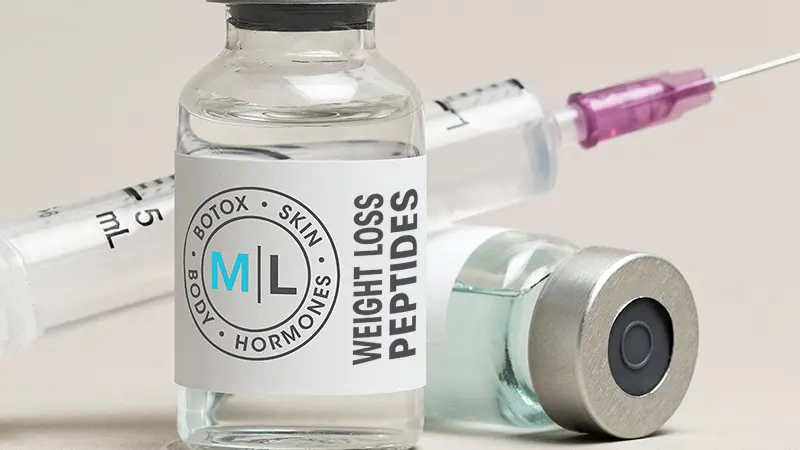
Category 4: Metabolic and Mitochondrial Peptides for Weight Loss
For individuals whose weight loss challenges are rooted in metabolic dysfunction — insulin resistance, impaired mitochondrial fat oxidation, or cellular energy inefficiency — a distinct category of metabolic peptides for weight loss addresses these underlying biological problems directly.
MOTS-c — The Mitochondrial Peptide for Weight Loss
MOTS-c is a mitochondria-derived peptide that activates AMPK — the cellular energy sensor that governs metabolic efficiency, insulin sensitivity, and fat oxidation. As a peptide for weight loss, MOTS-c does not suppress appetite or directly stimulate lipolysis — instead it addresses the metabolic environment in which fat burning occurs, improving insulin sensitivity and mitochondrial fat oxidation efficiency.
Research published in Cell Metabolism demonstrating MOTS-c’s metabolic effects showed that MOTS-c prevented diet-induced obesity in animal models and significantly improved metabolic markers — positioning it as one of the most mechanistically relevant peptides for weight loss in individuals with insulin resistance, metabolic syndrome, or a fat loss plateau despite consistent effort. Our dedicated MOTS-c peptide guide covers its mechanisms and protocol guidance in full. Shop MOTS-c here.
Choosing the Right Peptides for Weight Loss: A Goal-by-Goal Framework
With multiple categories of peptides for weight loss covering different mechanisms and applications, the right choice depends entirely on your specific situation. Here is a practical decision framework:
For maximum total weight loss — GLP-1 peptides for weight loss (semaglutide, tirzepatide, retatrutide) produce the greatest absolute weight reductions supported by the strongest clinical evidence. If scale weight reduction is the primary objective and the clinical evidence base is a priority, this category of peptides for weight loss is unmatched.
For body recomposition — lose fat, build muscle — GH-stimulating peptides for weight loss (CJC-1295 + Ipamorelin) are the most appropriate choice. They support fat loss through GH-driven lipolysis while simultaneously providing the anabolic environment for lean mass development — producing body composition improvement that GLP-1 peptides for weight loss cannot replicate.
For visceral belly fat specifically — Tesamorelin peptide has the strongest clinical evidence for visceral adipose tissue reduction of any GHRH analogue — backed by FDA approval-enabling RCT data. For individuals with significant central fat accumulation driven by age-related GH decline, tesamorelin is the most targeted and evidence-backed choice.
For targeted fat loss without hormonal effects — AOD-9604 provides direct lipolytic activity in adipose tissue without GH receptor activation, appetite suppression, or anabolic effects — the cleanest targeted fat loss peptide for weight loss for users who want body fat reduction in isolation.
For metabolic dysfunction and fat loss plateaus — MOTS-c addresses insulin resistance and mitochondrial metabolic inefficiency — the biological factors that cause fat loss to stall despite consistent diet and training. For individuals whose weight loss challenge is metabolic rather than appetite-related, MOTS-c is one of the most relevant peptides for weight loss to address the underlying biology.
For comprehensive fat loss protocols — The most powerful approach to peptides for weight loss combines compounds from multiple categories simultaneously — covering appetite regulation, GH-driven lipolysis, direct adipose tissue effects, and metabolic optimisation in a single coordinated protocol. Our best peptide stack guide covers the most effective multi-compound weight loss protocol combinations in detail.
Peptides for Weight Loss: Quick Reference Chart
| Peptide for Weight Loss | Mechanism | Average Weight Loss | Best For |
|---|---|---|---|
| Semaglutide | GLP-1 receptor agonism | ~15% body weight | Maximum appetite suppression, clinical weight loss |
| Tirzepatide | GLP-1 + GIP dual agonism | ~20-22% body weight | Superior efficacy, metabolic health |
| Retatrutide | GLP-1 + GIP + glucagon | ~24% body weight | Maximum weight loss, energy expenditure |
| Tesamorelin | GHRH — GH stimulation | ~15-18% VAT reduction | Visceral belly fat specifically |
| CJC-1295 + Ipamorelin | GHRH + GHRP — GH stimulation | Body recomposition | Fat loss + muscle preservation |
| AOD-9604 | Direct HGH fragment lipolysis | Targeted fat reduction | Clean fat loss, no hormonal effects |
| MOTS-c | AMPK activation — mitochondrial | Metabolic improvement | Insulin resistance, fat loss plateaus |
Peptides for Weight Loss: Important Considerations
Compliance with legal and regulatory status — The GLP-1 peptides for weight loss (semaglutide, tirzepatide, retatrutide) are FDA-approved pharmaceutical compounds or investigational agents. TitanForge Peptides supplies these as research-grade compounds for in vitro laboratory use only. Pharmaceutical-grade GLP-1 treatments require medical supervision and prescription. The WADA prohibited list includes peptide hormones as a prohibited class — competitive athletes subject to drug testing should verify the status of any peptide for weight loss before use.
Purity verification is non-negotiable — The quality of peptides for weight loss varies enormously across the market. Only purchase from suppliers that provide independently verified, batch-specific COA documentation from ISO-accredited laboratories. At TitanForge Peptides, every peptide for weight loss in our range is independently tested to minimum 99% purity with full public COA documentation on our Lab Results page.
Lifestyle foundation remains essential — Peptides for weight loss are the most powerful pharmacological tools available for fat reduction — but they are not a replacement for the dietary and lifestyle foundations that determine long-term health outcomes. The best results from any peptide for weight loss are achieved when combined with appropriate nutrition and physical activity.
Frequently Asked Questions
Q: What are the best peptides for weight loss? A: The best peptides for weight loss depend on your specific goals. For maximum total weight reduction, tirzepatide and semaglutide have the strongest clinical evidence. For body recomposition, CJC-1295 and Ipamorelin are the most widely used. For visceral fat specifically, tesamorelin has FDA-backed clinical trial data. For targeted fat loss without hormonal effects, AOD-9604 is the most direct approach. For metabolic dysfunction, MOTS-c addresses insulin resistance and mitochondrial efficiency.
Q: How do GLP-1 peptides for weight loss work? A: GLP-1 peptides for weight loss mimic the natural gut hormone GLP-1 — reducing appetite through brain receptor activation, slowing gastric emptying to increase satiety, and improving insulin sensitivity. Semaglutide and tirzepatide are the most extensively studied GLP-1 peptides for weight loss, with average clinical weight loss of 15 to 22 percent of body weight in trials.
Q: Can peptides for weight loss be stacked together? A: Yes — and the most effective peptide weight loss protocols combine compounds from different mechanism categories. AOD-9604 combined with CJC-1295 and Ipamorelin covers direct lipolysis alongside GH-driven fat oxidation simultaneously. MOTS-c can be added to any fat loss protocol to address metabolic efficiency. Our best peptide stack guide covers the most effective weight loss combinations in detail.
Q: Are peptides for weight loss safe? A: The safety profile varies by compound. GLP-1 peptides for weight loss have extensive pharmaceutical clinical safety data from large-scale trials. GH-stimulating peptides like CJC-1295 and Ipamorelin have well-characterised safety profiles with minimal adverse effects at standard doses. All peptides for weight loss should be used under appropriate medical supervision. Always consult a qualified healthcare professional before beginning any peptide protocol.
Q: How long do peptides for weight loss take to work? A: Timeline varies significantly by compound. GLP-1 peptides for weight loss typically produce noticeable appetite reduction within the first week, with significant weight loss observable from week 4 onwards. GH-stimulating peptides for weight loss produce gradual body composition changes over 8 to 16 weeks. Tesamorelin requires 3 to 6 months for peak visceral fat reduction. AOD-9604 produces more immediate lipolytic effects but visible body composition changes require 8 to 12 weeks of consistent use.
Q: Where can I buy peptides for weight loss? A: TitanForge Peptides supplies the full range of weight loss peptides — semaglutide, tirzepatide, retatrutide, tesamorelin, CJC-1295, Ipamorelin, AOD-9604, and MOTS-c — at independently verified 99%+ purity with full COA documentation. Browse all peptides for weight loss here.
