peptide purity & quality
Purified Aminos & Peptides: What They Are & Why It Matters

Apr
Purified Aminos Peptides: What They Are, How Purity Works, and Why It Matters (2026)
If you have been researching peptide supplements and come across the terms purified aminos peptides, purified peptides, or high-purity amino acid chains — and are not entirely sure what distinguishes a purified aminos peptide product from a standard one, or why the level of purification matters so significantly — this guide answers those questions completely.
Understanding the relationship between amino acids, peptides, and purity is not just academic knowledge. It is the practical foundation for making confident, informed decisions about every peptide product you purchase — because the purification standard of a peptide supplement determines whether the compound actually delivers what the research evidence promises, or whether it falls short through contamination, degradation, or incomplete synthesis. Purified aminos peptides are not simply a marketing category — they represent a specific quality standard that has real, measurable implications for everything from product safety to biological efficacy.
This guide covers what purified aminos peptides are at a molecular level, how the purification process works, why purity levels vary across the peptide supplement market, how to verify the purification standard of any purified aminos peptide product before purchasing, and which purified aminos peptide supplements from TitanForge Peptides deliver the highest verified purity across each product category.
What Are Amino Acids and How Do They Relate to Purified Aminos Peptides?
Amino acids are the fundamental molecular building blocks of all proteins and peptides in biology. There are 20 standard amino acids — each with a distinct chemical structure, a unique side chain, and a specific role in the proteins and peptides that govern biological function. The human body uses these 20 amino acids to construct every protein it produces — from structural proteins like collagen and actin to functional proteins like enzymes, hormones, and immune antibodies.
Purified aminos peptides are compounds composed of chains of these amino acids — linked together by peptide bonds in specific sequences that determine each compound’s unique biological activity. The critical distinction between a purified aminos peptide and a non-purified or incompletely purified peptide lies in what else is present alongside the target amino acid chain in the final product.
When a peptide is synthesised in a laboratory — whether through solid-phase peptide synthesis (SPPS) or recombinant biological methods — the process inevitably produces a range of byproducts alongside the desired purified aminos peptide. These byproducts include truncated sequences — incomplete amino acid chains that stopped growing before reaching full length — deletion sequences — chains missing one or more amino acids from the target sequence — racemised amino acids — amino acids in the wrong stereochemical configuration — and residual reagents from the synthesis process itself.
In a non-purified or incompletely purified aminos peptide product, these byproducts remain in the final compound alongside the target sequence — diluting its biological activity, potentially introducing unknown pharmacological effects, and reducing the reliability of dosing. A fully purified aminos peptide product has undergone rigorous downstream purification to remove all byproducts — leaving only the correctly synthesised, correctly folded target amino acid chain at a verified high concentration.
This is why the purification standard is the single most important quality indicator for any purified aminos peptide product — and why the purity percentage stated on a COA is so much more meaningful than any marketing claim about a peptide’s quality.
How Purified Aminos Peptides Are Manufactured and Purified
Understanding how purified aminos peptides are made illuminates why purity levels vary so dramatically across the peptide supplement market — and why genuine 99%+ purified aminos peptides cost more to produce than lower-purity alternatives.
Solid-Phase Peptide Synthesis (SPPS)
The majority of purified aminos peptides used in supplements and research compounds are produced by solid-phase peptide synthesis — a method developed by Nobel laureate Robert Bruce Merrifield in the 1960s that has since become the gold standard for peptide manufacturing. As described in PubMed’s overview of peptide synthesis methodology, SPPS involves sequentially attaching protected amino acid building blocks to a solid resin support — one amino acid at a time — until the complete target sequence is assembled.
The efficiency of each coupling step in SPPS is never 100% — even optimised synthesis reactions achieve coupling efficiencies of 99% to 99.9% per step. For a short purified aminos peptide of 5 amino acids, this high per-step efficiency produces a predominantly correct product. For longer purified aminos peptides — like BPC-157 at 15 amino acids, or IGF-1 LR3 at 83 amino acids — the cumulative impurity from even very high per-step efficiency becomes significant. This is why longer purified aminos peptides require more sophisticated downstream purification to achieve equivalent final purity levels compared to shorter chains.
Downstream Purification of Aminos Peptides
After synthesis, crude purified aminos peptides undergo downstream purification — typically using preparative High-Performance Liquid Chromatography (HPLC) — to separate the target amino acid sequence from synthesis impurities. The quality of this downstream purification step is the primary determinant of the final purity percentage of a purified aminos peptide product.
High-quality purified aminos peptide manufacturers invest in sophisticated preparative HPLC equipment and rigorous purification protocols to achieve consistently high purity levels — typically 98% to 99%+ for research and supplement-grade purified aminos peptides. Lower-quality manufacturers may skip or minimise this step to reduce production costs — resulting in purified aminos peptide products with much lower actual purity despite marketing claims to the contrary.
Verification of Purified Aminos Peptides: HPLC and Mass Spectrometry
The purification level of any purified aminos peptide product is verified through two complementary analytical techniques:
Analytical HPLC — separates the components of a purified aminos peptide sample by their physical properties and quantifies the proportion of the target amino acid sequence versus impurities. A genuine 99% purified aminos peptide shows a single dominant HPLC peak accounting for 99% of the total detected material.
Mass Spectrometry (MS) — confirms the molecular identity of the purified aminos peptide by measuring its exact molecular mass. MS verification confirms that the dominant component in the purified aminos peptide sample is indeed the target compound — not a differently massed impurity or substitute compound.
Together HPLC and MS analysis provide the complete verification picture for any purified aminos peptide — confirming both the purity level and the molecular identity of the compound. Both results should appear on the Certificate of Analysis for any reputable purified aminos peptide product. At TitanForge Peptides, every purified aminos peptide in our range is verified by both HPLC and MS analysis by an independent ISO-accredited laboratory, with full results published on our Lab Results page.
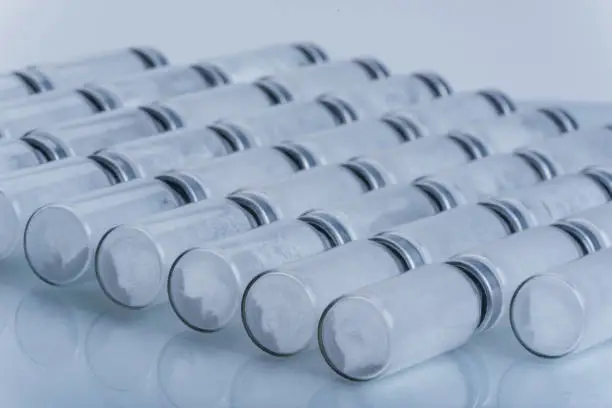
Why Purity Level Matters for Purified Aminos Peptides
The practical significance of purity level for purified aminos peptides extends across four dimensions that directly affect the user:
Dosing accuracy — A purified aminos peptide product at 90% purity delivers only 900 mcg of active compound per stated 1,000 mcg dose. At 99% purity, the same stated dose delivers 990 mcg of active compound. Across a full protocol of dozens of doses, this 10% discrepancy compounds into a significant under-delivery of the active purified aminos peptide — directly reducing the probability of achieving the results documented in research conducted with correctly dosed, high-purity compounds.
Research evidence applicability — Every piece of peer-reviewed research on purified aminos peptides like BPC-157, CJC-1295, or Ipamorelin was conducted using compounds verified to research-grade purity. The clinical and preclinical evidence base only applies to purified aminos peptides at comparable purity levels — lower-purity products cannot reliably reproduce these research findings.
Safety — The synthesis impurities present in lower-purity purified aminos peptides are not inert — they are biologically active amino acid sequences whose pharmacological effects are unknown and unstudied. A purified aminos peptide product with 5% to 10% unknown synthesis impurities introduces a meaningful unknown variable into any protocol.
Consistency between batches — High-purity purified aminos peptide manufacturing requires rigorous batch-to-batch quality control. Manufacturers who invest in genuine 99%+ purification and independent COA verification produce purified aminos peptides with consistent purity across batches — ensuring reliable, predictable results throughout a sustained protocol.
Purified Aminos Peptides at TitanForge Peptides: The Full Range
TitanForge Peptides applies the same minimum 99% purified aminos peptide standard across our entire product range — from consumer-grade collagen peptide supplements to advanced research-grade compounds. Here is how our purified aminos peptide range is organised by application:
Purified Aminos Peptides for Recovery and Healing
Our recovery range delivers the most extensively researched purified aminos peptides for tissue repair, joint health, and connective tissue support:
- BPC-157 — 15-amino-acid purified peptide, minimum 99% HPLC purity, independently COA-verified. The most researched purified aminos peptide for tendon, ligament, muscle, and gut healing. Shop BPC-157
- TB-500 — Thymosin Beta-4 synthetic analogue, minimum 99% purity. Systemic healing and anti-inflammatory purified aminos peptide for comprehensive recovery protocols. Shop TB-500
- GHK-Cu — Copper tripeptide complex, minimum 99% purity. Purified aminos peptide for collagen synthesis, wound healing, and skin regeneration. Shop GHK-Cu
Purified Aminos Peptides for Performance
Our performance range delivers GH-stimulating and anabolic purified aminos peptides for athletes and fitness-focused users:
- CJC-1295 + Ipamorelin Blend — Two purified aminos peptides combined in one vial, each minimum 99% purity. The most popular GH-stimulating purified aminos peptide combination globally. Shop CJC-1295 + Ipamorelin
- IGF-1 LR3 — 83-amino-acid purified peptide analogue, minimum 99% purity. The most potent anabolic purified aminos peptide available for advanced performance protocols. Shop IGF-1 LR3
- GHRP-6 — Six-amino-acid purified peptide, minimum 99% purity. Potent GH-releasing purified aminos peptide with appetite stimulation for bulking phases. Shop GHRP-6
Purified Aminos Peptides for Collagen and Joint Health
Our collagen range delivers the highest bioavailability purified aminos peptide supplements for daily connective tissue, skin, and joint support:
- Hydrolysed Collagen Peptides Type I & III — Bovine-derived purified amino acid chains optimised for maximum bioavailability. The most widely consumed purified aminos peptide supplement globally. Shop Collagen Peptides
- Marine Collagen Peptides — Fish-derived purified aminos peptides with superior bioavailability due to smaller molecular weight. Ideal for skin anti-aging and daily wellness protocols.
- Type II Collagen — Cartilage-specific purified aminos peptide for joint health and mobility support.
Purified Aminos Peptides for Cognitive Health and Anti-Aging
Our wellness and anti-aging range delivers nootropic and longevity purified aminos peptides:
- Semax — Seven-amino-acid ACTH-derived purified peptide, minimum 99% purity. Leading purified aminos peptide for BDNF upregulation and cognitive enhancement. Shop Semax
- Selank — Seven-amino-acid tuftsin analogue purified peptide, minimum 99% purity. Anxiolytic purified aminos peptide for calm cognitive performance. Shop Selank
- Epitalon — Four-amino-acid purified tetrapeptide, minimum 99% purity. Most extensively researched anti-aging purified aminos peptide for telomere regulation. Shop Epitalon
Research-Grade Purified Aminos Peptides
Our research-grade range delivers the highest purity purified aminos peptides for in vitro laboratory investigation — including GLP-1 class compounds, GH axis peptides, and emerging metabolic research compounds:
- Semaglutide — GLP-1 purified aminos peptide, minimum 99% purity, full COA. Shop Semaglutide
- Tirzepatide — Dual GIP/GLP-1 purified aminos peptide, minimum 99% purity. Shop Tirzepatide
- Retatrutide — Triple GLP-1/GIP/glucagon purified aminos peptide, minimum 99% purity. Shop Retatrutide
How to Verify Purified Aminos Peptides Before Purchasing
Before purchasing any purified aminos peptide supplement or research compound, follow this verification process to confirm genuine quality:
Step 1 — Locate the COA: Find the Certificate of Analysis for the specific batch number of the purified aminos peptide product. It should be publicly available — not hidden behind a request process.
Step 2 — Check the testing laboratory: Verify the COA was issued by an independent, ISO-accredited laboratory — not by the supplier’s in-house testing team.
Step 3 — Verify HPLC purity: Confirm the HPLC purity result for the purified aminos peptide is stated as a specific percentage — minimum 98% to 99% for a quality purified aminos peptide product. Vague language like “high purity” without a numerical result is not acceptable.
Step 4 — Confirm MS identity: Verify the Mass Spectrometry result confirms the correct molecular identity of the purified aminos peptide — the molecular mass stated should match the known molecular weight of the target compound.
Step 5 — Match batch number: Confirm the batch number on the COA matches the batch number on the purified aminos peptide product label — ensuring the COA you are reviewing corresponds to the actual product you are purchasing.
At TitanForge Peptides, all five steps of this verification process are publicly accessible for every purified aminos peptide in our range — on our Lab Results page before your purchase is complete.
Frequently Asked Questions
Q: What are purified aminos peptides? A: Purified aminos peptides are peptide compounds — chains of amino acids linked by peptide bonds — that have undergone rigorous downstream purification to remove synthesis impurities, truncated sequences, and byproducts from the manufacturing process. The result is a high-purity amino acid chain at a verified concentration — typically 98% to 99%+ for research and supplement-grade purified aminos peptide products.
Q: Why does purity matter for amino acid peptide supplements? A: Purity determines dosing accuracy, safety, and whether the research evidence actually applies to your product. A purified aminos peptide at 90% purity delivers 10% less active compound than stated per dose — and includes 10% unknown synthesis impurities whose biological effects are unstudied. Genuine 99%+ purified aminos peptides deliver the dose the label states and carry no meaningful synthesis impurity burden.
Q: How do I verify the purity of a purified aminos peptide supplement? A: Locate the batch-specific Certificate of Analysis from an independent ISO-accredited laboratory for the specific purified aminos peptide product. Verify the HPLC purity percentage is 98% to 99%+ and confirm Mass Spectrometry identity verification of the correct compound. At TitanForge Peptides all COAs are publicly available on our Lab Results page.
Q: What is the difference between collagen peptides and research purified aminos peptides? A: Both are purified aminos peptides — chains of amino acids — but they differ in complexity, application, and regulatory category. Collagen peptides are hydrolysed food-derived amino acid chains used as daily consumer supplements for joint, skin, and recovery support. Research purified aminos peptides like BPC-157 or CJC-1295 are synthetically produced specific sequences used in research protocols. Both require independent purity verification for genuine quality assurance.
Q: Are purified aminos peptides the same as protein supplements? A: No — purified aminos peptides and protein supplements are related but distinct categories. Protein supplements provide large, complex amino acid chains that are digested into free amino acids for general nutritional use. Purified aminos peptides are short, specific amino acid sequences that act through targeted receptor binding and signalling pathways — producing specific biological effects that protein supplements cannot replicate.
Q: Where can I buy verified purified aminos peptide supplements? A: TitanForge Peptides supplies purified aminos peptides across all categories — recovery, performance, collagen, nootropic, anti-aging, and research-grade — at independently verified minimum 99% purity with full COA documentation. Browse the full range here.
