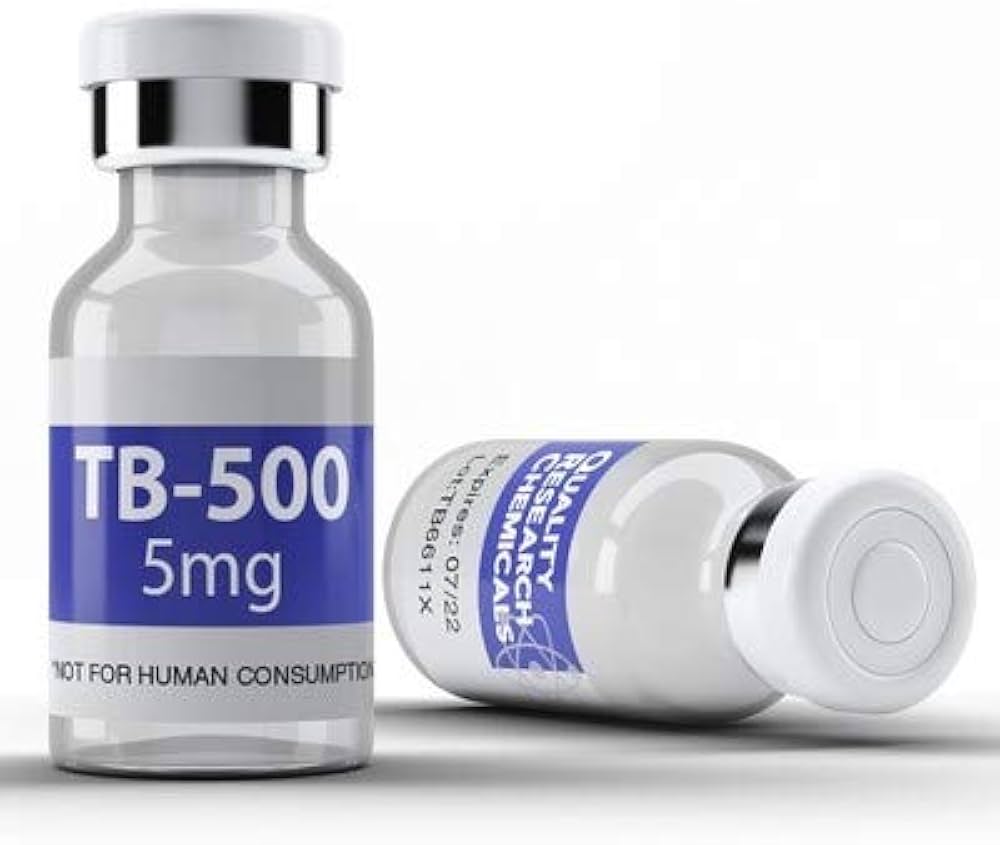
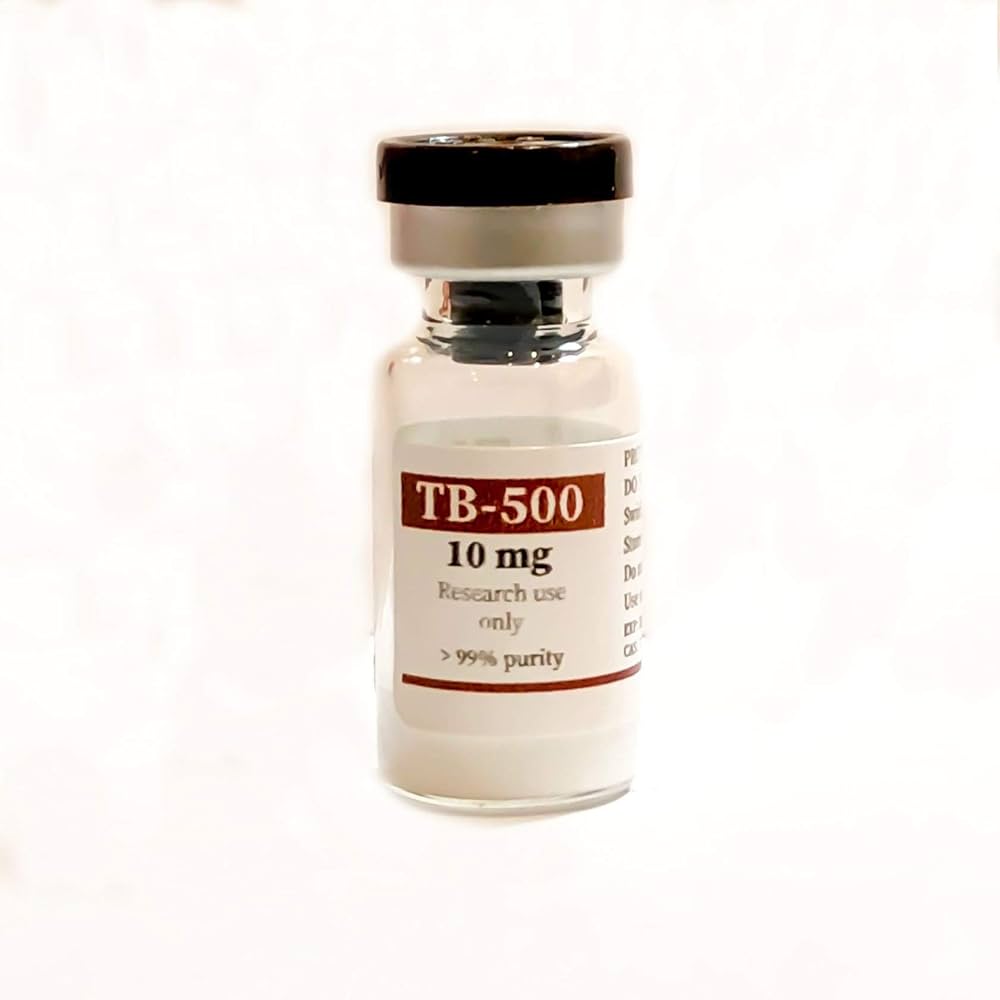


TB-500 | Advanced Tissue Repair & Regenerative Research


Original price was: $90.00.$78.00Current price is: $78.00.
TB-500 is a synthetic version of the naturally occurring peptide Thymosin Beta-4 (Tβ4), a 43-amino acid protein found in high concentrations in blood platelets and wound fluid. In laboratory research, TB-500 is primarily investigated for its role as a major actin-sequestering molecule, facilitating cell migration and tissue remodeling. It is a premier subject for studying the acceleration of repair in muscle, tendon, and ligament tissues due to its potent regenerative and anti-inflammatory signaling pathways.
TB-500: The Science of Cellular Migration and Regenerative Signaling
The Biochemistry of TB-500
The molecular structure of TB-500 corresponds to the active domain of Thymosin Beta-4. As a G-actin sequestering peptide, it maintains a pool of unpolymerized actin monomers, which are essential for the rapid reorganization of the cellular cytoskeleton. This small molecular size allows it to travel through tissues and cross biological barriers more efficiently than larger proteins, enabling systemic research into organ-wide repair mechanisms.
Mechanism of Action: Actin Sequestration and Angiogenesis
In advanced molecular biology and musculoskeletal research, TB-500 functions through several coordinated regenerative pathways:
-
Actin-Binding (G-Actin Sequestration): The peptide binds to globular actin, preventing its polymerization into filaments until needed for cell motility, which is a critical step in the migration of repair cells to injury sites.
-
Promotion of Angiogenesis: Research focuses on the peptide’s ability to stimulate the growth of new blood vessels (angiogenesis) by promoting the migration of endothelial cells and the upregulation of Vascular Endothelial Growth Factor (VEGF).
-
Downregulation of Pro-inflammatory Cytokines: TB-500 is observed to decrease the production of inflammatory mediators, which can prevent excessive scar tissue (fibrosis) and promote functional tissue restoration.
-
Dermal and Soft Tissue Migration: The peptide is investigated for its role in the “shunting” of keratinocytes and fibroblasts, which accelerates the re-epithelialization of skin and the repair of dense connective tissues like tendons.
Primary Research Applications
-
Soft Tissue Repair: Analyzing the restoration of tensile strength in muscle, tendon, and ligament models following mechanical trauma.
-
Cardiovascular Research: Investigating the peptide’s potential for myocardial repair and the reduction of post-ischemic cardiac fibrosis.
-
Corneal Healing Studies: Studying the application of TB-500 in accelerating the repair of corneal epithelial defects.
-
Neuroprotective Research: Observing the impact of Tβ4 analogs on neural cell survival and the stabilization of the blood-brain barrier after injury.
4. Technical Specifications (E-E-A-T Data)
| Feature | Scientific Specification |
| Peptide Sequence | Ac-Ser-Asp-Lys-Pro-Asp-Met-Ala-Glu-Ile-Glu-Lys-Phe-Asp-Lys-Ser-Lys-Leu-Lys-Lys-Thr-Glu-Thr-Gln-Glu-Lys-Asn-Pro-Leu-Pro-Ser-Lys-Glu-Thr-Ile-Glu-Gln-Glu-Lys-Gln-Ala-Gly-Glu-Ser |
| Molecular Formula | $C_{212}H_{350}N_{56}O_{78}S$ |
| Molecular Weight | 4963.5 g/mol |
| CAS Number | 77591-33-4 |
| Purity Grade | $\geq$99% (HPLC & Mass Spec Verified) |
| Physical State | Lyophilized White Powder |
| Solubility | Soluble in Water and Saline |
5. Product FAQ
Q: How does TB-500 differ from BPC-157 in research?
A: While both are regenerative, TB-500 is specifically researched for its role in cell migration and actin-binding, making it highly effective for studying large-scale tissue remodeling. BPC-157 is often studied for its immediate angiogenic and gut-protective effects.
Q: Is TB-500 a full-length protein?
A: TB-500 is typically the synthetic version of the 43-amino acid peptide Thymosin Beta-4. Its small structure is what researchers focus on for its systemic bioavailability and ability to signal repair across various tissue types.
Only logged in customers who have purchased this product may leave a review.
Related products

GLP-1 & METABOLIC RESEARCH COMPOUNDS

GLP-1 & METABOLIC RESEARCH COMPOUNDS

GLP-1 & METABOLIC RESEARCH COMPOUNDS

MUSCLE GROWTH & ANABOLIC PEPTIDES
TB-500 (Thymosin Beta-4) 5mg | High-Purity Regenerative Peptide | $\geq$99% Purity


GROWTH HORMONE RESEARCH PEPTIDES

RESEARCH-GRADE COMPOUNDS

COLLAGEN & RECOVERY PEPTIDES

RESEARCH-GRADE COMPOUNDS
Reviews
There are no reviews yet.