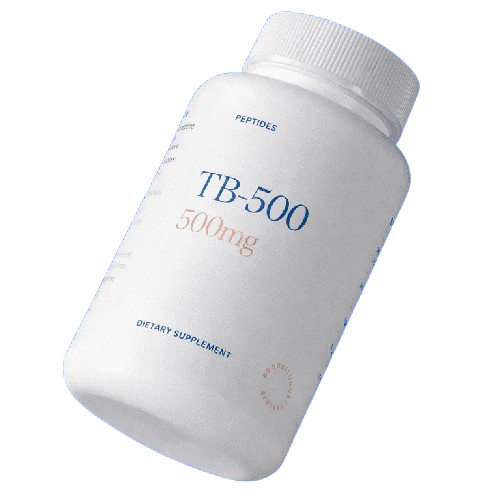
TB-500 (Thymosin Beta-4) 5mg | High-Purity Regenerative Peptide | $\geq$99% Purity

Original price was: $85.00.$80.00Current price is: $80.00.
TB-500 is a synthetic version of the naturally occurring 43-amino acid peptide Thymosin Beta-4 (T$\beta$4). As the body’s primary G-actin sequestering molecule, TB-500 is a master regulator of cellular motility and tissue regeneration. In research models, it is the gold standard for investigating the acceleration of wound healing, the stimulation of angiogenesis (new blood vessel formation), and the repair of connective tissues including tendons, ligaments, and corneal surfaces.
TB-500: The Science of Actin Modulation and Systemic Tissue Repair
The Biochemistry of Thymosin Beta-4
Thymosin Beta-4 is found in high concentrations in blood platelets and wound fluid. Its primary structural role is the sequestration of G-actin (globular actin), which prevents it from polymerizing into F-actin (filamentous actin). This biological “reservoir” of actin allows cells to rapidly reorganize their cytoskeleton, a process essential for migration to the site of an injury. Unlike many growth factors, TB-500 has a very low molecular weight, allowing it to diffuse easily through tissues and act systemically.
Mechanism of Action: The Regenerative Cascade
In advanced tissue engineering research, TB-500 functions through several pleiotropic pathways:
-
Stimulation of Angiogenesis: TB-500 promotes the migration and differentiation of endothelial cells, leading to the formation of new capillaries. This increases nutrient and oxygen delivery to hypoxic, damaged tissues.
-
Cellular Migration and Adhesion: By modulating the actin cytoskeleton, the peptide enables fibroblasts and keratinocytes to move across wound surfaces, significantly shortening the time required for re-epithelialization.
-
Collagen Deposition Regulation: Research indicates that TB-500 helps maintain a healthy balance of collagen, reducing the risk of excessive fibrosis (scar tissue) while ensuring structural integrity in repaired tendons and ligaments.
-
Anti-Inflammatory Signaling: It has been observed to downregulate pro-inflammatory cytokines, creating a “pro-regenerative” environment that prevents chronic inflammation from stalling the healing process.
Primary Research Applications of TB-500
-
Musculoskeletal Repair: Studying the recovery rates of tears in the Achilles tendon, rotator cuff, and medial collateral ligaments.
-
Cardiovascular Research: Investigating the potential for Thymosin Beta-4 to promote cardiac cell survival and vascularization following myocardial ischemia.
-
Ophthalmology: Analyzing the peptide’s ability to repair corneal epithelial defects and reduce ocular inflammation.
-
Dermal Healing: Observing the acceleration of repair in chronic ulcers and severe burn models.
4. Technical Specifications (E-E-A-T Data)
| Feature | Scientific Specification |
| Sequence | Ac-Ser-Asp-Lys-Pro-Asp-Met-Ala-Glu-Ile-Glu-Lys-Phe-Asp-Lys-Ser-Lys-Leu-Lys-Lys-Thr-Glu-Thr-Gln-Glu-Lys-Asn-Pro-Leu-Pro-Ser-Lys-Glu-Thr-Ile-Glu-Gln-Glu-Lys-Gln-Ala-Gly-Glu-Ser |
| Molecular Formula | $C_{212}H_{350}N_{56}O_{78}S_{1}$ |
| Molecular Weight | 4963.5 g/mol |
| CAS Number | 77591-33-4 |
| Purity Grade | $\geq$99% (HPLC & Mass Spec Verified) |
| Solubility | Highly soluble in sterile water or bacteriostatic water |
5. Product FAQ
Q: Is TB-500 the same as Thymosin Beta-4?
A: TB-500 is the synthetic sequence most commonly used in research to represent the active domain of Thymosin Beta-4. While the terms are often used interchangeably in literature, TB-500 is specifically designed for high-purity laboratory applications targeting tissue repair.
Q: Does TB-500 act locally or systemically?
A: One of the most unique research attributes of TB-500 is its ability to travel through the circulatory system to find the site of injury. Because of its low molecular weight and high mobility, it is studied for its systemic regenerative effects, rather than just local application.
Only logged in customers who have purchased this product may leave a review.
Related products

PERFORMANCE PEPTIDES
Hydrolysed Collagen Peptides (Type I & III) | Grass-Fed | Multi-Tissue Support

MUSCLE GROWTH & ANABOLIC PEPTIDES
Follistatin 344 (FST-344) 1mg | High-Purity Myostatin Inhibitor | $\geq$98% Purity

GROWTH HORMONE SECRETAGOGUES

FAT LOSS & METABOLIC PEPTIDES
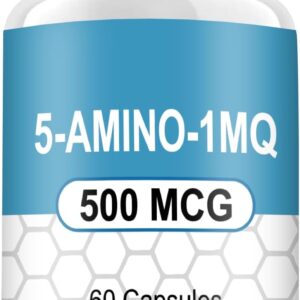
5-Amino-1MQ | Selective NNMT Inhibitor | Metabolic Research Standard

COLLAGEN & RECOVERY PEPTIDES

ENDURANCE & ENERGY PEPTIDES
Epitalon (Epithalamin) 10mg | Telomerase Activator | $\geq$99% Purity
GROWTH HORMONE SECRETAGOGUES
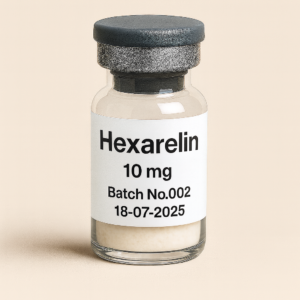
Hexarelin Peptide | High-Purity 2mg Vial | Advanced Cardioprotective Research

COLLAGEN & RECOVERY PEPTIDES
BPC-157 (Body Protection Compound) | 99% Purity Gastric & Tissue Repair

Reviews
There are no reviews yet.