peptide comparison and alternatives
BPC-157 and TB-500 Stack: The Ultimate Recovery Protocol
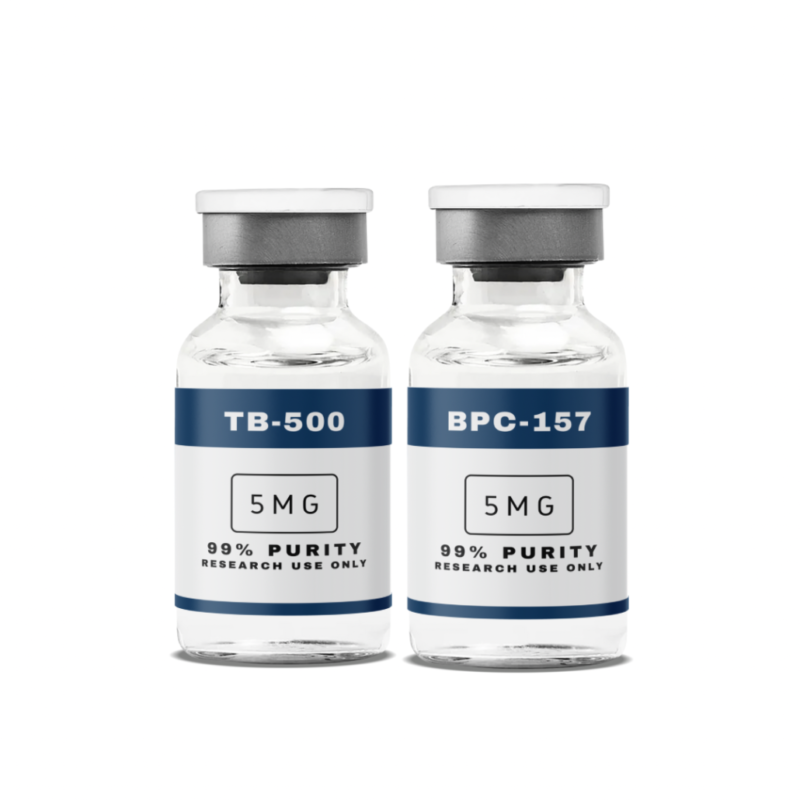
Jun
BPC-157 and TB-500 Stack: The Complete Recovery Protocol Guide (2026)
If you have spent any time researching peptides for injury recovery — whether you are dealing with a stubborn tendon issue, a muscle tear that will not fully heal, post-surgical repair, or simply the accumulated connective tissue wear of years of intensive training — you have almost certainly encountered the BPC-157 and TB-500 stack. And for good reason. The BPC-157 and TB-500 stack is the most widely used, most extensively discussed, and most consistently reported recovery peptide combination in the entire performance and sports medicine community.
But knowing the BPC-157 and TB-500 stack exists and knowing how to run it correctly are two different things. Most of the information circulating about the BPC-157 and TB-500 stack online is either incomplete — covering one compound thoroughly while barely addressing the other — or imprecise about the protocol details that actually determine whether the BPC-157 and TB-500 stack produces the results it is capable of.
This guide changes that. Everything you need to design and execute a complete, correctly structured BPC-157 and TB-500 stack — the pharmacological rationale for the combination, exactly how each compound works, why they are more effective together than apart, the precise dosage and timing protocol for the BPC-157 and TB-500 stack, how to adjust the stack for different injury types, what results to realistically expect, and where to find both compounds at verified purity standards.
Why Stack BPC-157 and TB-500? The Pharmacological Rationale
The BPC-157 and TB-500 stack is not simply two recovery peptides thrown together — it is a pharmacologically deliberate combination built on the principle of complementary mechanisms. Understanding why these two compounds are so effective together requires understanding exactly what each one does and — critically — what each one does not do.
BPC-157 is a targeted, site-specific healing compound. Its primary mechanisms — angiogenesis at injury sites, fibroblast activation, collagen synthesis stimulation, and FAK-paxillin pathway activation — are all focused on the injury site itself. BPC-157 is extraordinarily effective at driving localised repair where it is needed — but it does not produce the systemic, body-wide healing environment that allows the entire musculoskeletal system to recover simultaneously.
TB-500 is a systemic healing compound. As a synthetic analogue of Thymosin Beta-4 — a naturally occurring peptide expressed throughout the body — TB-500 promotes cell migration throughout the entire body to injury sites, reduces systemic fibrosis, upregulates actin for global tissue repair, and restores flexibility and range of motion in connective tissue that has undergone repair. TB-500 creates the systemic biological environment in which healing can occur — but it lacks the targeted, site-specific repair potency that BPC-157 provides at the injury location itself.
Together the BPC-157 and TB-500 stack covers both dimensions simultaneously — BPC-157 driving aggressive localised repair at the injury site while TB-500 optimises the systemic healing environment that supports recovery throughout the entire body. This complementary coverage is precisely why the BPC-157 and TB-500 stack consistently produces results that neither compound achieves alone — not because the two compounds overlap but because they address entirely different aspects of the same healing problem from opposite directions.
BPC-157 in the Stack: Mechanism Deep Dive
Understanding BPC-157’s contribution to the BPC-157 and TB-500 stack requires appreciating the breadth of its localised healing mechanisms — each addressing a different rate-limiting step in the tissue repair cascade.
Angiogenesis — restoring vascular supply to damaged tissue: BPC-157 is one of the most potent known stimulators of VEGF — Vascular Endothelial Growth Factor — the primary driver of new capillary formation. Injured connective tissue — particularly tendons, ligaments, and muscle-tendon junctions — has notoriously poor blood supply that severely limits healing speed. BPC-157’s angiogenic activity directly addresses this limitation by rebuilding the microvascular network that delivers oxygen, nutrients, and growth factors to repair cells at the injury site. As documented in PubMed’s BPC-157 angiogenesis research, this vascular restoration mechanism is one of the most reproducible and most clinically significant findings across the entire BPC-157 literature.
FAK-paxillin pathway activation — driving fibroblast activity: BPC-157 activates the FAK-paxillin signalling cascade that governs fibroblast migration to injury sites and subsequent collagen deposition — directly accelerating the structural reconstruction of damaged connective tissue at the molecular level. This mechanism is particularly relevant for the BPC-157 and TB-500 stack because fibroblast activity is the primary cellular driver of tendon and ligament repair — the tissue types most commonly addressed by this stack in athletic populations.
Anti-inflammatory modulation: BPC-157 modulates the inflammatory signalling at injury sites in a physiologically appropriate manner — reducing the chronic dysregulated inflammation that impairs healing while preserving the acute inflammatory signals that drive productive repair. This distinction between helpful and harmful inflammation is central to BPC-157’s value in the BPC-157 and TB-500 stack for athletes whose injuries often involve both acute damage and chronic inflammatory accumulation simultaneously.
Gut protection under training stress: One dimension of BPC-157’s contribution to the BPC-157 and TB-500 stack that is frequently overlooked is its protection of gut integrity under training stress. Intensive training increases intestinal permeability — reducing the efficiency of nutrient absorption that fuels tissue repair. BPC-157’s gastroprotective activity helps maintain the gut barrier that determines how effectively the amino acids required for connective tissue rebuilding are absorbed and delivered to repair sites. Explore our BPC-157 product page for full specifications, our BPC-157 benefits article for the complete evidence base, and our BPC-157 muscle recovery guide for the detailed muscle-specific research overview.
TB-500 in the Stack: Mechanism Deep Dive
TB-500’s contribution to the BPC-157 and TB-500 stack operates at the systemic level — creating the body-wide biological environment that BPC-157’s localised repair activity depends on for maximum effectiveness.
Actin upregulation — the foundation of cell movement: TB-500 works primarily by upregulating actin — the structural protein that forms the cytoskeletal framework cells require to migrate and move. Cell migration is fundamental to healing — repair cells must physically travel to injury sites to perform their functions. By upregulating actin, TB-500 enhances the migratory capacity of every repair-relevant cell type in the body simultaneously — including fibroblasts, myoblasts, endothelial cells, and immune cells — accelerating the delivery of the cellular workforce that drives repair throughout the entire musculoskeletal system.
Systemic cell migration to injury sites: The practical consequence of TB-500’s actin upregulation is enhanced migration of repair cells from their normal locations throughout the body to wherever healing is required — making TB-500 a uniquely non-site-specific recovery compound. While BPC-157 works most effectively when administered near the specific injury location, TB-500 in the BPC-157 and TB-500 stack works systemically regardless of where it is injected — distributing its healing-facilitating effects throughout the entire body simultaneously.
Anti-fibrotic activity: TB-500 reduces fibrosis — the formation of inferior, disorganised scar tissue that replaces damaged connective tissue when healing is incomplete or poorly regulated. Fibrosis is one of the primary causes of reduced performance and chronic discomfort following tendon, ligament, and muscle injuries — TB-500’s anti-fibrotic activity in the BPC-157 and TB-500 stack ensures that repaired tissue maintains higher structural and functional quality than scar tissue formation alone would produce.
Flexibility and range of motion restoration: A consistently reported and practically significant effect of TB-500 in the BPC-157 and TB-500 stack is improved flexibility and restored range of motion in tissues that have undergone repair — reducing the stiffness and movement restriction that typically accompanies connective tissue healing and that limits return to full athletic function. Explore our TB-500 product page for full TB-500 specifications.
BPC-157 and TB-500 Stack: Complete Dosage and Protocol Guide
The following BPC-157 and TB-500 stack protocol information is provided for reference based on published research and established use protocols. It does not constitute medical advice.
Loading Phase — Weeks 1 to 4
The loading phase of the BPC-157 and TB-500 stack delivers the highest compound concentration to establish an aggressive initial healing environment. This is the phase where the most significant tissue repair activity is initiated.
BPC-157 dosage in loading phase:
- Dose: 250 mcg to 500 mcg per day
- Frequency: Once daily
- Administration: Subcutaneous injection — near the injury site where practically possible for localised injuries, standard subcutaneous sites (abdomen, outer thigh) for systemic recovery
- Timing: Flexible — consistency of daily administration is the priority
TB-500 dosage in loading phase:
- Dose: 2 mg to 2.5 mg twice weekly
- Frequency: Twice weekly — for example Monday and Thursday
- Administration: Subcutaneous injection at any standard site — TB-500 works systemically regardless of injection location
- Note: TB-500 does not need to be injected near the injury site — its systemic mechanism means injection site location does not affect its healing reach
Maintenance Phase — Weeks 5 to 12
Following the loading phase the BPC-157 and TB-500 stack transitions to a lower-frequency maintenance protocol that sustains the healing environment while reducing compound usage and associated cost.
BPC-157 dosage in maintenance phase:
- Dose: 250 mcg to 500 mcg
- Frequency: Every other day — 3 to 4 times weekly
- Administration: Same as loading phase
TB-500 dosage in maintenance phase:
- Dose: 2 mg once weekly
- Frequency: Once weekly — reduced from twice weekly in loading phase
- Administration: Standard subcutaneous site
BPC-157 and TB-500 Stack Dosage Reference Table
| Phase | BPC-157 Dose | BPC-157 Frequency | TB-500 Dose | TB-500 Frequency |
|---|---|---|---|---|
| Loading (Weeks 1–4) | 250–500 mcg | Daily | 2–2.5 mg | Twice weekly |
| Maintenance (Weeks 5–12) | 250–500 mcg | Every other day | 2 mg | Once weekly |
| Acute injury (intense) | 500 mcg | Twice daily | 2.5 mg | Twice weekly |
Use our peptide reconstitution calculator to calculate exact draw volumes for your chosen BPC-157 and TB-500 stack dosages and our how to mix BPC-157 with bac water guide for complete BPC-157 reconstitution instructions.
BPC-157 and TB-500 Stack: Application by Injury Type
The BPC-157 and TB-500 stack protocol can be adjusted based on the specific injury type being addressed. Here is how the stack applies across the most common athletic injury categories:
Tendon and Ligament Injuries
The BPC-157 and TB-500 stack is most extensively used — and most consistently reported to produce results — for tendon and ligament injuries. These tissues have poor blood supply and slow natural healing rates — precisely the conditions that BPC-157’s angiogenic mechanism and TB-500’s cell migration promotion address most directly. Common applications include Achilles tendinopathy, patellar tendon issues, rotator cuff strain, lateral epicondyle tendinopathy, and ligament sprains across all major joints.
Protocol adjustment for tendons and ligaments: Prioritise site-specific BPC-157 injection — subcutaneously as close to the affected tendon or ligament as practically possible — for maximum localised angiogenic and fibroblast activity at the specific injury site. TB-500 injection site remains standard — its systemic mechanism ensures body-wide healing support regardless of injection location. Explore our peptides for healing guide for the complete healing peptide evidence framework.
Muscle Tears and Strains
For acute muscle tears and chronic muscle strains the BPC-157 and TB-500 stack addresses both the structural muscle damage and the connective tissue elements within and surrounding the injured muscle. The loading phase protocol is particularly important for acute muscle injuries — establishing aggressive early intervention during the first 72 hours following the injury when the inflammatory and proliferative phases of healing are most active.
Protocol adjustment for muscle injuries: Higher BPC-157 dosing at 500 mcg daily during the loading phase for acute muscle tears. Consider twice-daily BPC-157 injections in the first 5 to 7 days following a severe acute muscle tear — one injection near the injury site and one at a standard subcutaneous site for combined localised and systemic coverage. Our detailed BPC-157 muscle recovery article covers the complete muscle-specific research evidence.
Post-Surgical Recovery
The BPC-157 and TB-500 stack is increasingly used in post-surgical recovery contexts — particularly following procedures involving connective tissue repair, ligament reconstruction, or musculoskeletal surgery. Both compounds’ pro-healing and anti-fibrotic mechanisms directly support the goals of post-surgical recovery — accelerating tissue repair, reducing scar formation, and restoring functional mobility.
Protocol adjustment for post-surgical recovery: Begin the BPC-157 and TB-500 stack as soon as is appropriate post-surgery — the earlier the intervention the more effectively both compounds can influence the initial inflammatory and proliferative healing phases. Coordinate with the supervising medical team before beginning any peptide protocol following surgical procedures.
Chronic Overuse Injuries
For chronic tendinopathy, repetitive strain injuries, and the accumulated connective tissue wear of long-term intensive training — the BPC-157 and TB-500 stack addresses the underlying tissue degeneration that conventional rest and physiotherapy alone struggle to reverse.
Protocol adjustment for chronic injuries: Extend the stack duration to the full 12-week protocol. The slower, more complex repair biology of chronically degenerated tissue requires sustained BPC-157 and TB-500 stack intervention over a longer period than acute injuries. Continue through the full maintenance phase even when symptomatic improvement is noted early — structural tissue repair continues beyond pain resolution.
Enhancing the BPC-157 and TB-500 Stack With Performance Peptides
For athletes who need to maintain training and performance development alongside injury recovery — extending the BPC-157 and TB-500 stack with GH-stimulating performance peptides creates the most comprehensive recovery and performance protocol available.
BPC-157 and TB-500 stack + CJC-1295 + Ipamorelin: The addition of CJC-1295 and Ipamorelin to the BPC-157 and TB-500 stack creates a protocol that simultaneously drives GH-supported anabolic tissue repair and targeted connective tissue healing. GH elevation from CJC-1295 and Ipamorelin increases the anabolic environment in which the BPC-157 and TB-500 stack operates — elevating IGF-1, improving nitrogen retention, and enhancing protein synthesis in the recovering tissue alongside the direct repair mechanisms of both stack compounds. Explore our CJC-1295 + Ipamorelin blend, CJC-1295 dosage guide, and best peptide stack guide for the complete combined performance and recovery protocol.
BPC-157 and TB-500 stack + collagen peptides: Daily oral collagen peptide supplementation provides the amino acid building blocks for connective tissue synthesis that the BPC-157 and TB-500 stack’s biological repair machinery requires. The cellular fibroblast activity and collagen synthesis stimulation driven by BPC-157 requires adequate proline, glycine, and hydroxyproline substrate — collagen peptides deliver exactly these amino acids through the bloodstream to the active repair sites. Browse our collagen peptides range for the full range of Type I, II, and III collagen options.
What to Realistically Expect From the BPC-157 and TB-500 Stack
Setting honest expectations before beginning the BPC-157 and TB-500 stack ensures you can accurately assess your response and make informed decisions about protocol continuation and adjustment.
Weeks 1 to 2: Reduced pain and inflammation at the injury site from BPC-157’s anti-inflammatory activity and TB-500’s early cell migration promotion. Most users of the BPC-157 and TB-500 stack report this as the first noticeable outcome — not structural repair, but a meaningful reduction in the pain and swelling that limits function.
Weeks 2 to 4: Improved range of motion and reduced stiffness as TB-500’s flexibility-restoring properties become apparent. Initial functional improvement beyond simple pain reduction — the beginning of genuine structural healing from BPC-157’s angiogenic and fibroblast-activating mechanisms.
Weeks 4 to 8: Meaningful structural improvement — restored strength in the recovering tissue, improved stability in affected joints, and progressive return of full athletic function. This is where the BPC-157 and TB-500 stack’s most significant results become apparent for most users.
Weeks 8 to 12: Continued refinement of tissue quality — reduced scar tissue from TB-500’s anti-fibrotic activity, improved load-bearing capacity, and approach to full functional recovery for most injury types.
Important reality check: The BPC-157 and TB-500 stack accelerates healing — it does not eliminate the healing timeline entirely. Severe injuries, chronically degenerated tissue, and post-surgical recovery all require sustained, patient protocol adherence alongside appropriate physiotherapy and progressive rehabilitation. The BPC-157 and TB-500 stack is most effectively used as a biological amplifier of a comprehensive recovery programme rather than as a standalone treatment.
Frequently Asked Questions
Q: Why stack BPC-157 and TB-500 instead of using one alone? A: BPC-157 provides targeted localised repair at the injury site — angiogenesis, fibroblast activation, collagen synthesis. TB-500 provides systemic healing support — cell migration throughout the body, anti-fibrotic activity, flexibility restoration. They address entirely different aspects of the same healing problem and are more effective together than either compound alone. The BPC-157 and TB-500 stack is the gold standard recovery combination precisely because the two mechanisms are complementary rather than redundant.
Q: What is the correct dosage for the BPC-157 and TB-500 stack? A: Loading phase — BPC-157 at 250 mcg to 500 mcg daily alongside TB-500 at 2 mg to 2.5 mg twice weekly. Maintenance phase — BPC-157 at 250 mcg to 500 mcg every other day alongside TB-500 at 2 mg once weekly. Use our peptide reconstitution calculator for exact draw volumes.
Q: How long should the BPC-157 and TB-500 stack run? A: A complete BPC-157 and TB-500 stack protocol runs 8 to 12 weeks — 4 weeks of loading phase followed by 4 to 8 weeks of maintenance phase depending on injury severity. Chronic injuries benefit from the full 12-week protocol. Acute injuries may resolve within 8 weeks of consistent stack use.
Q: Do BPC-157 and TB-500 need to be injected at the injury site? A: For BPC-157 — yes, site-specific injection near the injury is recommended where practical as it enhances localised delivery. For TB-500 — no. TB-500 works systemically regardless of injection site location. In the BPC-157 and TB-500 stack, BPC-157 is injected near the injury while TB-500 is injected at any convenient standard subcutaneous site.
Q: Can the BPC-157 and TB-500 stack be used while continuing to train? A: Yes — the BPC-157 and TB-500 stack is specifically suited to athletes who need to continue training while managing recovery. Both compounds actively accelerate biological repair processes concurrently with training stress. For athletes using the stack while training, pairing it with CJC-1295 and Ipamorelin provides the GH anabolic environment that supports both training adaptation and enhanced recovery simultaneously. Explore our CJC-1295 + Ipamorelin blend.
Q: Where can I buy the BPC-157 and TB-500 stack? A: TitanForge Peptides supplies both BPC-157 and TB-500 individually and as the pre-built Recovery & Repair Stack bundle — both compounds at independently verified 99%+ purity with a full Certificate of Analysis on every batch. Shop the Recovery & Repair Stack here or shop BPC-157 and TB-500 individually.
