igf-1 lr3 dosage and usage
IGF-1 LR3 Dosage Guide: Get This Right or Waste Every Drop
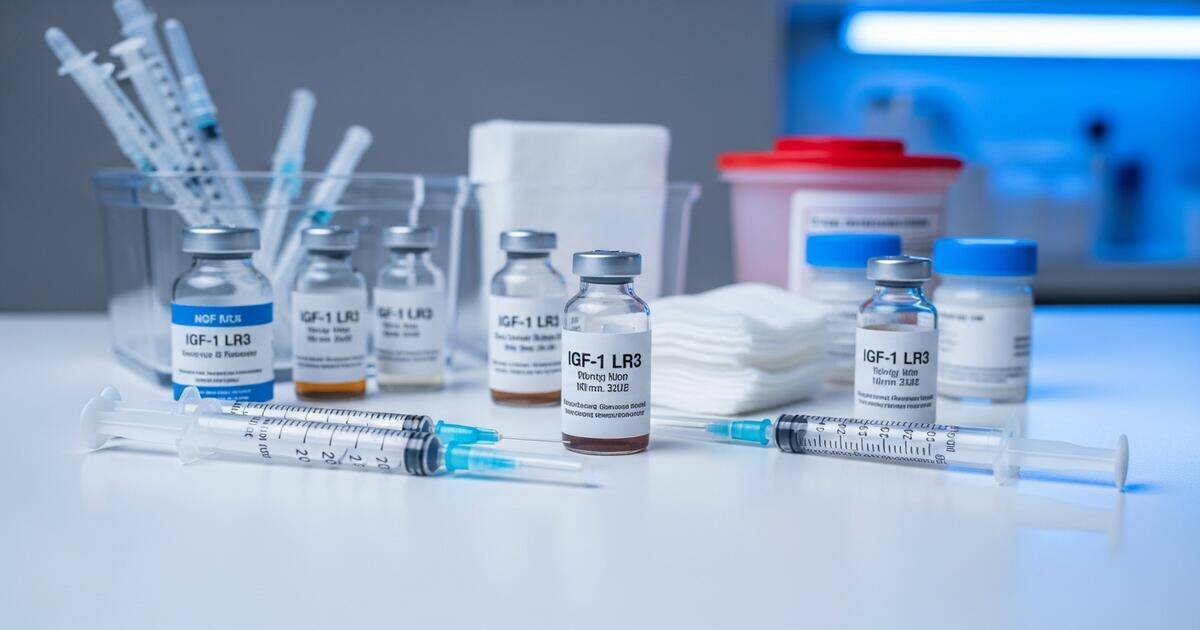
Jun
IGF-1 LR3 Dosage Guide for Bodybuilders: The Complete 2026 Protocol Breakdown
IGF-1 LR3 is the most potent anabolic peptide available to bodybuilders — and it is also the one where getting the dosage wrong carries the most significant consequences. Too low an IGF-1 LR3 dosage and you produce no meaningful anabolic response, wasting a compound that costs significantly more than most peptides in your protocol. Too high an IGF-1 LR3 dosage and you risk receptor desensitisation, hypoglycaemic episodes, and the kind of side effects that make continuing the protocol impractical. The timing of your IGF-1 LR3 dosage matters as much as the amount — and the cycle structure determines whether you maintain receptor sensitivity across an entire protocol or burn it out after three weeks.
This IGF-1 LR3 dosage guide covers everything you need to know to get this compound right — the pharmacology that explains why the dosage rules are what they are, the exact IGF-1 LR3 dosage ranges for every experience level, the optimal timing windows for maximum anabolic effect, the cycle structure that preserves receptor sensitivity, how IGF-1 LR3 dosage changes when stacking with other compounds, the reconstitution and calculation process, and the most common IGF-1 LR3 dosage mistakes that cost bodybuilders results and money.
IGF-1 LR3 from TitanForge Peptides is a research-grade compound supplied for in vitro laboratory use only. The dosage information in this guide is provided for reference based on published research. It does not constitute medical advice. Always consult a qualified healthcare professional before beginning any IGF-1 LR3 protocol.
What Makes IGF-1 LR3 Different From Standard IGF-1
Before examining IGF-1 LR3 dosage specifically, understanding why the LR3 modification fundamentally changes the pharmacokinetics — and therefore the dosage requirements — of this compound is essential for anyone designing a protocol.
Native IGF-1 — the form naturally produced in the liver following GH stimulation — has a circulating half-life of approximately 10 to 20 minutes when free in plasma. This extremely short half-life severely limits the window of anabolic activity following any single administration. More significantly native IGF-1 has high binding affinity for IGF-binding proteins — particularly IGFBP-3 — which sequester the majority of circulating IGF-1 and prevent it from reaching muscle IGF-1 receptors.
IGF-1 LR3 addresses both of these limitations through two structural modifications. The LR3 designation refers to a substitution of Glutamic acid with Arginine at position 3 of the IGF-1 molecule combined with a 13-amino-acid N-terminal extension. These modifications dramatically reduce IGF-1 LR3’s binding affinity for IGFBPs — meaning the vast majority of administered IGF-1 LR3 circulates freely in plasma — while simultaneously extending its half-life to approximately 20 to 30 hours. As documented in PubMed’s IGF-1 LR3 pharmacokinetics research, this extended half-life is the primary pharmacological property that makes IGF-1 LR3 dosage practical for bodybuilding protocols.
The result is a compound that circulates freely, reaches muscle IGF-1 receptors directly, and remains biologically active for a full day following each injection — making once-daily IGF-1 LR3 dosage sufficient to maintain continuous receptor activation throughout a cycle.
How IGF-1 LR3 Works: The Anabolic Mechanism
IGF-1 LR3 dosage produces its anabolic effects by binding to and activating the IGF-1 receptor (IGF-1R) expressed on the surface of muscle cells. This receptor activation initiates the PI3K-Akt-mTOR signalling cascade — the master anabolic pathway governing muscle protein synthesis, muscle cell hypertrophy, and satellite cell activation.
The mTOR pathway activation from IGF-1 LR3 dosage drives three simultaneous anabolic processes:
Muscle protein synthesis acceleration — mTOR activation directly upregulates the translation of muscle structural proteins — including myosin heavy chain and actin — producing net positive muscle protein balance that drives hypertrophy when combined with appropriate training stimulus and nutritional support.
Satellite cell activation — IGF-1 LR3 dosage activates the quiescent satellite cells that reside in the basal lamina of muscle fibres — the muscle-specific stem cells responsible for generating new myonuclei following mechanical damage from training. New myonuclei increase the synthetic capacity of muscle fibres — one of the fundamental mechanisms through which muscle fibres become larger and stronger over time.
Anti-catabolic activity — IGF-1 LR3 dosage activates Akt-mediated phosphorylation of FOXO transcription factors — the cellular regulators of muscle protein breakdown — suppressing the catabolic pathways that degrade muscle protein during caloric restriction, high training volume, or elevated cortisol states. This anti-catabolic dimension of IGF-1 LR3 dosage is particularly relevant during cutting phases where preserving lean mass under caloric deficit is the primary body composition challenge.
Understanding that IGF-1 LR3 works downstream of the GH-IGF-1 axis — bypassing the liver’s rate-limiting step in IGF-1 production — is what makes the combination of IGF-1 LR3 dosage with CJC-1295 and Ipamorelin so powerful. The GH secretagogues drive upstream GH and liver IGF-1 production while IGF-1 LR3 simultaneously delivers direct receptor-level activation in muscle tissue — covering the entire anabolic axis from top to bottom. Explore our CJC-1295 + Ipamorelin blend for the upstream GH component that pairs with IGF-1 LR3 dosage most effectively.
IGF-1 LR3 Dosage: The Core Ranges by Experience Level
The appropriate IGF-1 LR3 dosage varies significantly by experience level — not because less experienced users cannot physiologically handle higher doses, but because receptor sensitivity is highest at the beginning of a cycle and the risk of receptor desensitisation increases with dosage. Starting conservatively preserves receptor sensitivity across the full protocol duration and allows accurate assessment of individual response before escalating.
Beginner IGF-1 LR3 Dosage
Dose: 20 mcg to 40 mcg per day Frequency: Once daily Timing: Post-training on training days — within 30 minutes of completing your session Cycle length: 4 weeks maximum Break period: Minimum 4 weeks off between cycles
The beginner IGF-1 LR3 dosage range is deliberately conservative — 20 mcg to 40 mcg represents the threshold where meaningful receptor activation occurs without the hypoglycaemic risk that higher doses carry. At this IGF-1 LR3 dosage range, most first-time users experience improved muscle fullness, enhanced recovery speed, and noticeable improvements in training performance without significant side effects.
Intermediate IGF-1 LR3 Dosage
Dose: 40 mcg to 80 mcg per day Frequency: Once daily post-training Cycle length: 4 to 6 weeks maximum Break period: Minimum 4 to 6 weeks off
The intermediate IGF-1 LR3 dosage range is where the most significant anabolic effects are consistently reported — sufficient receptor activation to drive meaningful mTOR signalling, satellite cell activation, and muscle protein synthesis acceleration without entering the higher-risk territory above 80 mcg where hypoglycaemia and receptor downregulation become more pronounced concerns.
Advanced IGF-1 LR3 Dosage
Dose: 80 mcg to 120 mcg per day Frequency: Once daily post-training Cycle length: Maximum 4 weeks at this dosage range — receptor desensitisation risk increases significantly above 6 weeks at advanced doses Break period: Minimum 6 to 8 weeks off before the next cycle
The advanced IGF-1 LR3 dosage range should only be considered by experienced users with established familiarity with the compound’s individual effects at lower doses. At 80 mcg to 120 mcg daily the anabolic stimulus is substantial — but so is the hypoglycaemia risk, and the receptor downregulation that follows extended high-dose use can significantly reduce responsiveness in subsequent cycles. The extended break period at this IGF-1 LR3 dosage range is not optional — it is the mechanism by which receptor sensitivity is restored before the next protocol.
IGF-1 LR3 Dosage Reference Table:
| Experience Level | IGF-1 LR3 Dosage | Cycle Length | Break Period | Timing |
|---|---|---|---|---|
| Beginner | 20 – 40 mcg/day | 4 weeks | 4 weeks minimum | Post-training |
| Intermediate | 40 – 80 mcg/day | 4 – 6 weeks | 4 – 6 weeks | Post-training |
| Advanced | 80 – 120 mcg/day | 4 weeks maximum | 6 – 8 weeks | Post-training |
IGF-1 LR3 Dosage Timing: Why Post-Training Is Non-Negotiable
The single most important timing principle for IGF-1 LR3 dosage is post-training administration — and it is not merely a preference, it is rooted in a specific physiological mechanism that makes post-training the only timing window that fully exploits IGF-1 LR3’s anabolic potential.
Why post-training IGF-1 LR3 dosage maximises muscle growth:
Resistance training creates a state of elevated muscle IGF-1 receptor sensitivity — the mechanical stress of training upregulates IGF-1R expression and sensitises the downstream mTOR signalling machinery in the trained muscle groups. This training-induced receptor sensitisation creates a window of dramatically enhanced responsiveness to IGF-1 LR3 dosage — the same dose administered post-training produces a substantially greater anabolic stimulus than the same dose administered at rest.
The post-training IGF-1 LR3 dosage window — ideally within 30 minutes of completing your training session — captures this sensitisation peak before it diminishes. Administering IGF-1 LR3 dosage at other times of day — morning fasted, mid-afternoon, or pre-sleep — misses this window entirely and produces significantly reduced anabolic output per dose.
On rest days: On non-training days the post-training timing window does not exist. Most protocols either omit IGF-1 LR3 dosage on rest days entirely — preserving receptor sensitivity and reducing total cycle cost — or administer a reduced dose in the morning fasted state. The omit-on-rest-days approach is generally preferred for shorter 4-week cycles. A reduced 20 mcg to 30 mcg rest day dose is more practical for 6-week intermediate cycles where maintaining some daily receptor activation across the full protocol is the priority.
Use our peptide reconstitution calculator to calculate your exact draw volume for your chosen IGF-1 LR3 dosage and reconstitution ratio.
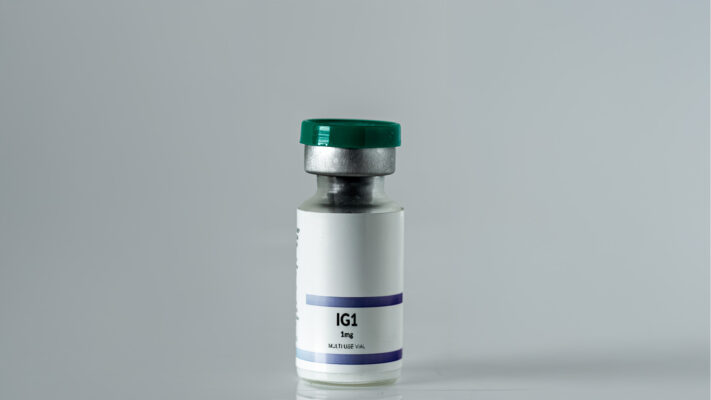
IGF-1 LR3 Dosage and Hypoglycaemia: The Critical Safety Consideration
The most important safety consideration in any IGF-1 LR3 dosage protocol is the risk of hypoglycaemia — low blood sugar. IGF-1 receptors are expressed in multiple tissue types beyond muscle — including adipose tissue, liver, and the pancreas — and IGF-1 LR3 dosage activates these receptors systemically. In metabolically sensitive individuals or at higher IGF-1 LR3 dosages, this systemic receptor activation can produce insulin-like glucose-lowering effects that result in symptomatic hypoglycaemia.
Hypoglycaemia risk is highest:
- At IGF-1 LR3 dosages above 80 mcg
- When IGF-1 LR3 dosage is administered in a fasted state
- In individuals with naturally low blood glucose
- When IGF-1 LR3 dosage is combined with other insulin-sensitising compounds
Practical hypoglycaemia management for IGF-1 LR3 dosage protocols:
- Always administer IGF-1 LR3 dosage post-training — not fasted
- Consume a post-training meal containing both protein and carbohydrates within 15 to 30 minutes of your IGF-1 LR3 dosage injection
- Keep a fast-acting carbohydrate source (glucose tablets, fruit juice, dextrose) available during and after IGF-1 LR3 dosage administration
- Start at the beginner IGF-1 LR3 dosage range of 20 mcg to 40 mcg to assess individual glucose response before escalating
- Monitor for hypoglycaemia symptoms — dizziness, shakiness, cold sweat, confusion — particularly in the 2 to 3 hours following IGF-1 LR3 dosage administration
IGF-1 LR3 Dosage in Stacks: How Combining Changes the Protocol
IGF-1 LR3 dosage within a broader peptide stack requires specific adjustments compared to solo use — because the GH elevation from concurrent CJC-1295 and Ipamorelin administration naturally elevates endogenous liver IGF-1 production alongside the direct receptor activation from IGF-1 LR3 dosage.
IGF-1 LR3 dosage in the advanced bodybuilding stack:
When running IGF-1 LR3 dosage alongside CJC-1295 and Ipamorelin — the most comprehensive performance peptide stack for bodybuilding — the combined IGF-1 signalling from both upstream GH stimulation and direct IGF-1 LR3 receptor activation means lower IGF-1 LR3 dosages are required to achieve the target anabolic stimulus compared to IGF-1 LR3 solo use. Start at the lower end of the appropriate experience range — typically 20 mcg to 40 mcg post-training daily — when adding IGF-1 LR3 dosage to an existing CJC-1295 and Ipamorelin stack.
The full advanced bodybuilding stack protocol is covered in our best peptide stack guide — including the exact combination of CJC-1295, Ipamorelin, and IGF-1 LR3 dosage for maximum muscle growth.
IGF-1 LR3 dosage with recovery peptides:
BPC-157 and TB-500 run concurrently with IGF-1 LR3 dosage protocols provide connective tissue protection against the increased training loads that IGF-1 LR3’s anabolic stimulus enables. As muscles develop more rapidly under IGF-1 LR3 dosage, the tendons and ligaments that must support increased strength outputs require corresponding protection — making BPC-157 the essential concurrent recovery peptide in any IGF-1 LR3 dosage protocol running at intermediate or advanced doses. Explore our BPC-157 product page, TB-500 product page, and Recovery & Repair Stack for the complete recovery companion protocol.
IGF-1 LR3 Dosage: Reconstitution and Calculation
IGF-1 LR3 requires a specific reconstitution approach that differs from most other peptides — it uses 0.6% acetic acid as the primary reconstitution solvent rather than bacteriostatic water. This is because IGF-1 LR3’s stability in solution requires a mildly acidic pH that bacteriostatic water does not provide. After reconstitution in acetic acid, the solution is diluted with bacteriostatic water to the working concentration.
Standard IGF-1 LR3 Dosage Reconstitution Protocol:
- Add 1ml of 0.6% acetic acid to the IGF-1 LR3 lyophilized powder vial — swirl gently, never shake
- Add 1ml of bacteriostatic water to achieve a 2ml total volume and neutralise the acidity partially
- For a 1mg IGF-1 LR3 vial reconstituted in 2ml total volume — concentration is 500 mcg per ml
- A 20 mcg beginner IGF-1 LR3 dosage = 0.04ml draw. A 50 mcg dose = 0.1ml. An 80 mcg dose = 0.16ml
- Store at 2 to 8°C, use within 28 days, never freeze
Use our peptide reconstitution calculator to verify your exact draw volumes for any IGF-1 LR3 dosage and reconstitution ratio combination. Our IGF-1 LR3 product page includes full reconstitution guidance specific to each available vial size.
The Most Common IGF-1 LR3 Dosage Mistakes
These are the errors that most commonly undermine IGF-1 LR3 dosage protocols — each one preventable with the right information:
Running cycles too long — The most common and most costly IGF-1 LR3 dosage mistake. Receptor desensitisation begins within 4 to 6 weeks of continuous use at any dosage. Cycles beyond 6 weeks produce diminishing returns and significantly reduce responsiveness in subsequent cycles. Strictly observe the cycle length limits in the dosage table above.
Ignoring the break period — The break period between IGF-1 LR3 dosage cycles is not optional — it is the mechanism by which receptor sensitivity is restored. Insufficient break periods produce progressively weaker responses from each subsequent cycle regardless of the IGF-1 LR3 dosage used.
Fasted administration — Administering IGF-1 LR3 dosage in a fasted state significantly increases hypoglycaemia risk. Always administer post-training followed within 30 minutes by a post-workout meal.
Skipping acetic acid reconstitution — Using bacteriostatic water alone for IGF-1 LR3 reconstitution produces an unstable solution that degrades faster than properly reconstituted IGF-1 LR3. Always use acetic acid as the primary reconstitution solvent.
Starting too high — Beginning an IGF-1 LR3 dosage protocol at the advanced range without prior experience at lower doses creates unnecessary hypoglycaemia risk and makes it impossible to identify what dosage produces your optimal individual response. Always start at beginner dosages and escalate gradually across successive cycles.
Frequently Asked Questions
Q: What is the correct IGF-1 LR3 dosage for bodybuilding? A: For beginners the correct IGF-1 LR3 dosage is 20 mcg to 40 mcg per day post-training in 4-week cycles. For intermediate users 40 mcg to 80 mcg per day in 4 to 6-week cycles. For advanced users 80 mcg to 120 mcg per day in 4-week maximum cycles. Always start at the lower end of your appropriate range and assess individual response before escalating. Our peptide reconstitution calculator calculates exact draw volumes for any dosage.
Q: When should IGF-1 LR3 dosage be administered? A: Post-training — within 30 minutes of completing your training session. Training-induced IGF-1 receptor sensitisation in the worked muscle groups makes the post-training window the only timing that fully exploits IGF-1 LR3’s anabolic potential. On rest days either omit the dose or administer a reduced 20 mcg to 30 mcg morning dose depending on cycle length and goals.
Q: How long should an IGF-1 LR3 dosage cycle run? A: Maximum 4 to 6 weeks depending on dosage range — followed by a minimum 4 to 8 week break period. Receptor desensitisation is the primary limiting factor for cycle length. Longer cycles produce diminishing returns and reduce responsiveness in subsequent protocols. Strictly observing cycle length limits is the most important structural principle of any IGF-1 LR3 dosage protocol.
Q: Can IGF-1 LR3 dosage cause hypoglycaemia? A: Yes — hypoglycaemia is the most important safety consideration in any IGF-1 LR3 dosage protocol. Risk is highest at dosages above 80 mcg, in fasted states, and in metabolically sensitive individuals. Always administer post-training followed by a carbohydrate-containing meal. Start at beginner dosages to assess individual glucose response. Keep fast-acting carbohydrates available during and after administration.
Q: Should I take IGF-1 LR3 every day? A: Most protocols recommend once-daily IGF-1 LR3 dosage post-training on training days with either rest day omission (shorter cycles) or reduced rest day dosing (longer cycles). Daily administration provides continuous receptor activation across the cycle while the strict cycle length and break period rules ensure receptor sensitivity is maintained across successive protocols.
Q: What is the best stack with IGF-1 LR3 dosage? A: The most comprehensive anabolic bodybuilding stack combines IGF-1 LR3 dosage post-training with CJC-1295 and Ipamorelin twice daily for full GH-IGF-1 axis coverage. Adding BPC-157 daily provides the connective tissue protection that the increased training loads IGF-1 LR3 enables require. Our best peptide stack guide covers the complete advanced bodybuilding stack protocol. Our CJC-1295 + Ipamorelin blend and BPC-157 product page carry both companion compounds.
Q: Where can I buy IGF-1 LR3 for my dosage protocol? A: TitanForge Peptides supplies research-grade IGF-1 LR3 at independently verified 99%+ purity with a full Certificate of Analysis on every batch. Shop IGF-1 LR3 here.
