


Recovery & Repair, Stack Recovery Bundle | Synergistic Healing Protocol


Original price was: $260.00.$255.00Current price is: $255.00.
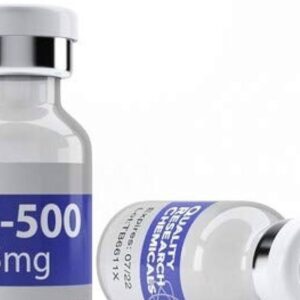
The Recovery & Repair, Stack Recovery Bundle is a scientifically curated pairing of the two most potent regenerative peptides: BPC-157 and TB-500. Designed for comprehensive musculoskeletal research, this bundle targets both localized wound stabilization and systemic cellular migration. By utilizing the Recovery & Repair, Stack Recovery Bundle, researchers can investigate a “dual-pathway” approach to recovery that addresses vascular formation and structural protein regulation simultaneously.
Recovery & Repair, Stack Recovery Bundle: The Gold Standard for Regenerative Synergy
The Biochemistry of the Recovery & Repair, Stack Recovery Bundle
The efficacy of the Recovery & Repair, Stack Recovery Bundle lies in the biological overlap of its two primary components. While BPC-157 provides the “blueprint” and “materials” for localized repair, TB-500 provides the “transportation” for repair cells.
-
BPC-157 (Body Protection Compound): A 15-amino acid peptide that upregulates VEGFR2 expression to initiate angiogenesis. It focuses on stabilizing the site of injury and promoting the growth of new capillaries.
-
TB-500 (Thymosin Beta-4): A 7-amino acid active fragment (Ac-LKKTETQ) that regulates actin polymerization. This allows fibroblasts and endothelial cells to migrate across the tissue matrix to reach the damaged area.
Mechanism of Action: The Dual-Pathway Recovery Protocol
In advanced orthopedic and soft tissue research, the Recovery & Repair, Stack Recovery Bundle functions through a synchronized regenerative cascade:
-
Angiogenic Scaffolding: The BPC-157 component in the Recovery & Repair, Stack Recovery Bundle ensures that the injured tissue is re-vascularized, providing the necessary oxygen and nutrients for metabolic repair.
-
Cellular Mobilization: Simultaneously, the TB-500 component promotes the migration of satellite cells and myoblasts, which are essential for replacing damaged muscle fibers and connective tissue.
-
Extracellular Matrix (ECM) Normalization: The bundle is investigated for its ability to modulate collagen deposition, ensuring that repair results in functional tissue alignment rather than disorganized fibrotic scar tissue.
-
Systemic Anti-Inflammatory Signaling: The Recovery & Repair, Stack Recovery Bundle is studied for its role in suppressing pro-inflammatory cytokines, creating a biochemical environment conducive to long-term healing.
Primary Research Applications of the Stack Recovery Bundle
-
Acute Ligament and Tendon Tears: Analyzing the recovery of tensile strength in models of ACL, MCL, and Achilles tendon injuries.
-
Post-Surgical Recovery: Investigating the acceleration of wound closure and tissue integration following reconstructive procedures.
-
Chronic Overuse Injuries: Studying the reversal of degenerative changes in tendinopathy and chronic joint inflammation.
-
Muscular Atrophy Prevention: Observing the preservation of muscle mass and function during periods of immobilization following trauma.
4. Technical Specifications (E-E-A-T Data)
| Feature | Scientific Specification |
| Bundle Components | BPC-157 (Pentadecapeptide) + TB-500 (Ac-LKKTETQ Fragment) |
| BPC-157 Formula | $C_{62}H_{98}N_{16}O_{22}$ |
| TB-500 Formula | $C_{38}H_{68}N_{10}O_{14}$ |
| Molecular Weights | 1419.5 g/mol (BPC) / 889.0 g/mol (TB) |
| CAS Numbers | 137525-51-0 (BPC) / 77591-33-4 (TB) |
| Purity Grade | $\geq$99% (HPLC & Mass Spec Verified) |
| Stability | Lyophilized for maximum shelf-life and biological activity |
5. Product FAQ
Q: Why is the Recovery & Repair, Stack Recovery Bundle more effective than single peptides?
A: Most tissue injuries involve both structural damage and a lack of blood flow. The Recovery & Repair, Stack Recovery Bundle addresses both by combining the angiogenic signaling of BPC-157 with the cellular mobility benefits of TB-500.
Q: Can the components of the bundle be stored together?
A: For research purposes, the lyophilized powders in the Recovery & Repair, Stack Recovery Bundle are stored in separate vials to maintain the highest purity and stability before reconstitution.
Only logged in customers who have purchased this product may leave a review.
Related products

MUSCLE GROWTH & ANABOLIC PEPTIDES
TB-500 (Thymosin Beta-4) 5mg | High-Purity Regenerative Peptide | $\geq$99% Purity

MUSCLE GROWTH & ANABOLIC PEPTIDES
Follistatin 344 (FST-344) 1mg | High-Purity Myostatin Inhibitor | $\geq$98% Purity


PERFORMANCE STACKS
The Lean Body Stack, Fat Loss Bundle | Metabolic Research Protocol

LONGEVITY & WELLNESS STACKS
The Longevity Stack | Advanced Telomere & Cellular Research Bundle
COLLAGEN & RECOVERY PEPTIDES
TB-500 (Thymosin Beta-4) | Advanced Cellular Migration & Recovery


RESEARCH-GRADE COMPOUNDS


BEGINNER BUNDLES
Beginner’s Wellness Bundle | Foundational Peptide Research Stack

PERFORMANCE PEPTIDES
Hydrolysed Collagen Peptides (Type I & III) | Grass-Fed | Multi-Tissue Support

Reviews
There are no reviews yet.