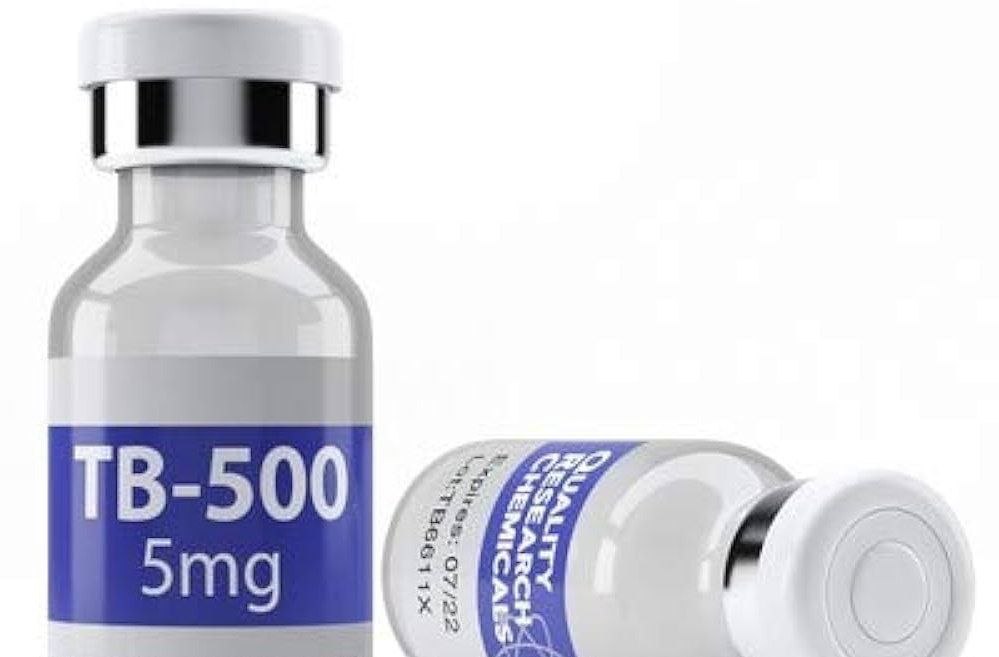
TB-500 (Thymosin Beta-4) | Advanced Cellular Migration & Recovery

Original price was: $100.00.$85.00Current price is: $85.00.
TB-500 (Thymosin Beta-4) is a synthetic version of the naturally occurring 43-amino acid protein found in high concentrations in platelets and wound fluid. Specifically engineered as the active 7-amino acid fragment (Ac-LKKTETQ), TB-500 (Thymosin Beta-4) is a master regulator of actin, the primary protein involved in cell movement. In research environments, it is the premier subject for studying “active recovery,” as it facilitates the rapid migration of repair cells to sites of injury while promoting the growth of new vascular networks.
TB-500 (Thymosin Beta-4): The Science of Cellular Mobility and Angiogenesis
The Biochemistry of Actin Sequestration
The hallmark characteristic of TB-500 (Thymosin Beta-4) is its ability to bind to G-actin (globular actin) and prevent its polymerization into F-actin (filamentous actin). By sequestering G-actin, the peptide maintains a pool of available building blocks that the cell can use to remodel its cytoskeleton rapidly. This “molecular fluidity” is what allows endothelial cells and fibroblasts to navigate through tissues to reach damaged areas.
Mechanism of Action: Systemic Tissue Recovery Pathways
In advanced physiological research, TB-500 (Thymosin Beta-4) functions through several sophisticated regenerative mechanisms:
-
Promotion of Angiogenesis: TB-500 (Thymosin Beta-4) is studied for its ability to stimulate the production of Vascular Endothelial Growth Factor (VEGF), leading to the formation of new capillaries. This restores oxygenation to “hypoxic” injured tissues.
-
Upregulation of Matrix Metalloproteinases (MMPs): The peptide assists in the temporary degradation of the extracellular matrix (ECM), creating “pathways” for repair cells to migrate through dense connective tissue.
-
Anti-Fibrotic Signaling: Research suggests that TB-500 (Thymosin Beta-4) modulates TGF-β signaling, which helps prevent the formation of disorganized scar tissue and promotes functional tissue alignment.
-
Stem Cell Differentiation: In various models, TB-500 (Thymosin Beta-4) is investigated for its capacity to influence the differentiation of satellite cells into mature muscle fibers.
Primary Research Applications of TB-500 (Thymosin Beta-4)
-
Musculoskeletal Injury Models: Analyzing the recovery rate of acute muscle tears, ligament strains, and chronic tendinopathies.
-
Cardiovascular Ischemia: Investigating the peptide’s ability to protect and repair cardiac tissue following oxygen deprivation.
-
Corneal and Dermal Repair: Studying the acceleration of epithelial cell migration in models of ocular or skin surface damage.
-
Neurological Recovery: Observing the role of TB-500 (Thymosin Beta-4) in promoting neurite outgrowth and axonal repair in central nervous system research.
4. Technical Specifications (E-E-A-T Data)
| Feature | Scientific Specification |
| Peptide Sequence | Ac-Ser-Asp-Lys-Pro-Asp-Met-Ala-Glu-Ile-Glu-Lys-Phe-Asp-Lys-Ser-Lys-Leu-Lys-Lys-Thr-Glu-Thr-Gln-Glu-Lys-Asn-Pro-Leu-Pro-Ser-Lys-Glu-Thr-Ile-Glu-Gln-Glu-Lys-Gln-Ala-Gly-Glu-Ser (Full Protein) |
| Active Fragment | Ac-Leu-Lys-Lys-Thr-Glu-Thr-Gln (Ac-LKKTETQ) |
| Molecular Formula | $C_{38}H_{68}N_{10}O_{14}$ (Active Fragment) |
| Molecular Weight | 889.0 g/mol (Active Fragment) |
| CAS Number | 77591-33-4 |
| Purity Grade | $\geq$99% (HPLC & Mass Spec Verified) |
| Physical State | Lyophilized White Powder |
| Solubility | Highly Soluble in Water and Saline |
5. Product FAQ
Q: Why is TB-500 (Thymosin Beta-4) considered a “systemic” recovery peptide?
A: Unlike many compounds that only act locally, TB-500 (Thymosin Beta-4) has a low molecular weight and high mobility, allowing it to travel through the circulatory system to find sites of inflammation or injury throughout the entire research subject.
Q: How does TB-500 (Thymosin Beta-4) differ from BPC-157?
A: While both aid recovery, they have different “specialties.” BPC-157 is primarily a localized “signal” for repair and blood vessel stabilization. TB-500 (Thymosin Beta-4) is the “mover,” focused on cellular migration and the systemic regulation of actin-driven movement.
Only logged in customers who have purchased this product may leave a review.
Related products

COLLAGEN & RECOVERY PEPTIDES

COLLAGEN & RECOVERY PEPTIDES

COLLAGEN & RECOVERY PEPTIDES

COLLAGEN & RECOVERY PEPTIDES
Pentosan Polysulphate Peptide Analogue | Advanced GAG Mimetic Research

COLLAGEN & RECOVERY PEPTIDES
Vegan Collagen Peptides | Plant-Based Biomimetic Booster | 98% Bioavailability


RESEARCH-GRADE COMPOUNDS

COLLAGEN & RECOVERY PEPTIDES
Collagen Peptides + Glucosamine + Chondroitin | Joint Matrix Repair

COLLAGEN & RECOVERY PEPTIDES
LNAC (N-Acetyl Cysteine) + Glycine Peptide | Glutathione Precursor

Reviews
There are no reviews yet.