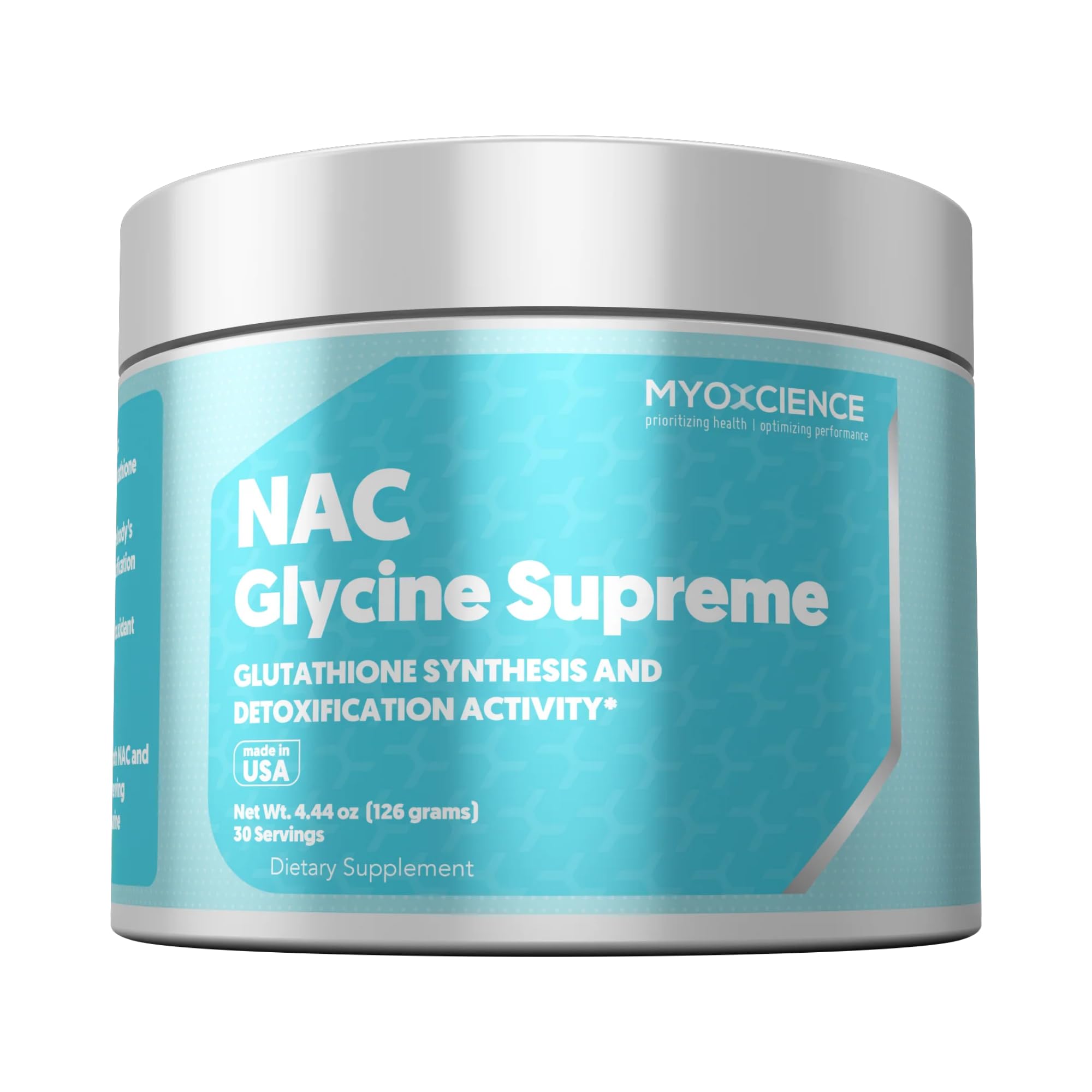
LNAC (N-Acetyl Cysteine) + Glycine Peptide | Glutathione Precursor

Original price was: $45.00.$37.00Current price is: $37.00.
The LNAC (N-Acetyl Cysteine) + Glycine Peptide complex, commonly referred in research as “GlyNAC,” is a powerful dual-precursor system designed to bypass the rate-limiting steps of glutathione (GSH) synthesis. By providing stable, bioavailable forms of cysteine and glycine, this LNAC (N-Acetyl Cysteine) + Glycine Peptide matrix is investigated for its ability to correct age-related glutathione deficiency. In advanced cellular research, it is the primary subject for studying the mitigation of mitochondrial “fuel leaks” and the restoration of systemic redox homeostasis.
LNAC (N-Acetyl Cysteine) + Glycine Peptide: The Science of Glutathione Restoration
The Biochemistry of the GlyNAC Synergy
Glutathione is the body’s “Master Antioxidant,” but its production declines significantly with age. The LNAC (N-Acetyl Cysteine) + Glycine Peptide complex addresses this by supplying the two most critical precursors in a form that the cell can readily utilize.
-
LNAC (N-Acetyl Cysteine): Provides the thiol group required for the antioxidant action. It is more stable and better absorbed than standard L-cysteine.
-
Glycine Peptide: Often used in research as a di-peptide or tri-peptide for superior cellular uptake via the PEPT1 transporter. Glycine is the “glue” that completes the tripeptide glutathione molecule alongside glutamate.
Mechanism of Action: Mitigating “OxInflammation”
In advanced longevity and metabolic research, the LNAC (N-Acetyl Cysteine) + Glycine Peptide complex functions through several metabolic “checkpoints”:
-
Correction of GSH Deficiency: Research indicates that the combination of LNAC (N-Acetyl Cysteine) + Glycine Peptide is more effective at raising intracellular GSH levels than taking either component alone, specifically in older research models.
-
Mitochondrial Bioenergetics: By neutralizing mitochondrial reactive oxygen species (mROS) at the source, the complex is investigated for its ability to improve ATP production and reduce the leakage of electrons that leads to cellular damage.
-
Genomic Stability: LNAC (N-Acetyl Cysteine) + Glycine Peptide is studied for its role in protecting DNA from oxidative breaks and supporting the repair mechanisms that maintain chromosomal integrity.
-
Insulin Sensitivity: Newer studies focus on how the reduction of oxidative stress via this complex can improve the function of insulin receptors in metabolic research.
Primary Research Applications of LNAC (N-Acetyl Cysteine) + Glycine Peptide
-
Geroscience and Lifespan Research: Analyzing the impact of restored glutathione levels on biological markers of aging.
-
Neuroprotective Studies: Investigating the reduction of oxidative stress in brain tissue and its effect on neuronal longevity.
-
Skeletal Muscle Maintenance: Observing the prevention of sarcopenia and the improvement of muscle protein synthesis in aging models.
-
Toxicology Research: Studying the ability of the LNAC (N-Acetyl Cysteine) + Glycine Peptide complex to assist in phase II detoxification in the liver.
4. Technical Specifications (E-E-A-T Data)
| Feature | Scientific Specification |
| Active Components | N-Acetyl-L-Cysteine + Glycine (Peptide Bonded) |
| Molecular Formula (NAC) | $C_{5}H_{9}NO_{3}S$ |
| Molecular Formula (Glycine) | $C_{2}H_{5}NO_{2}$ |
| Purity Grade | $\geq$99% (HPLC Verified) |
| CAS Numbers | 616-91-1 (NAC), 56-40-6 (Glycine) |
| Molar Ratio | Optimized 1:1 or 1:1.2 Research Ratio |
| Physical State | Highly Soluble Fine White Powder |
5. Product FAQ
Q: Why use the LNAC (N-Acetyl Cysteine) + Glycine Peptide complex instead of just NAC?
A: Research has shown that while NAC provides the necessary cysteine, glycine is often a co-limiting factor in older cells. The LNAC (N-Acetyl Cysteine) + Glycine Peptide complex ensures that both precursors are present in the correct ratio to maximize the de novo synthesis of glutathione.
Q: Is the Glycine in this complex peptide-bonded?
A: Yes. In research-grade LNAC (N-Acetyl Cysteine) + Glycine Peptide complexes, the use of peptide-bonded glycine facilitates faster intestinal and cellular absorption through specialized transporters, bypassing the competition for standard amino acid carriers.
Only logged in customers who have purchased this product may leave a review.
Related products

COLLAGEN & RECOVERY PEPTIDES

COLLAGEN & RECOVERY PEPTIDES
Pentosan Polysulphate Peptide Analogue | Advanced GAG Mimetic Research

COLLAGEN & RECOVERY PEPTIDES
L-Glutamine Peptide Complex | High-Purity Bioavailable Nitrogen
SLEEP & CIRCADIAN RHYTHM PEPTIDES


COLLAGEN & RECOVERY PEPTIDES

COLLAGEN & RECOVERY PEPTIDES
Collagen Peptides Type II | Joint-Specific Cartilage Support | $\geq$99% Purity


PERFORMANCE STACKS
The Ultimate Performance Stack | Peak Physiological Research

LONGEVITY & CELLULAR REPAIR PEPTIDES
Epitalon (Epithalamin) 10mg | Telomerase Activator | $\geq$99% Purity

Reviews
There are no reviews yet.