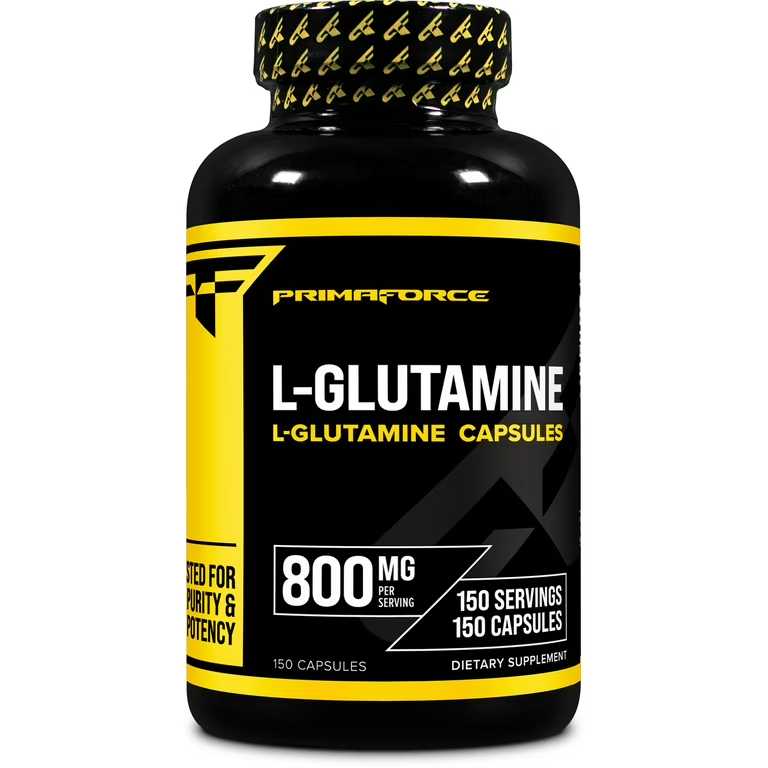
L-Glutamine Peptide Complex | High-Purity Bioavailable Nitrogen

Original price was: $75.00.$62.00Current price is: $62.00.
The L-Glutamine Peptide Complex is an advanced, peptide-bonded form of the most abundant amino acid in the human body. Unlike standard free-form L-glutamine, which is often degraded by the stomach and used primarily by the liver, the L-Glutamine Peptide Complex is engineered for superior stability and intestinal absorption. In research models, this complex is the primary subject for investigating the restoration of the “leaky” intestinal barrier and the maintenance of a positive nitrogen balance during metabolic stress.
L-Glutamine Peptide Complex: The Science of Enhanced Bioavailability
The Biochemistry of Peptide-Bonded Glutamine
The L-Glutamine Peptide Complex typically consists of glutamine molecules enzymatically bonded to other amino acids (often derived from hydrolyzed wheat protein). This peptide bond protects the glutamine as it passes through the digestive tract. Research indicates that the human gut has specific transporters (such as PEPT1) that prioritize the uptake of di- and tri-peptides over free-form amino acids, making the L-Glutamine Peptide Complex a significantly more efficient delivery system for cellular repair.
Mechanism of Action: Enteric and Muscular Homeostasis
In clinical and physiological research, the L-Glutamine Peptide Complex functions through several critical pathways:
-
Intestinal Tight Junction Support: L-Glutamine Peptide Complex is a primary fuel source for enterocytes. It is studied for its ability to upregulate the expression of tight junction proteins like Occludin and Zonulin, which prevent intestinal permeability.
-
Nitrogen Shuttling: As a key nitrogen donor, the L-Glutamine Peptide Complex facilitates the movement of nitrogen between tissues, which is essential for protein synthesis and the prevention of muscle tissue catabolism.
-
Immune Cell Proliferation: Lymphocytes and macrophages depend on glutamine for rapid division. Research focuses on how this complex supports immune surveillance during periods of high physical or environmental stress.
-
Acid-Base Balance: In renal research, glutamine is studied for its role in producing ammonia, which helps the kidneys maintain a stable systemic pH.
Primary Research Applications of L-Glutamine Peptide Complex
-
Gastrointestinal Repair Studies: Analyzing the healing of the mucosal lining in models of inflammatory bowel conditions.
-
Metabolic Stress Recovery: Investigating the preservation of lean muscle mass in subjects undergoing strenuous physical exertion or trauma.
-
Immune Modulation: Observing the impact of enhanced glutamine availability on the production of secretory IgA in the gut.
-
Ammonia Clearance: Studying the peptide’s role in the urea cycle and the detoxification of nitrogenous waste.
4. Technical Specifications (E-E-A-T Data)
| Feature | Scientific Specification |
| Composition | Peptide-Bonded L-Glutamine (Hydrolyzed) |
| Glutamine Content | ~30% Total Amino Acid Weight |
| Molecular Weight | 1,000 – 3,000 Da (Peptide Distribution) |
| CAS Number | 56-85-9 (Active Glutamine Component) |
| Purity Grade | $\geq$99% (HPLC Verified) |
| Solubility | Superior to Free-Form L-Glutamine |
| Stability | Thermally stable and acid-resistant |
5. Product FAQ (Schema-Ready)
Q: Why use an L-Glutamine Peptide Complex instead of standard L-glutamine?
A: Standard L-glutamine is unstable in solution and largely consumed by the gut and liver before reaching systemic circulation. The L-Glutamine Peptide Complex utilizes peptide transporters (PEPT1) for faster, more complete absorption, making it more effective for muscle and systemic research.
Q: Does L-Glutamine Peptide Complex contain gluten?
A: While many glutamine peptides are derived from wheat protein, the intense hydrolysis process typically breaks down the gluten proteins. However, in sensitive research models, it is essential to verify the specific source and processing to ensure the absence of intact gluten allergens.
Only logged in customers who have purchased this product may leave a review.
Related products

COLLAGEN & RECOVERY PEPTIDES

COLLAGEN & RECOVERY PEPTIDES

COLLAGEN & RECOVERY PEPTIDES
Collagen + Vitamin C & Hyaluronic Acid Complex | Triple-Action Skin Matrix

COLLAGEN & RECOVERY PEPTIDES

COLLAGEN & RECOVERY PEPTIDES
BPC-157 (Body Protection Compound) | 99% Purity Gastric & Tissue Repair

COLLAGEN & RECOVERY PEPTIDES
Collagen Peptides Type II | Joint-Specific Cartilage Support | $\geq$99% Purity
GROWTH HORMONE SECRETAGOGUES
Hexarelin Peptide | High-Purity 2mg Vial | Advanced Cardioprotective Research

COLLAGEN & RECOVERY PEPTIDES
Vegan Collagen Peptides | Plant-Based Biomimetic Booster | 98% Bioavailability
Reviews
There are no reviews yet.