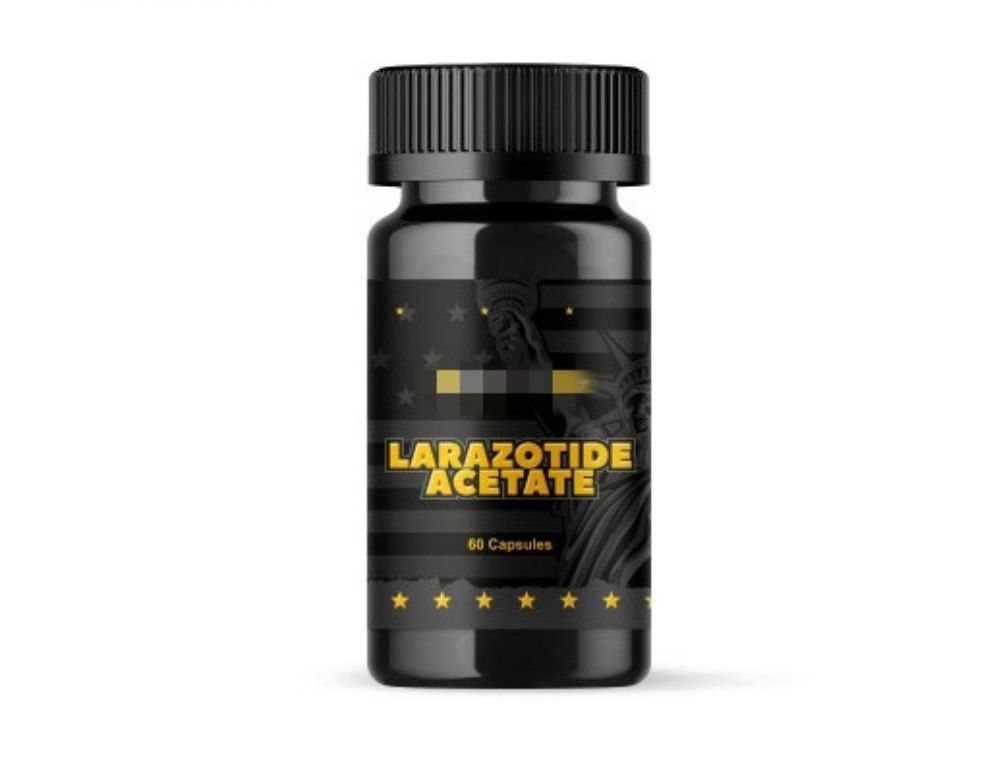
Larazotide Acetate (AT-1001) | Tight Junction Regulator Peptide

Original price was: $100.00.$89.00Current price is: $89.00.
Larazotide Acetate (AT-1001) is a synthetic eight-amino acid peptide that functions as a first-in-class zonulin antagonist. Specifically designed to regulate the “opening” of the intestinal barrier, Larazotide Acetate (AT-1001) is the primary subject of research involving pathological intestinal permeability (often termed “leaky gut”). In laboratory models, it is studied for its ability to prevent the disassembly of tight junctions triggered by gluten, cytokines, or environmental toxins.
Larazotide Acetate (AT-1001): The Master Regulator of the Intestinal Barrier
The Biochemistry of the Zonulin Pathway
Larazotide Acetate (AT-1001) was derived from a sequence found in the Vibrio cholerae zonula occludens toxin. It acts by competitively inhibiting the zonulin receptor. Zonulin is the only known physiological modulator of intercellular tight junctions; when overexpressed, it causes the “gates” between enterocytes to remain open. Research into Larazotide Acetate (AT-1001) focuses on its ability to block this signaling, thereby maintaining the structural integrity of the paracellular pathway.
Mechanism of Action: Tight Junction Stabilization
In advanced mucosal immunology research, Larazotide Acetate (AT-1001) functions through highly targeted mechanisms:
-
Antagonizing Zonulin Signaling: Larazotide Acetate (AT-1001) prevents zonulin from binding to its target receptor (EGFR/PAR2), which would otherwise trigger the contraction of the perijunctional actin-myosin ring.
-
Preservation of Occludin and ZO-1: By inhibiting the zonulin pulse, Larazotide Acetate (AT-1001) ensures that key structural proteins like Occludin and Zonula Occludens-1 (ZO-1) remain correctly localized at the tight junction complex.
-
Prevention of Macromolecular Translocation: Research demonstrates that Larazotide Acetate (AT-1001) restricts the passage of large, immunogenic molecules (such as gliadin fragments or LPS) from the intestinal lumen into the systemic circulation.
-
Cytokine-Induced Barrier Protection: Beyond gluten-related studies, Larazotide Acetate (AT-1001) is investigated for its ability to counteract barrier disruption caused by pro-inflammatory cytokines like TNF-alpha and IFN-gamma.
[Image illustrating the difference between “open” and “closed” tight junctions via AT-1001]
Primary Research Applications of Larazotide Acetate (AT-1001)
-
Celiac Disease Models: Analyzing the peptide’s ability to prevent the inflammatory response to gluten ingestion.
-
Autoimmune Signaling: Investigating the link between intestinal permeability and the development of systemic autoimmune conditions.
-
Environmental Toxin Defense: Studying the protective effects of Larazotide Acetate (AT-1001) against glyphosate or heavy-metal induced barrier failure.
-
Inflammatory Bowel Disease (IBD): Observing the impact of tight junction stabilization on mucosal healing in colitis models.
4. Technical Specifications (E-E-A-T Data)
| Feature | Scientific Specification |
| Peptide Sequence | Gly-Gly-Val-Leu-Ser-Glu-Leu-Tyr |
| Molecular Formula | $C_{36}H_{58}N_{8}O_{13}$ |
| Molecular Weight | 810.9 g/mol |
| CAS Number | 881851-50-9 |
| Purity Grade | $\geq$99% (HPLC & Mass Spec Verified) |
| Physical State | Lyophilized White Powder |
| Solubility | Soluble in Water and Aqueous Buffers |
5. Product FAQ
Q: Is Larazotide Acetate (AT-1001) absorbed into the bloodstream?
A: A key characteristic of Larazotide Acetate (AT-1001) in research is its minimal systemic absorption. It is designed to act locally within the intestinal lumen and on the surface of the enterocytes, which is ideal for studying targeted gastrointestinal barrier regulation without systemic interference.
Q: How does AT-1001 differ from BPC-157 for gut health?
A: While both are studied for gut health, their mechanisms are distinct. Larazotide Acetate (AT-1001) is a specific tight junction regulator (zonulin antagonist), whereas BPC-157 is a broader regenerative peptide focused on angiogenesis and growth factor upregulation for tissue healing.
Only logged in customers who have purchased this product may leave a review.
Related products

COLLAGEN & RECOVERY PEPTIDES
BPC-157 (Body Protection Compound) | 99% Purity Gastric & Tissue Repair

COLLAGEN & RECOVERY PEPTIDES
Collagen Peptides Type II | Joint-Specific Cartilage Support | $\geq$99% Purity

COLLAGEN & RECOVERY PEPTIDES
LNAC (N-Acetyl Cysteine) + Glycine Peptide | Glutathione Precursor


COLLAGEN & RECOVERY PEPTIDES

COLLAGEN & RECOVERY PEPTIDES

COLLAGEN & RECOVERY PEPTIDES

COLLAGEN & RECOVERY PEPTIDES

COLLAGEN & RECOVERY PEPTIDES
Vegan Collagen Peptides | Plant-Based Biomimetic Booster | 98% Bioavailability
Reviews
There are no reviews yet.