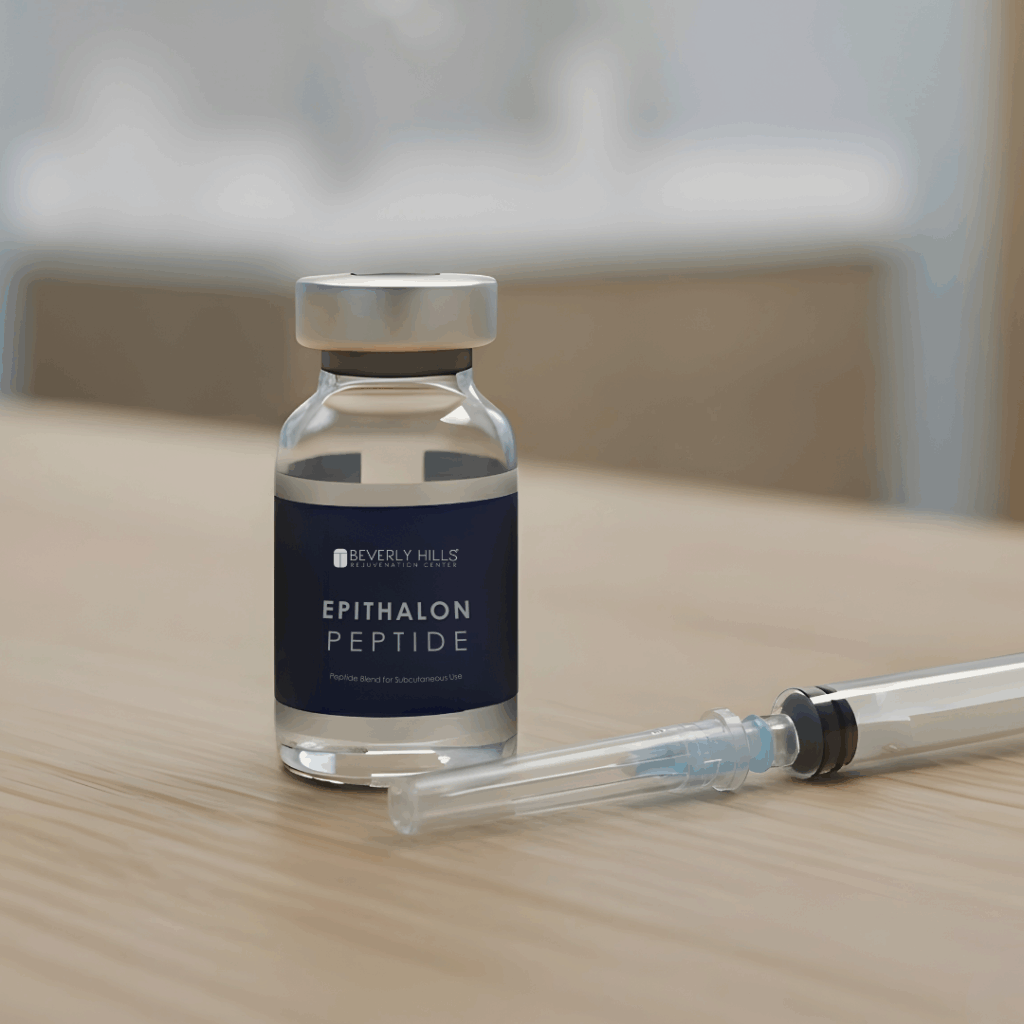
Epithalon | Sleep & Circadian Rhythm Research Data

Original price was: $95.00.$78.00Current price is: $78.00.
Epithalon (also known as Epitalon) is a synthetic tetrapeptide ($Ala-Glu-Asp-Gly$) derived from epithalamin, a natural peptide produced in the pineal gland. In advanced longevity and endocrine research, Epithalon is investigated for its unique ability to regulate the pineal gland and normalize the production of endogenous melatonin. By modulating the sleep-wake cycle and promoting telomerase activity, Epithalon serves as a primary subject for studying the reversal of age-related circadian decay.
Epithalon: The Science of Pineal Regulation and Circadian Homeostasis
The Biochemistry of Epithalon
Epithalon functions as a short-chain peptide bioregulator that interacts directly with the chromatin of pineal gland cells. This interaction is studied for its ability to restore the sensitivity of the pineal gland to environmental light cues. Unlike direct melatonin supplementation, Epithalon is researched for its potential to stimulate the natural, pulsatile secretion of hormones, maintaining the body’s internal biological clock without suppressing endogenous production.
Mechanism of Action: Telomerase and Melatonin Synthesis
In advanced metabolic and chronobiology research, Epithalon functions through several coordinated pathways:
-
Melatonin Secretion Normalization: The peptide is studied for its ability to restore nighttime melatonin levels to youthful parameters, which is critical for deep sleep and antioxidant defense.
-
Telomerase Activation: Research focuses on the peptide’s role in activating telomerase, the enzyme responsible for maintaining telomere length, thereby extending the replicative lifespan of cells involved in circadian regulation.
-
Correction of Circadian Rhythms: Epithalon is investigated for its capacity to synchronize the internal master clock, improving the quality of sleep-wake transitions and daytime alertness.
-
Neuro-Endocrine Stabilization: By regulating the pineal-hypothalamic axis, the peptide is analyzed for its systemic effect on reducing cortisol levels and improving stress resilience.
Primary Research Applications
-
Sleep Architecture Studies: Analyzing the impact of Epithalon on REM and Non-REM sleep cycles in aging models.
-
Longevity and Anti-Aging Research: Investigating the correlation between telomere maintenance and the slowing of biological aging.
-
Jet Lag and Shift Work Modeling: Studying the peptide’s efficacy in re-aligning circadian rhythms following rapid environmental changes.
-
Hormonal Decline Research: Observing the restoration of endocrine balance in subjects experiencing age-related pineal involution.
4. Technical Specifications (E-E-A-T Data)
| Feature | Scientific Specification |
| Peptide Sequence | L-Alanyl-L-glutamyl-L-aspartyl-glycine |
| Molecular Formula | $C_{14}H_{22}N_{4}O_{9}$ |
| Molecular Weight | 390.34 g/mol |
| CAS Number | 307297-39-8 |
| Purity Grade | $\geq$99% (HPLC & Mass Spec Verified) |
| Source | Synthetic Bioregulator (Epithalamin Analog) |
| Storage | Store at -20°C (Protect from light and moisture) |
5. Product FAQ
Q: How does Epithalon differ from standard melatonin supplements?
A: Standard supplements provide an external dose of the hormone, which can lead to dependency. Epithalon is researched for its ability to stimulate the pineal gland to produce its own melatonin, restoring a natural, physiological rhythm.
Q: Why is Epithalon categorized as a “Bioregulator”?
A: It is classified this way because it acts on a cellular level to regulate the expression of specific genes. In research, this is observed as a “balancing” effect—it helps restore pineal function to its optimal biological state rather than over-stimulating it.
Only logged in customers who have purchased this product may leave a review.
Related products

COGNITIVE & NEUROPROTECTIVE PEPTIDES
Semax Nootropic Neuropeptide | Advanced Neuroprotective Research
LONGEVITY & CELLULAR REPAIR PEPTIDES
Pinealon Peptide | 10mg High-Purity Brain Bioregulator | $\geq$99% Purity


LONGEVITY & CELLULAR REPAIR PEPTIDES
SS-31 Longevity | Elamipretide Mitochondrial Rejuvenation Peptide


WEIGHT MANAGEMENT & METABOLIC WELLNESS

ENDURANCE & ENERGY PEPTIDES
Epitalon (Epithalamin) 10mg | Telomerase Activator | $\geq$99% Purity

COLLAGEN & RECOVERY PEPTIDES
LNAC (N-Acetyl Cysteine) + Glycine Peptide | Glutathione Precursor

LONGEVITY & WELLNESS STACKS
The Longevity Stack | Advanced Telomere & Cellular Research Bundle


COGNITIVE & NEUROPROTECTIVE PEPTIDES

Reviews
There are no reviews yet.