
Orexin Antagonist | Sleep-Wake Cycle Research & Analysis


Original price was: $150.00.$125.00Current price is: $125.00.
Orexin Antagonist peptide analogues are synthetic molecules designed to investigate the inhibition of the orexin (hypocretin) signaling system. By targeting the OX1 and OX2 receptors, these compounds serve as critical tools for studying the transition between wakefulness and sleep. In laboratory models, an Orexin Antagonist is utilized to analyze the suppression of the “arousal” signal, providing insights into the stabilization of circadian rhythms.
Orexin Antagonist: The Science of Arousal Inhibition
The Biochemistry of Orexin Receptor Antagonist Peptide Analogues
The orexin system consists of two neuropeptides, Orexin-A and Orexin-B, which act upon two G-protein coupled receptors: OX1R and OX2R. An Orexin Antagonist is engineered to bind with high affinity to these receptors without triggering a downstream response. By occupying the receptor site, these analogues effectively block the binding of endogenous orexins, thereby dampening the brain’s primary wakefulness-promoting signals produced in the lateral hypothalamus.
Mechanism of Action: Dual Receptor Antagonism (DORA)
In advanced sleep and metabolic research, the Orexin Antagonist functions through a targeted neurochemical blockade:
-
OX2R Selective vs. Dual Antagonism: Research focuses on whether blocking OX2R alone is sufficient for sleep induction, or if the simultaneous blockade of OX1R and OX2R (Dual Orexin Receptor Antagonist) provides superior stabilization of the sleep-wake transition.
-
Attenuation of the Arousal Center: By inhibiting orexin signaling, these analogues reduce the activity of monoaminergic and cholinergic neurons in the brainstem and forebrain that are responsible for maintaining alertness.
-
REM and Non-REM Modulation: Unlike traditional GABAergic sedatives, an Orexin Antagonist is studied for its ability to promote a more natural sleep architecture, facilitating entry into both Non-REM and REM sleep cycles without significant cognitive impairment.
-
Limbic System Interaction: Research also explores the role of OX1R antagonism in reducing emotional arousal and stress-induced wakefulness mediated by the amygdala.
Primary Research Applications
-
Insomnia and Sleep Disorder Studies: Analyzing the efficacy of orexin blockade in reducing sleep latency and improving sleep maintenance.
-
Narcolepsy and Cataplexy Modeling: Investigating the dysregulation of the orexin system and the potential for antagonist-based therapeutic strategies.
-
Addiction and Reward Research: Studying the role of the orexin system in drug-seeking behavior and the potential for an Orexin Antagonist to modulate reward circuitry.
-
Metabolic and Feeding Studies: Observing the impact of orexin inhibition on appetite, energy expenditure, and systemic glucose regulation.
4. Technical Specifications (E-E-A-T Data)
| Feature | Scientific Specification |
| Receptor Affinity | OX1R and OX2R (Kᵢ values in nanomolar range) |
| Primary Mechanism | Competitive Receptor Antagonism |
| Purity Grade | $\geq$99% (HPLC & Mass Spec Verified) |
| Molecular Structure | Optimized Peptide or Peptidomimetic Analogues |
| Stability | Formulated for CNS bioavailability and receptor saturation |
| Storage | Store at -20°C (Protect from light and moisture) |
5. Product FAQ
Q: How does an Orexin Antagonist differ from traditional sleeping aids?
A: Traditional aids typically enhance the inhibitory GABA system (turning on the “sleep switch”). An Orexin Antagonist works by inhibiting the arousal system (turning off the “wake switch”), which is researched for its potential to provide a more targeted effect with fewer motor or cognitive side effects.
Q: Why is Dual Antagonism (DORA) a focus in this research?
A: Research suggests that while OX2R is heavily involved in sleep-wake transitions, OX1R plays a role in emotional and reward-based arousal. By using an Orexin Antagonist that targets both, researchers can investigate the total suppression of the “drive to wake.”
Only logged in customers who have purchased this product may leave a review.
Related products


WEIGHT MANAGEMENT & METABOLIC WELLNESS

LONGEVITY & CELLULAR REPAIR PEPTIDES


LONGEVITY & CELLULAR REPAIR PEPTIDES
SS-31 Longevity | Elamipretide Mitochondrial Rejuvenation Peptide

NEUROPEPTIDE RESEARCH COMPOUNDS
HORMONAL BALANCE & VITALITY
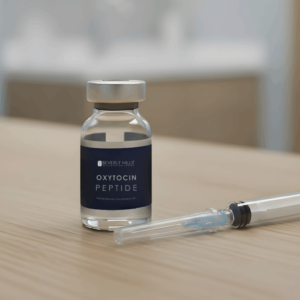
Oxytocin Peptide | Neuropeptide for Emotional Wellness Research

COGNITIVE & NEUROPROTECTIVE PEPTIDES
Semax Nootropic Neuropeptide | Advanced Neuroprotective Research


COGNITIVE & NEUROPROTECTIVE PEPTIDES

LONGEVITY & CELLULAR REPAIR PEPTIDES
Epitalon (Epithalamin) 10mg | Telomerase Activator | $\geq$99% Purity

Reviews
There are no reviews yet.