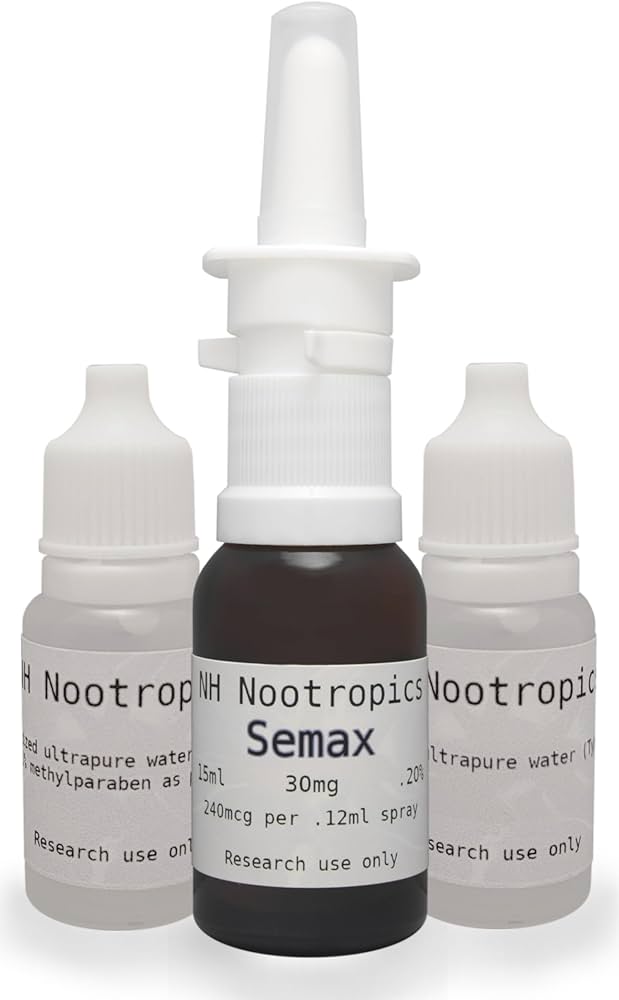
Semax Nootropic Neuropeptide | Advanced Neuroprotective Research


Original price was: $100.00.$85.00Current price is: $85.00.
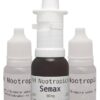
Semax Nootropic Neuropeptide is a synthetic heptapeptide ($Met-Glu-His-Phe-Pro-Gly-Pro$) modeled after a fragment of the Adrenocorticotropic hormone (ACTH 4-10). Unlike the parent hormone, Semax Nootropic Neuropeptide is completely devoid of hormonal activity, focusing its biological impact entirely on the central nervous system. In advanced laboratory models, it is investigated for its profound ability to stimulate neurotrophic factors and provide a robust neuroprotective shield against hypoxic and oxidative damage.
Semax Nootropic Neuropeptide: The Science of Melanocortin-Driven Cognitive Repair
The Biochemistry of Semax Nootropic Neuropeptide
The structure of Semax Nootropic Neuropeptide was engineered to maintain the core signaling properties of melanocortins while achieving higher metabolic stability than endogenous fragments. This neuropeptide functions as a melanocortin receptor agonist, primarily engaging pathways that regulate cerebral metabolism and neuronal survival. Its unique amino acid sequence allows it to act as a regulator of the brain’s internal environment during periods of high cognitive demand or physiological stress.
Mechanism of Action: BDNF Upregulation and Synaptic Plasticity
In advanced neuroscience research, the Semax Nootropic Neuropeptide functions through several coordinated regenerative pathways:
-
Induction of BDNF Expression: The peptide is studied for its ability to rapidly increase the synthesis of Brain-Derived Neurotrophic Factor (BDNF) and its receptor, TrkB, in the hippocampus and cortex. This is a critical marker for memory formation and synaptic plasticity.
-
Anti-Inflammatory Signaling: Semax Nootropic Neuropeptide is observed to modulate the expression of genes involved in the immune response, reducing the production of pro-inflammatory cytokines that can damage neural tissue.
-
Neurovascular Protection: Research suggests the peptide improves cerebral blood flow and enhances the survival of neurons during episodes of hypoxia or ischemia by stabilizing mitochondrial function.
-
Dopaminergic and Serotonergic Modulation: The Semax Nootropic Neuropeptide is investigated for its role in normalizing the levels of primary neurotransmitters, which may contribute to improved focus, mental clarity, and emotional resilience.
Primary Research Applications of Semax Nootropic Neuropeptide
-
Ischemic Stroke Recovery: Analyzing the peptide’s role in minimizing the volume of cerebral infarction and accelerating functional rehabilitation.
-
Cognitive Enhancement Studies: Investigating the stabilization of attention and memory retention in subjects under extreme environmental or workload stress.
-
Optic Nerve Protection: Studying the application of Semax Nootropic Neuropeptide in preserving visual function and preventing retinal ganglion cell death.
-
Neurodegenerative Disease Modeling: Observing the impact of enhanced BDNF signaling on the progression of various memory-related disorders.
4. Technical Specifications (E-E-A-T Data)
| Feature | Scientific Specification |
| Peptide Sequence | Met-Glu-His-Phe-Pro-Gly-Pro |
| Molecular Formula | $C_{37}H_{51}N_{9}O_{10}S$ |
| Molecular Weight | 813.9 g/mol |
| CAS Number | 80714-61-0 |
| Purity Grade | $\geq$99% (HPLC & Mass Spec Verified) |
| Physical State | Lyophilized White Powder |
| Solubility | Soluble in Water and Saline |
5. Product FAQ
Q: How does Semax Nootropic Neuropeptide differ from NA-Semax Amidate?
A: Standard Semax Nootropic Neuropeptide is the original heptapeptide sequence. While highly effective, the NA-Semax Amidate version includes additional N-Acetyl and Amidate groups to further increase metabolic stability and blood-brain barrier penetration in specific research models.
Q: Why is Semax Nootropic Neuropeptide used in stroke research?
A: Research focuses on its ability to act as a “neuro-metabolic” protector. By upregulating BDNF and reducing inflammatory gene expression, it helps save salvageable brain tissue in the “penumbra” region following an ischemic event.
Only logged in customers who have purchased this product may leave a review.
Related products

WEIGHT MANAGEMENT & METABOLIC WELLNESS
Semaglutide (GLP-1 Analogue) | GLP-1 Agonist for Weight Loss
HORMONAL BALANCE & VITALITY
LONGEVITY & CELLULAR REPAIR PEPTIDES
Pinealon Peptide | 10mg High-Purity Brain Bioregulator | $\geq$99% Purity

LONGEVITY & CELLULAR REPAIR PEPTIDES


LONGEVITY & CELLULAR REPAIR PEPTIDES
SS-31 Longevity | Elamipretide Mitochondrial Rejuvenation Peptide


NEUROPEPTIDE RESEARCH COMPOUNDS


EMERGING & SPECIALIST RESEARCH PEPTIDES
ARA-290 | Advanced Innate Repair & Neuropathic Research Data
COGNITIVE & NEUROPROTECTIVE PEPTIDES
Reviews
There are no reviews yet.