
Semaglutide (GLP-1 Analogue) | GLP-1 Agonist for Weight Loss
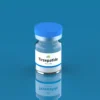

Original price was: $300.00.$275.00Current price is: $275.00.
Semaglutide (GLP-1 Analogue) is a highly potent, synthetic GLP-1 receptor agonist designed for enhanced metabolic stability and prolonged activity. With a 94% structural homology to human GLP-1, this Semaglutide (GLP-1 Analogue) is specifically modified to resist the enzymatic action of DPP-4, extending its biological presence. In contemporary research, it is the primary subject for investigating long-term weight loss, the suppression of hedonic hunger, and the reversal of insulin resistance in metabolic models.
Semaglutide (GLP-1 Analogue): The Science of Sustained Metabolic Signaling
The Biochemistry of Semaglutide (GLP-1 Analogue)
The molecular structure of Semaglutide (GLP-1 Analogue) ($C_{187}H_{291}N_{45}O_{59}$) includes three critical modifications that differentiate it from native GLP-1:
-
Amino Acid Substitution: The substitution of Alanine at position 8 with Alpha-aminoisobutyric acid (Aib) makes the peptide resilient against DPP-4 degradation.
-
Fatty Acid Acylation: The attachment of a $C_{18}$ fatty diacid side chain via a spacer to Lysine-26 increases its affinity for albumin.
-
Extended Half-Life: These modifications create a slow-release effect, extending the half-life of Semaglutide (GLP-1 Analogue) to approximately 165 hours in research models, allowing for consistent receptor saturation.
Mechanism of Action: Satiety and Glycemic Homeostasis
In advanced weight loss and endocrinology research, Semaglutide (GLP-1 Analogue) functions through a targeted multi-organ signaling protocol:
-
Central Appetite Suppression: Semaglutide (GLP-1 Analogue) acts directly on the hypothalamus and the hindbrain (area postrema) to signal satiety and reduce the “reward” value of food.
-
Glucoregulatory Incretin Effect: The analogue stimulates insulin secretion in a glucose-dependent manner while simultaneously inhibiting glucagon release from alpha cells.
-
Gastric Kinetic Modulation: Research investigates the peptide’s ability to slow gastric emptying, which leads to a more gradual absorption of nutrients and prolonged postprandial fullness.
-
Cardiovascular and Anti-inflammatory Effects: Recent studies explore the role of Semaglutide (GLP-1 Analogue) in reducing systemic inflammation and protecting vascular endothelial health.
Primary Research Applications of Semaglutide (GLP-1 Analogue)
-
Chronic Weight Loss Modeling: Analyzing the reduction of total adipose tissue and visceral fat in long-term metabolic studies.
-
Glycemic Control and Beta-Cell Function: Investigating the stabilization of blood glucose levels and the preservation of insulin-secreting cells.
-
Cardiometabolic Syndrome: Studying the impact of the peptide on blood pressure, cholesterol, and cardiovascular risk factors.
-
PCOS and Hormonal Balance: Observing the effects of Semaglutide (GLP-1 Analogue) on reproductive hormone normalization in metabolic models.
4. Technical Specifications (E-E-A-T Data)
| Feature | Scientific Specification |
| Active Component | GLP-1 Receptor Agonist (Aib8, Arg34, Lys26 acylated) |
| Molecular Formula | $C_{187}H_{291}N_{45}O_{59}$ |
| Molecular Weight | 4113.6 g/mol |
| CAS Number | 910463-68-2 |
| Purity Grade | $\geq$99% (HPLC & Mass Spec Verified) |
| Half-Life | ~165 hours (Research Model Dependent) |
| Physical State | Lyophilized White Powder |
5. Product FAQ
Q: How does Semaglutide (GLP-1 Analogue) differ from Liraglutide?
A: While both are GLP-1 analogues, Semaglutide (GLP-1 Analogue) has specific modifications (Aib substitution and a $C_{18}$ fatty acid chain) that give it a significantly longer half-life, allowing for more consistent metabolic signaling in research settings compared to the shorter-acting Liraglutide.
Q: Why is Semaglutide (GLP-1 Analogue) studied for appetite regulation?
A: Research focuses on its ability to cross the blood-brain barrier and bind to receptors in the hypothalamus. This interaction is believed to shift the body’s “set point” for weight by decreasing hunger and increasing the feeling of satisfaction after eating.
Only logged in customers who have purchased this product may leave a review.
Related products

LONGEVITY & CELLULAR REPAIR PEPTIDES

WEIGHT MANAGEMENT & METABOLIC WELLNESS
Liraglutide (GLP-1 Analogue) | GLP-1 Agonist for Weight Management
HORMONAL BALANCE & VITALITY
Oxytocin Peptide | Neuropeptide for Emotional Wellness Research
SLEEP & CIRCADIAN RHYTHM PEPTIDES

WEIGHT MANAGEMENT & METABOLIC WELLNESS
5-HTP Peptide Precursor Complex | Appetite & Serotonin Research

LONGEVITY & CELLULAR REPAIR PEPTIDES
COGNITIVE & NEUROPROTECTIVE PEPTIDES


COGNITIVE & NEUROPROTECTIVE PEPTIDES

Reviews
There are no reviews yet.