
5-HTP Peptide Precursor Complex | Appetite & Serotonin Research
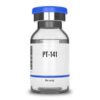

Original price was: $40.00.$35.00Current price is: $35.00.
The 5-HTP Peptide Precursor Complex is a highly bioavailable metabolic matrix designed to support the endogenous production of serotonin (5-HT). By bypassing the rate-limiting enzyme tryptophan hydroxylase, this 5-HTP Peptide Precursor Complex provides a direct pathway to neurotransmitter synthesis. In advanced metabolic and neurochemical research, it is the primary subject for investigating the regulation of appetite, the induction of satiety, and the stabilization of mood-related feeding behaviors.
5-HTP Peptide Precursor Complex: The Science of Satiety and Serotonergic Signaling
The Biochemistry of 5-HTP Peptide Precursor Complex
The 5-HTP Peptide Precursor Complex utilizes 5-Hydroxytryptophan, an intermediate metabolite in the conversion of L-tryptophan to serotonin. Unlike standard tryptophan, the complex does not compete with other large neutral amino acids for transport across the blood-brain barrier. This ensures a high rate of conversion into 5-HT within the central nervous system, where it acts as a master regulator of the serotonergic system.
Mechanism of Action: Appetite Regulation and Satiety Signaling
In advanced physiological and behavioral research, the 5-HTP Peptide Precursor Complex functions through several targeted metabolic pathways:
-
Hypothalamic Satiety Induction: 5-HTP Peptide Precursor Complex is studied for its ability to increase serotonin levels in the hypothalamus, specifically targeting the 5-HT2C receptors. Activation of these receptors is associated with a decrease in caloric intake and the promotion of a “fullness” sensation.
-
Inhibition of Carbohydrate Craving: Research suggests that serotonergic signaling via this complex can selectively reduce the impulse for high-carbohydrate feeding, making it a key subject in obesity and binge-eating models.
-
HPA Axis Modulation: By stabilizing serotonin levels, the complex is investigated for its role in buffering the stress response, which frequently drives “emotional eating” and metabolic dysfunction.
-
Melatonin Synthesis Support: As a precursor to serotonin, which is itself a precursor to melatonin, the 5-HTP Peptide Precursor Complex is analyzed for its secondary impact on circadian rhythms and sleep-quality-related metabolic health.
Primary Research Applications of 5-HTP Peptide Precursor Complex
-
Metabolic Syndrome and Obesity Research: Analyzing the impact of increased satiety signaling on total body weight and lipid profiles.
-
Behavioral Feeding Studies: Investigating the reduction of hyperphagia (excessive eating) in stress-induced research models.
-
Neurotransmitter Depletion Studies: Observing the restoration of cognitive and emotional balance in subjects with low serotonergic activity.
-
Glycemic Control Research: Studying how the regulation of appetite through the 5-HTP Peptide Precursor Complex indirectly influences insulin sensitivity and glucose homeostasis.
4. Technical Specifications (E-E-A-T Data)
| Feature | Scientific Specification |
| Active Component | 5-Hydroxytryptophan (Peptide Bonded Complex) |
| Molecular Formula | $C_{11}H_{12}N_{2}O_{3}$ |
| Molecular Weight | 220.23 g/mol |
| CAS Number | 56-69-9 |
| Purity Grade | $\geq$99% (HPLC & Mass Spec Verified) |
| Extraction Source | Griffonia simplicifolia (Research-Grade Isolated) |
| Physical State | White to Off-White Crystalline Powder |
| Solubility | Soluble in Water and Warm Ethanol |
5. Product FAQ
Q: How does the 5-HTP Peptide Precursor Complex regulate appetite?
A: It works by increasing the synthesis of serotonin in the brain. Elevated serotonin levels act on the satiety centers of the hypothalamus, signaling to the body that it is satisfied and reducing the neurochemical drive to consume excess calories.
Q: Why use a “Peptide Precursor Complex” rather than standard 5-HTP?
A: The complex is engineered to enhance stability and ensure maximum transport across the blood-brain barrier. In research, this leads to more consistent serotonergic signaling and more reliable data regarding appetite regulation and behavioral changes.
Only logged in customers who have purchased this product may leave a review.
Related products

LONGEVITY & CELLULAR REPAIR PEPTIDES
Epitalon (Epithalamin) 10mg | Telomerase Activator | $\geq$99% Purity
SLEEP & CIRCADIAN RHYTHM PEPTIDES


LONGEVITY & CELLULAR REPAIR PEPTIDES
SS-31 Longevity | Elamipretide Mitochondrial Rejuvenation Peptide

LONGEVITY & CELLULAR REPAIR PEPTIDES

FAT LOSS & METABOLIC PEPTIDES
AOD-9604 | 5mg Stabilized Lipolytic Peptide | $\geq$99% Purity

WEIGHT MANAGEMENT & METABOLIC WELLNESS
Semaglutide (GLP-1 Analogue) | GLP-1 Agonist for Weight Loss

LONGEVITY & CELLULAR REPAIR PEPTIDES

RESEARCH-GRADE COMPOUNDS

Reviews
There are no reviews yet.