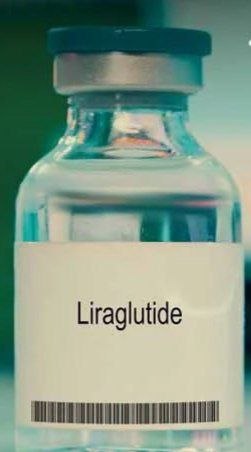
Liraglutide (GLP-1 Analogue) | GLP-1 Agonist for Weight Management

Original price was: $220.00.$207.00Current price is: $207.00.
Liraglutide (GLP-1 Analogue) is a long-acting, acylated glucagon-like peptide-1 (GLP-1) receptor agonist designed to mimic the action of the body’s natural incretin hormones. With a 97% homology to human GLP-1, this Liraglutide (GLP-1 Analogue) is engineered to resist rapid enzymatic degradation by DPP-4. In advanced metabolic research, it is the primary subject for investigating sustained weight management through the dual mechanisms of delayed gastric emptying and central satiety signaling.
Liraglutide (GLP-1 Analogue): The Science of Incretin-Mediated Weight Management
The Biochemistry of Liraglutide (GLP-1 Analogue)
The molecular structure of Liraglutide (GLP-1 Analogue) ($C_{172}H_{265}N_{43}O_{51}$) features a fatty acid side chain (palmitic acid) attached to the Lysine-26 residue. This modification allows the peptide to bind reversibly to albumin, creating a slow-release reservoir that extends its biological half-life to approximately 13 hours. Unlike endogenous GLP-1, which is degraded in minutes, Liraglutide (GLP-1 Analogue) provides sustained activation of the GLP-1 receptors across various organ systems.
Mechanism of Action: Central Satiety and Peripheral Gastric Regulation
In advanced endocrinology and weight management research, Liraglutide (GLP-1 Analogue) functions through several critical metabolic pathways:
-
Hypothalamic Appetite Regulation: Liraglutide (GLP-1 Analogue) crosses the blood-brain barrier to target the arcuate nucleus. It stimulates POMC/CART neurons (satiety) and inhibits NPY/AgRP neurons (hunger), leading to a significant reduction in caloric intake.
-
Delayed Gastric Emptying: By slowing the rate at which food leaves the stomach, the peptide prolongs postprandial fullness and blunts the rapid rise of post-meal blood glucose.
-
Incretin Effect: The analogue enhances glucose-dependent insulin secretion from pancreatic beta cells while suppressing inappropriate glucagon secretion, supporting overall glycemic stability.
-
Adipose Tissue Thermogenesis: Newer studies focus on the potential for Liraglutide (GLP-1 Analogue) to promote the “browning” of white adipose tissue, potentially increasing energy expenditure.
Primary Research Applications of Liraglutide (GLP-1 Analogue)
-
Chronic Weight Management Studies: Analyzing the long-term impact of GLP-1 agonism on total body fat mass and visceral adiposity.
-
Cardiometabolic Risk Research: Investigating the reduction of markers such as HbA1c, systolic blood pressure, and lipid profiles in metabolic syndrome models.
-
Neuroprotective Research: Studying the impact of GLP-1 signaling on neuroinflammation and cognitive function in aging models.
-
Nonalcoholic Steatohepatitis (NASH): Observing the effect of Liraglutide (GLP-1 Analogue) on liver fat accumulation and hepatic inflammation.
4. Technical Specifications (E-E-A-T Data)
| Feature | Scientific Specification |
| Active Component | Acylated Human Glucagon-Like Peptide-1 (GLP-1) |
| Molecular Formula | $C_{172}H_{265}N_{43}O_{51}$ |
| Molecular Weight | 3751.2 g/mol |
| CAS Number | 204656-20-2 |
| Purity Grade | $\geq$99% (HPLC & Mass Spec Verified) |
| Stability | Resistant to DPP-4 enzymatic degradation |
| Physical State | Lyophilized White Powder |
5. Product FAQ
Q: How does Liraglutide (GLP-1 Analogue) support weight management? A: Research indicates it works by mimicking the “fullness” hormone GLP-1. It signals the brain to reduce hunger while physically slowing down the digestion process, allowing research subjects to maintain a caloric deficit with greater metabolic stability.
Q: What is the significance of the fatty acid chain in Liraglutide (GLP-1 Analogue)? A: The palmitic acid chain allows the peptide to bind to albumin. This prevents the kidneys from filtering it out quickly and protects it from enzymes, extending its activity from minutes to nearly a full day in research models.
Only logged in customers who have purchased this product may leave a review.
Related products
SLEEP & CIRCADIAN RHYTHM PEPTIDES


GLP-1 & METABOLIC RESEARCH COMPOUNDS

WEIGHT MANAGEMENT & METABOLIC WELLNESS
5-HTP Peptide Precursor Complex | Appetite & Serotonin Research
COGNITIVE & NEUROPROTECTIVE PEPTIDES
HORMONAL BALANCE & VITALITY

COGNITIVE & NEUROPROTECTIVE PEPTIDES
Semax Nootropic Neuropeptide | Advanced Neuroprotective Research


COGNITIVE & NEUROPROTECTIVE PEPTIDES
Selank Anxiolytic Nootropic Peptide | Advanced Stress & Cognitive
SLEEP & CIRCADIAN RHYTHM PEPTIDES
Reviews
There are no reviews yet.