


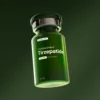
Liraglutide | Advanced GLP-1 Receptor Agonist Research Data

Original price was: $220.00.$209.00Current price is: $209.00.
Liraglutide is a synthetic, long-acting analog of mammalian glucagon-like peptide-1 (GLP-1), an incretin hormone that facilitates glucose-dependent insulin secretion. Unlike native GLP-1, which has a half-life of less than two minutes, Liraglutide is engineered with a fatty acid side chain that allows for reversible binding to albumin. In advanced metabolic research, it is investigated for its capacity to improve glycemic control, suppress glucagon secretion, and modulate appetite through central nervous system signaling.
Liraglutide: The Science of Incretin Mimicry and Metabolic Signaling
The Biochemistry of Liraglutide
Liraglutide ($C_{172}H_{265}N_{43}O_{51}$) is a 31-amino acid peptide that shares 97% sequence homology with endogenous human GLP-1. The structural modification involves the substitution of Lysine at position 34 with Arginine and the attachment of a C-16 fatty acid (palmitic acid) via a glutamic acid spacer at position 26. This acylation creates a “depot” effect in the blood, protecting the peptide from rapid degradation by dipeptidyl peptidase-IV (DPP-IV) and extending its biological activity significantly in research models.
Mechanism of Action: GLP-1R Agonism and Beta-Cell Modulation
In advanced endocrinology and obesity research, Liraglutide functions through several coordinated physiological pathways:
-
Glucose-Dependent Insulin Secretion: The peptide binds to the GLP-1 receptor (GLP-1R) on pancreatic beta cells, stimulating insulin release only when glucose levels are elevated.
-
Glucagon Suppression: Research focuses on the peptide’s ability to inhibit inappropriate postprandial glucagon secretion from alpha cells, thereby reducing hepatic glucose output.
-
Gastric Emptying Regulation: Liraglutide is investigated for its role in slowing gastric motility, which blunts the post-meal glucose spike in laboratory subjects.
-
Hypothalamic Appetite Modulation: The peptide crosses the blood-brain barrier to act on the arcuate nucleus of the hypothalamus, promoting satiety and reducing overall caloric intake in energy balance studies.
Primary Research Applications
-
Type 2 Diabetes Modeling: Analyzing the restoration of beta-cell sensitivity and the long-term stabilization of hemoglobin A1c.
-
Obesity and Weight Management: Investigating the impact of sustained GLP-1R agonism on adipose tissue distribution and metabolic rate.
-
Cardiovascular Protection Research: Studying the peptide’s effects on endothelial function, blood pressure, and lipid profiles in models of atherosclerosis.
-
Neurodegenerative Disease Studies: Observing the impact of GLP-1 analogs on neuro-inflammation and neuronal survival in memory-related research.
4. Technical Specifications (E-E-A-T Data)
| Feature | Scientific Specification |
| Peptide Type | GLP-1 Receptor Agonist (Incretin Mimetic) |
| Molecular Formula | $C_{172}H_{265}N_{43}O_{51}$ |
| Molecular Weight | 3751.2 g/mol |
| CAS Number | 204656-20-2 |
| Purity Grade | $\geq$99% (HPLC & Mass Spec Verified) |
| Modifications | Palmitoylated (C-16 fatty acid chain) |
| Solubility | Soluble in Water and Saline |
5. Product FAQ
Q: How does Liraglutide differ from Native GLP-1 in research?
A: Native GLP-1 is degraded by the DPP-IV enzyme within minutes. Liraglutide is specifically modified with a fatty acid chain to bind to albumin, allowing it to resist this enzymatic breakdown and maintain a half-life of approximately 13 hours in research models.
Q: Is Liraglutide researched for conditions other than diabetes?
A: Yes. Because of its profound effect on satiety and gastric emptying, Liraglutide is a primary subject in chronic weight management research. It is also being investigated for potential neuroprotective and cardioprotective benefits.
Only logged in customers who have purchased this product may leave a review.
Related products

FAT LOSS & METABOLIC PEPTIDES
5-Amino-1MQ | Selective NNMT Inhibitor | Metabolic Research Standard

WEIGHT MANAGEMENT & METABOLIC WELLNESS
Liraglutide (GLP-1 Analogue) | GLP-1 Agonist for Weight Management

GLP-1 & METABOLIC RESEARCH COMPOUNDS
GIP Peptide | Gastric Inhibitory Polypeptide Research Analysis

GLP-1 & METABOLIC RESEARCH COMPOUNDS

GLP-1 & METABOLIC RESEARCH COMPOUNDS


NEUROPEPTIDE RESEARCH COMPOUNDS

NEUROPEPTIDE RESEARCH COMPOUNDS

GROWTH HORMONE RESEARCH PEPTIDES
Hexarelin | Advanced GHRP & Growth Hormone Research Compound

Reviews
There are no reviews yet.