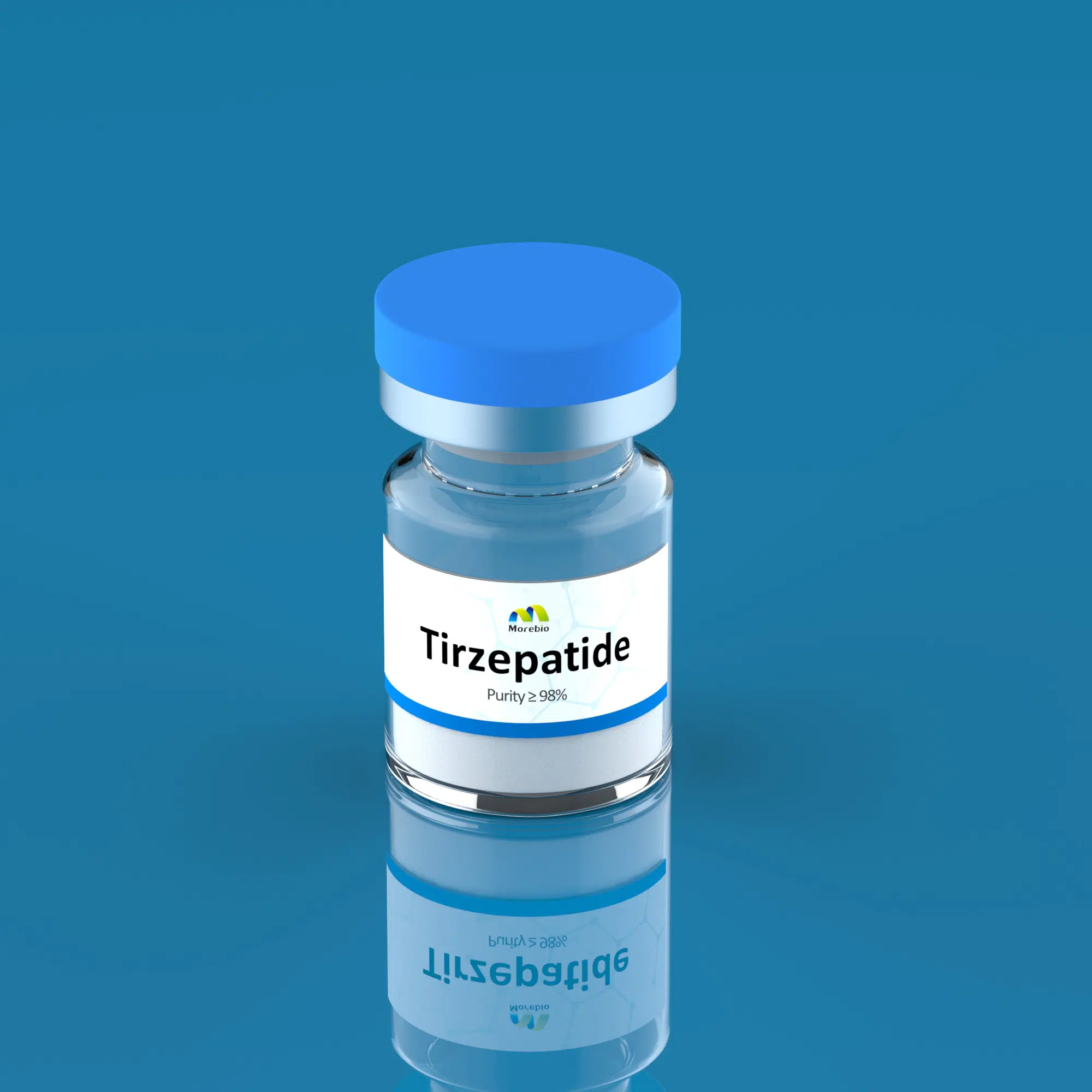


Tirzepatide (GIP/GLP-1 Dual Agonist) | Advanced Weight Loss


Original price was: $350.00.$330.00Current price is: $330.00.
Tirzepatide (GIP/GLP-1 Dual Agonist) is a first-in-class synthetic peptide engineered to activate both the glucose-dependent insulinotropic polypeptide (GIP) and glucagon-like peptide-1 (GLP-1) receptors. This Tirzepatide (GIP/GLP-1 Dual Agonist) represents a major shift in metabolic research, moving beyond single-receptor stimulation to a synergistic co-agonist approach. In clinical models, it is investigated for its superior capacity to regulate blood glucose, enhance insulin sensitivity, and drive significant weight loss through coordinated “twin-incretin” signaling.
Tirzepatide (GIP/GLP-1 Dual Agonist): The Synergy of Twin-Incretin Agonism
The Biochemistry of Tirzepatide (GIP/GLP-1 Dual Agonist)
The molecular architecture of Tirzepatide (GIP/GLP-1 Dual Agonist) is based on the native GIP sequence, modified to include GLP-1 receptor agonist activity. The peptide consists of 39 amino acids and features a $C_{20}$ fatty diacid moiety attached to a lysine residue. This acylation allows the peptide to bind to albumin, extending its biological half-life to approximately 5 days. This structural engineering ensures that Tirzepatide (GIP/GLP-1 Dual Agonist) remains active in the system far longer than endogenous incretins.
Mechanism of Action: Dual-Pathway Metabolic Regulation
In advanced weight loss and endocrinology research, Tirzepatide (GIP/GLP-1 Dual Agonist) functions through a dual-receptor signaling cascade:
-
GLP-1 Receptor Agonism: Similar to traditional agonists, this pathway slows gastric emptying and targets the brain’s satiety centers to reduce caloric intake.
-
GIP Receptor Agonism: Uniquely, the GIP component of the Tirzepatide (GIP/GLP-1 Dual Agonist) is studied for its ability to improve lipid metabolism and enhance the insulin response. Research suggests GIP signaling may actually buffer some of the gastrointestinal side effects typically associated with pure GLP-1 agonists.
-
Adipose Tissue Sensitivity: The dual agonist is investigated for its role in improving “adipose tissue health,” making fat cells more sensitive to insulin and reducing the systemic inflammation associated with obesity.
-
Glucagon Modulation: The synergy of GIP and GLP-1 helps regulate glucagon secretion more effectively than either hormone alone, leading to improved hepatic glucose production levels.
Primary Research Applications of Tirzepatide (GIP/GLP-1 Dual Agonist)
-
Massive Weight Loss Modeling: Analyzing the superior efficacy of dual-agonism versus single-receptor agonists in chronic obesity studies.
-
Type 2 Diabetes and Glycemic Control: Investigating the reduction of HbA1c levels and the restoration of beta-cell function.
-
Cardiovascular Health: Studying the impact of metabolic optimization on blood pressure, cholesterol, and arterial health.
-
NAFLD/NASH Research: Observing the effect of Tirzepatide (GIP/GLP-1 Dual Agonist) on liver fat content and fibrotic markers.
4. Technical Specifications (E-E-A-T Data)
| Feature | Scientific Specification |
| Active Component | Dual GIP and GLP-1 Receptor Agonist (Acylated) |
| Amino Acid Count | 39 Amino Acids |
| Molecular Formula | $C_{225}H_{348}N_{48}O_{68}$ |
| Molecular Weight | 4813.5 g/mol |
| CAS Number | 2023788-19-2 |
| Purity Grade | $\geq$99% (HPLC & Mass Spec Verified) |
| Elimination Half-Life | ~5 Days in Research Models |
5. Product FAQ
Q: What makes Tirzepatide (GIP/GLP-1 Dual Agonist) different from Liraglutide or Semaglutide?
A: While those are single GLP-1 agonists, Tirzepatide (GIP/GLP-1 Dual Agonist) adds a second signal: GIP. Research indicates that GIP may enhance the fat-burning and blood-sugar-regulating effects of GLP-1, often leading to more significant weight loss results in research settings.
Q: Why is the “Dual” nature of this agonist important for weight loss research?
A: By targeting two different incretin receptors, the Tirzepatide (GIP/GLP-1 Dual Agonist) addresses more metabolic “checkpoints.” This coordinated approach is studied for its ability to lower the “body weight set point” more effectively than targeting the GLP-1 receptor alone.
Only logged in customers who have purchased this product may leave a review.
Related products


GLP-1 & METABOLIC RESEARCH COMPOUNDS

LONGEVITY & CELLULAR REPAIR PEPTIDES

WEIGHT MANAGEMENT & METABOLIC WELLNESS
5-HTP Peptide Precursor Complex | Appetite & Serotonin Research

GROWTH HORMONE SECRETAGOGUES
Sermorelin (GHRH 1-29) 2mg | High-Purity Research Peptide | $\geq$99% Purity


COGNITIVE & NEUROPROTECTIVE PEPTIDES


LONGEVITY & CELLULAR REPAIR PEPTIDES
SS-31 Longevity | Elamipretide Mitochondrial Rejuvenation Peptide

SLEEP & CIRCADIAN RHYTHM PEPTIDES
COGNITIVE & NEUROPROTECTIVE PEPTIDES

Reviews
There are no reviews yet.