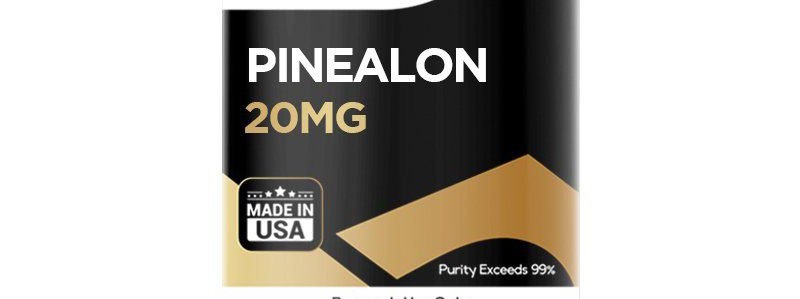
Pinealon Peptide | 10mg High-Purity Brain Bioregulator | $\geq$99% Purity
Original price was: $90.00.$78.00Current price is: $78.00.
Pinealon is a synthetic tripeptide—L-Glutamyl-L-aspartyl-L-arginine—specifically developed to act as a potent bioregulator for the central nervous system and the pineal gland. Due to its ultra-low molecular weight, Pinealon exhibits superior bioavailability and can easily penetrate the blood-brain barrier to interact directly with neuronal DNA. In research models, it is studied for its ability to protect neurons from oxidative stress, improve cognitive function, and synchronize the body’s internal biological clock.
Pinealon: The Science of Neuronal Bioregulation and DNA Interaction
The Biochemistry of the Glu-Asp-Arg Tripeptide
Pinealon belongs to the class of short-chain peptides discovered by the St. Petersburg Institute of Bioregulation and Gerontology. Its sequence—Glutamic Acid, Aspartic Acid, and Arginine—is a highly specific signaling motif. Unlike larger proteins, this tripeptide can migrate into the cell nucleus and bind to the promoter regions of genes associated with neuronal health. This “epigenetic” regulation helps restore protein synthesis in brain cells that has been diminished by aging or environmental stressors.
Mechanism of Action: Neuroprotection and Circadian Restoration
In advanced neurological research, Pinealon functions through several primary pathways:
-
Antioxidant Gene Activation: Pinealon stimulates the expression of antioxidant enzymes within the brain, significantly reducing the concentration of reactive oxygen species (ROS) and preventing lipid peroxidation in neuronal membranes.
-
Caspase-3 Inhibition: Research indicates that Pinealon can inhibit Caspase-3, a key executioner protein in the apoptotic (programmed cell death) pathway. By slowing neuronal apoptosis, it preserves the structural integrity of the cerebral cortex.
-
Pineal-Astrocyte Interaction: It acts as a bioregulator for the pineal gland, helping to normalize the production of melatonin. This is studied for its potential to correct “social jetlag” and age-related sleep fragmentation.
-
Glutamatergic System Modulation: Pinealon appears to influence the balance of excitatory neurotransmission, potentially improving the plasticity of synapses and enhancing memory retention in cognitive models.
Pinealon vs. Epitalon: Strategic Research Differences
While both target the pineal gland, they serve distinct experimental purposes:
-
Epitalon: A tetrapeptide primarily studied for telomerase activation and systemic longevity.
-
Pinealon: A tripeptide primarily studied for direct neuroprotection, cognitive recovery, and specific brain-tissue regeneration.
-
Synergy: Many research protocols utilize both in combination to provide both systemic anti-aging and targeted neurological support.
4. Technical Specifications (E-E-A-T Data)
| Feature | Scientific Specification |
| Full Chemical Name | L-Glutamyl-L-aspartyl-L-arginine |
| Peptide Sequence | Glu-Asp-Arg |
| Molecular Formula | $C_{15}H_{26}N_{6}O_{8}$ |
| Molecular Weight | 418.4 g/mol |
| CAS Number | 133503-46-9 |
| Purity Grade | $\geq$99% (HPLC & Mass Spec Verified) |
| Net Peptide Content | $\geq$80% (rest as counter-ions/moisture) |
| Physical State | Lyophilized White Powder |
| Storage Temperature | -20°C (Long Term); 2–8°C (Reconstituted) |
5. Product FAQ
Q: How does Pinealon interact with DNA? A: Pinealon acts as a gene-specific bioregulator. Because of its specific amino acid sequence, it can find matching “docking stations” on the DNA molecule within neurons. This interaction can trigger the “unzipping” of genes that produce protective proteins, effectively rebooting cellular repair mechanisms.
Q: Why is the tripeptide structure of Pinealon significant? A: The three-amino-acid structure (tripeptide) is the “goldilocks” size for neuro-research. It is small enough to pass through the blood-brain barrier without a specialized transport system but complex enough to carry a specific biological “message” to brain cells.
Only logged in customers who have purchased this product may leave a review.
Related products
HORMONAL BALANCE & VITALITY
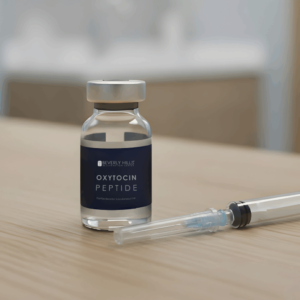
Oxytocin Peptide | Neuropeptide for Emotional Wellness Research
HORMONAL BALANCE & VITALITY

WEIGHT MANAGEMENT & METABOLIC WELLNESS
Semaglutide (GLP-1 Analogue) | GLP-1 Agonist for Weight Loss

LONGEVITY & CELLULAR REPAIR PEPTIDES

LONGEVITY & CELLULAR REPAIR PEPTIDES
Epitalon (Epithalamin) 10mg | Telomerase Activator | $\geq$99% Purity

PERFORMANCE PEPTIDES
Thymalin (Thymus Peptide) 10mg | High-Purity Immunomodulatory
SLEEP & CIRCADIAN RHYTHM PEPTIDES

NEUROPEPTIDE RESEARCH COMPOUNDS
Reviews
There are no reviews yet.