
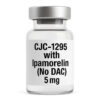
CJC-1295 + Ipamorelin Blend (5mg/5mg) | Synergistic GHS Research


Original price was: $110.00.$100.00Current price is: $100.00.
The CJC-1295 + Ipamorelin Blend represents the pinnacle of Growth Hormone (GH) research synergy. By combining a Growth Hormone-Releasing Hormone (GHRH) analog (CJC-1295) with a selective Growth Hormone Releasing Peptide (GHRP) (Ipamorelin), this blend targets two distinct receptors on the pituitary gland. In research models, this combination is studied for its ability to produce a significantly greater GH pulse than either peptide could achieve alone, mimicking the natural physiological rhythm of the human body.
CJC-1295 & Ipamorelin: The Science of Dual-Pathway Pituitary Activation
The Synergy of GHRH and GHRP
In the hypothalamic-pituitary-somatotropic axis, GH release is controlled by two primary signals. CJC-1295 mimics the endogenous GHRH, signaling the pituitary to produce more GH. Ipamorelin acts as a ghrelin mimetic, signaling the pituitary to release its stored GH while simultaneously inhibiting Somatostatin (the “GH-inhibiting hormone”).
When administered together, the result is a “Double-Pulse” effect:
-
The Signaling Pulse (CJC-1295): Increases the amplitude and duration of the growth hormone pulse by keeping the somatotrophs in an “active” state.
-
The Release Pulse (Ipamorelin): Triggers the immediate exocytosis of GH and suppresses the inhibitory influence of somatostatin.
Mechanism of Action: Selective Bioenergetics
In advanced laboratory research, the CJC-1295 + Ipamorelin blend is analyzed for several systemic effects:
-
Selective GH Secretion: Ipamorelin is the most selective GHRP available, meaning it stimulates GH release without the significant elevation of Cortisol or Prolactin often seen with earlier peptides like GHRP-2 or GHRP-6.
-
IGF-1 Modulation: Continuous study shows that this blend promotes a steady, physiological increase in Insulin-like Growth Factor 1 (IGF-1), facilitating research into muscle tissue repair and bone density.
-
Lipolysis and Metabolism: The surge in GH levels activates hormone-sensitive lipase, promoting the breakdown of triglycerides in adipose tissue and shifting the body toward fat oxidation.
-
Sleep Architecture: Researchers often observe improvements in Slow Wave Sleep (SWS), the phase where the body naturally performs the majority of its structural repair and GH secretion.
Why “No DAC” is Preferred for This Blend
This blend typically utilizes CJC-1295 No DAC (also known as Mod GRF 1-29). The absence of the Drug Affinity Complex (DAC) ensures a shorter half-life (approx. 30 minutes), which prevents “GH bleeding”—a state of constant, non-pulsatile GH elevation. This allows researchers to maintain the natural pulsatile nature of the endocrine system, which is critical for long-term receptor sensitivity.
4. Technical Specifications (E-E-A-T Data)
| Feature | Scientific Specification |
| Components | CJC-1295 (Mod GRF 1-29) + Ipamorelin Acetate |
| Molecular Formula (CJC) | $C_{152}H_{252}N_{44}O_{42}$ |
| Molecular Formula (Ipam) | $C_{38}H_{49}N_{9}O_{5}$ |
| Ratio | 1:1 (Commonly 5mg:5mg or 2mg:2mg) |
| Purity Grade | $\geq$99% (HPLC & Mass Spec Verified) |
| Appearance | Lyophilized White Powder |
5. Product FAQ
Q: Why use a blend instead of just one peptide?
A: Research indicates that GHRH and GHRP have a multiplicative rather than additive effect. When used together, they overcome the natural inhibitory signals (Somatostatin) that might limit the effectiveness of a single peptide.
Q: Does this blend affect appetite?
A: Unlike GHRP-6, Ipamorelin has a very low affinity for the receptors that trigger hunger. This makes the CJC-1295 + Ipamorelin blend ideal for research where metabolic rate and fat loss are the primary variables, without the confounding factor of increased caloric intake.
Only logged in customers who have purchased this product may leave a review.
Related products
GROWTH HORMONE SECRETAGOGUES
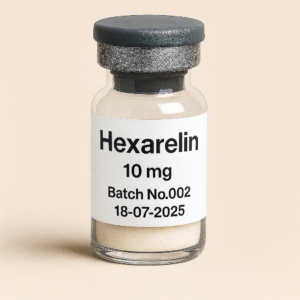
Hexarelin Peptide | High-Purity 2mg Vial | Advanced Cardioprotective Research

PERFORMANCE PEPTIDES
Kisspeptin-10 (Kiss-1) 10mg | High-Purity GPR54 Agonist | $\geq$99% Purity


GROWTH HORMONE RESEARCH PEPTIDES

PERFORMANCE PEPTIDES
Hydrolysed Collagen Peptides (Type I & III) | Grass-Fed | Multi-Tissue Support

ENDURANCE & ENERGY PEPTIDES
Selank Peptide | 10mg High-Purity Tuftsin Analog | Neuro-Research Grade

MUSCLE GROWTH & ANABOLIC PEPTIDES
TB-500 (Thymosin Beta-4) 5mg | High-Purity Regenerative Peptide | $\geq$99% Purity
FAT LOSS & METABOLIC PEPTIDES
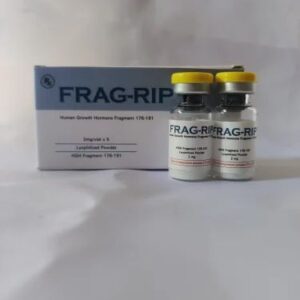
HGH Fragment 176-191 | 5mg High-Purity Lipolytic Peptide | $\geq$99% Purity

MUSCLE GROWTH & ANABOLIC PEPTIDES
Reviews
There are no reviews yet.