
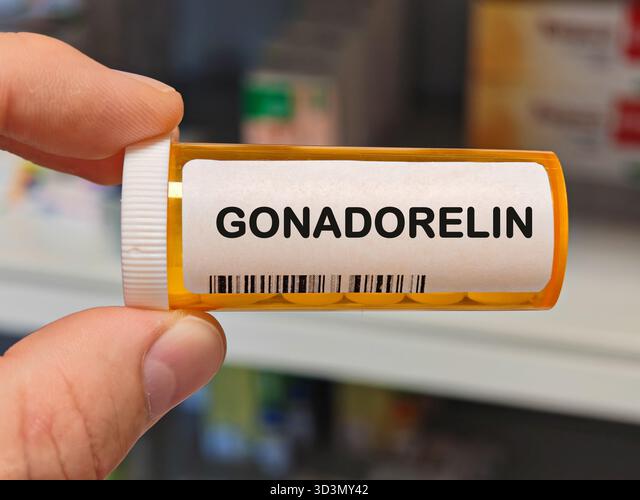
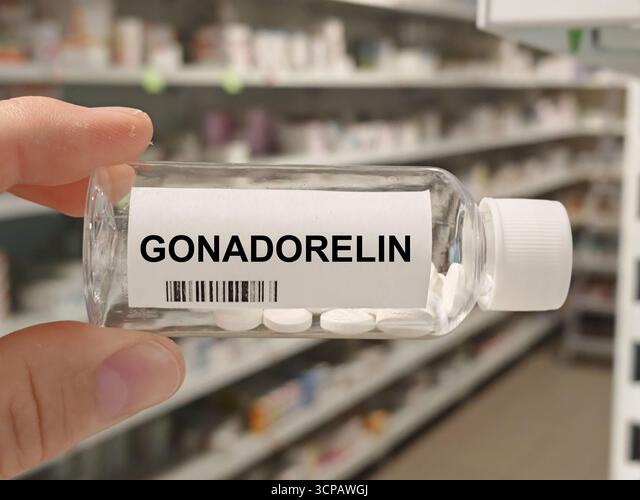


GnRH (Gonadorelin) 2mg | High-Purity Decapeptide | HPTA Standard


Original price was: $80.00.$65.00Current price is: $65.00.
GnRH (Gonadorelin) is a synthetic decapeptide (10 amino acids) that is bio-identical to the endogenous Gonadotropin-Releasing Hormone produced by the hypothalamus. As the primary regulator of the reproductive axis, GnRH signals the anterior pituitary gland to synthesize and release Luteinizing Hormone (LH) and Follicle-Stimulating Hormone (FSH). In research models, Gonadorelin is the gold standard for investigating the restoration of natural testosterone production and the assessment of pituitary gonadotropic function.
GnRH (Gonadorelin): The Master Regulator of the Gonadotropic Axis
The Biochemistry of Gonadorelin
GnRH is a hypothalamic decapeptide that orchestrates the entire reproductive system. Its structure—pyroGlu-His-Trp-Ser-Tyr-Gly-Leu-Arg-Pro-Gly-NH2—is specifically evolved to bind with high affinity to the GnRH receptors on pituitary gonadotrophs. Unlike synthetic analogs that can cause receptor downregulation (desensitization), our high-purity Gonadorelin allows researchers to study the acute, pulsatile response of the pituitary gland, mimicking the natural “surges” of hormone release.
Mechanism of Action: The HPTA Cascade
In laboratory settings, GnRH functions as a potent catalyst for the Hypothalamic-Pituitary-Testicular Axis (HPTA):
-
Pituitary Binding: Upon administration, GnRH binds to the G-protein coupled receptors in the anterior pituitary.
-
Gonadotropin Release: This trigger causes a rapid mobilization of calcium ions, leading to the exocytosis of Luteinizing Hormone (LH) and Follicle-Stimulating Hormone (FSH) into the bloodstream.
-
Leydig and Sertoli Stimulation: In male research models, LH subsequently signals the Leydig cells to produce testosterone, while FSH acts on Sertoli cells to support spermatogenesis.
-
Feedback Loop Analysis: Researchers use GnRH to evaluate how effectively the pituitary responds when the natural hypothalamic signal is absent or suppressed.
GnRH vs. HCG: Strategic Research Differences
While both are used in HPTA-related studies, their mechanisms are distinct:
-
HCG (Human Chorionic Gonadotropin): Mimics LH directly at the testicular level. It bypasses the pituitary, which can lead to further pituitary suppression in long-term studies.
-
GnRH (Gonadorelin): Stimulates the pituitary to release its own LH. This is considered a “top-down” approach, studied for its ability to maintain or restart the entire signaling chain rather than just the end-organ.
-
Half-Life: GnRH has a short half-life (approx. 10-20 minutes), making it ideal for studying pulsatile release patterns rather than chronic elevation.
4. Technical Specifications (E-E-A-T Data)
| Feature | Scientific Specification |
| Chemical Name | L-pyroglutamyl-L-histidyl-L-tryptophyl-L-seryl-L-tyrosyl-glycyl-L-leucyl-L-arginyl-L-prolyl-glycinamide |
| Molecular Formula | $C_{55}H_{75}N_{17}O_{13}$ |
| Molecular Weight | 1182.3 g/mol |
| CAS Number | 33515-09-2 |
| Purity Grade | $\geq$99% (HPLC Verified) |
| Concentration | 2mg per vial |
5. Product FAQ
Q: Why is the half-life of GnRH so short?
A: Endogenous GnRH is designed to be released in pulses to prevent receptor desensitization. A short half-life allows the pituitary receptors to “reset” between pulses. Researchers often utilize specific administration timings to study this pulsatile effect.
Q: What is the primary use of GnRH in endocrine research?
A: It is primarily used to conduct “GnRH Stimulation Tests.” This helps researchers determine if a deficiency in testosterone or estrogen is caused by a hypothalamic failure or a direct pituitary dysfunction.
Only logged in customers who have purchased this product may leave a review.
Related products

PERFORMANCE PEPTIDES
Hydrolysed Collagen Peptides (Type I & III) | Grass-Fed | Multi-Tissue Support

ENDURANCE & ENERGY PEPTIDES
Selank Peptide | 10mg High-Purity Tuftsin Analog | Neuro-Research Grade

ENDURANCE & ENERGY PEPTIDES
SS-31 (Elamipretide) 50mg | Mitochondrial Stabilizing Peptide | $\geq$99% Purity

MUSCLE GROWTH & ANABOLIC PEPTIDES
TB-500 (Thymosin Beta-4) 5mg | High-Purity Regenerative Peptide | $\geq$99% Purity

MUSCLE GROWTH & ANABOLIC PEPTIDES
Follistatin 344 (FST-344) 1mg | High-Purity Myostatin Inhibitor | $\geq$98% Purity

GROWTH HORMONE SECRETAGOGUES
CJC-1295 + Ipamorelin Blend (5mg/5mg) | Synergistic GHS Research

MUSCLE GROWTH & ANABOLIC PEPTIDES
PEG-MGF (Pegylated MGF) 2mg | Long-Acting Muscle Recovery Peptide

ENDURANCE & ENERGY PEPTIDES
Epitalon (Epithalamin) 10mg | Telomerase Activator | $\geq$99% Purity

Reviews
There are no reviews yet.