
CJC-1295 DAC | Long-Acting GHRH Research Compound Analysis

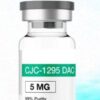
Original price was: $95.00.$82.00Current price is: $82.00.
CJC-1295 DAC is a synthetic analog of Growth Hormone Releasing Hormone (GHRH) that incorporates Drug Affinity Complex (DAC) technology. This modification allows the peptide to covalently bond to circulating albumin, significantly extending its half-life compared to standard GHRH fragments. In laboratory research, it is utilized to study the sustained, pulsatile release of endogenous growth hormone and its long-term effects on the somatotropic axis.
CJC-1295 DAC: The Science of Extended GHRH Signaling
The Biochemistry of CJC-1295 DAC
The molecular structure of CJC-1295 DAC is based on a modified version of the first 29 amino acids of GHRH, often referred to as Mod GRF (1-29). The critical distinction is the addition of the Drug Affinity Complex (DAC), which prevents rapid enzymatic degradation by dipeptidyl peptidase-IV (DPP-IV). This allows the compound to remain active in research models for several days, providing a constant stimulus to the pituitary gland.
Mechanism of Action: Pituitary Stimulation and Albumin Conjugation
In advanced endocrinology and metabolic research, CJC-1295 DAC functions through several coordinated physiological pathways:
-
Albumin Binding (DAC Technology): The DAC affinity allows the peptide to bind to serum albumin, extending its biological half-life from minutes to approximately 6–8 days.
-
GHRH Receptor Agonism: The peptide binds to GHRH receptors in the anterior pituitary, triggering the synthesis and secretion of endogenous growth hormone.
-
Sustained GH Pulsatility: Research focuses on how CJC-1295 DAC maintains the natural pulsatile nature of GH release while increasing the overall amplitude of those pulses over an extended duration.
-
IGF-1 Upregulation: By providing a continuous somatotropic stimulus, the compound is studied for its ability to significantly elevate systemic levels of Insulin-like Growth Factor 1 (IGF-1).
Primary Research Applications
-
Extended Secretagogue Modeling: Analyzing the impact of long-term GHRH stimulation on pituitary health and receptor sensitivity.
-
Metabolic Homeostasis Research: Investigating the role of sustained GH levels in lipid metabolism and adipose tissue reduction.
-
Musculoskeletal Repair: Studying the indirect effects of elevated IGF-1 on protein synthesis and the repair of soft tissues.
-
Age-Related Endocrine Decline: Observing the reversal of somatopause markers in aging laboratory models through steady-state GHRH signaling.
4. Technical Specifications (E-E-A-T Data)
| Feature | Scientific Specification |
| Peptide Type | GHRH Analog (1-29) with DAC |
| Molecular Formula | $C_{165}H_{269}N_{47}O_{46}$ (excluding DAC) |
| Molecular Weight | 3647.28 g/mol (excluding DAC) |
| CAS Number | 863248-36-6 |
| Purity Grade | $\geq$99% (HPLC & Mass Spec Verified) |
| Half-Life | ~6 to 8 Days (Due to Albumin Conjugation) |
| Solubility | Soluble in Water and Saline |
5. Product FAQ
Q: How does CJC-1295 DAC differ from CJC-1295 No DAC (Mod GRF 1-29)?
A: The “No DAC” version has a very short half-life (approx. 30 minutes) and requires more frequent administration in research models. CJC-1295 DAC is designed for long-term study, remaining active in the system for over a week.
Q: Why is DAC technology significant in peptide research?
A: DAC technology allows researchers to bypass the limitation of rapid peptide clearance. It enables the study of steady-state hormone levels without the fluctuations associated with short-acting secretagogues.
Only logged in customers who have purchased this product may leave a review.
Related products

GLP-1 & METABOLIC RESEARCH COMPOUNDS

LONGEVITY & WELLNESS STACKS
The Longevity Stack | Advanced Telomere & Cellular Research Bundle

GROWTH HORMONE RESEARCH PEPTIDES

FAT LOSS & METABOLIC PEPTIDES
Tesamorelin 2mg | High-Purity GHRH Analog | Visceral Fat Research
GROWTH HORMONE SECRETAGOGUES
Hexarelin Peptide | High-Purity 2mg Vial | Advanced Cardioprotective Research


EMERGING & SPECIALIST RESEARCH PEPTIDES
ARA-290 | Advanced Innate Repair & Neuropathic Research Data

RESEARCH-GRADE COMPOUNDS

GLP-1 & METABOLIC RESEARCH COMPOUNDS
Reviews
There are no reviews yet.