
MOTS-c Peptide 10mg | Mitochondrial Exercise Mimetic | $\geq$99% Purity


Original price was: $130.00.$90.00Current price is: $90.00.
MOTS-c is a potent 16-amino acid mitochondrial-derived peptide (MDP) that functions as a systemic metabolic regulator. Encoded within the mitochondrial 12S rRNA gene, MOTS-c is unique because it translocates to the nucleus in response to metabolic stress, where it regulates nuclear gene expression. Known colloquially as an “exercise mimetic,” it stimulates the same biological pathways as high-intensity physical activity, specifically targeting AMPK activation and skeletal muscle glucose uptake.
MOTS-c: The Mitochondrial Signaling Hormone for Metabolic Longevity
The Biochemistry of the 12S rRNA-c Open Reading Frame
MOTS-c is the primary signaling molecule of the mitochondrial genome’s “retrograde” communication system. Its sequence—Met-Arg-Trp-Gln-Glu-Met-Gly-Tyr-Ile-Phe-Tyr-Pro-Arg-Lys-Leu-Arg—is highly conserved, reflecting its fundamental role in energy metabolism. Unlike traditional hormones produced in specialized glands, MOTS-c is produced locally within cells and acts both as an autocrine and endocrine signal to harmonize systemic energy expenditure.
Mechanism of Action: The AMPK and Folate Cycle Axis
In advanced metabolic research, MOTS-c functions as a master metabolic switch through several integrated pathways:
-
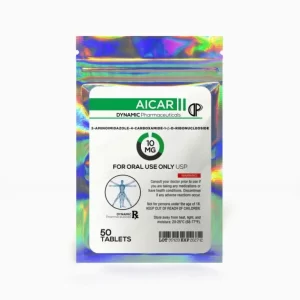
AMPK Activation: MOTS-c increases the levels of AICAR (aminoimidazole-4-carboxamide ribonucleotide), a potent activator of AMP-activated protein kinase (AMPK). This triggers an immediate shift toward fat oxidation and glucose utilization.
-
Folate Cycle Modulation: It inhibits the de novo purine synthesis pathway by targeting the folate cycle. This metabolic “bottleneck” results in the accumulation of AICAR, providing a sustained signal for energy mobilization.
-
GLUT4 Translocation: Research indicates that MOTS-c stimulates the translocation of glucose transporter type 4 (GLUT4) to the cell membranes of skeletal muscle, significantly improving insulin-independent glucose uptake.
-
Nuclear Gene Regulation: Under metabolic stress, MOTS-c enters the nucleus to bind with ARE (Antioxidant Response Element) sequences, promoting the expression of genes involved in cellular stress resistance.
Primary Research Applications of MOTS-c
-
Obesity and Weight Management: Studying the peptide’s ability to prevent diet-induced obesity and enhance thermogenesis in brown adipose tissue (BAT).
-
Type 2 Diabetes Research: Investigating the restoration of insulin sensitivity and the reduction of systemic glucose levels.
-
Exercise Physiology: Observing how MOTS-c mimics the physiological benefits of aerobic exercise, specifically in sedentary models.
-
Osteoporosis Research: Emerging studies examine the role of MOTS-c in promoting osteoblast differentiation and bone mineral density.
4. Technical Specifications (E-E-A-T Data)
| Feature | Scientific Specification |
| Sequence | MRWQEMGYIFYPRKLR |
| Molecular Formula | $C_{101}H_{152}N_{28}O_{22}S_{2}$ |
| Molecular Weight | 2174.6 g/mol |
| CAS Number | 1627580-64-6 |
| Purity Grade | $\geq$99% (HPLC & MS Verified) |
| Stability | 24 months at -20°C; 7 days refrigerated once reconstituted |
5. Product FAQ
Q: Why is MOTS-c called an “exercise mimetic”?
A: MOTS-c is called an exercise mimetic because its administration triggers cellular responses similar to those seen during physical exertion, such as increased glucose uptake in muscles and enhanced fatty acid oxidation via the AMPK pathway.
Q: How does MOTS-c differ from Humanin?
A: While both are mitochondrial-derived peptides (MDPs), Humanin is primarily cytoprotective and anti-apoptotic. In contrast, MOTS-c is fundamentally a metabolic regulator focused on energy homeostasis, insulin sensitivity, and physical performance.
Only logged in customers who have purchased this product may leave a review.
Related products

MUSCLE GROWTH & ANABOLIC PEPTIDES
Follistatin 344 (FST-344) 1mg | High-Purity Myostatin Inhibitor | $\geq$98% Purity

GROWTH HORMONE SECRETAGOGUES

MUSCLE GROWTH & ANABOLIC PEPTIDES
TB-500 (Thymosin Beta-4) 5mg | High-Purity Regenerative Peptide | $\geq$99% Purity

GROWTH HORMONE SECRETAGOGUES
CJC-1295 + Ipamorelin Blend (5mg/5mg) | Synergistic GHS Research

FAT LOSS & METABOLIC PEPTIDES
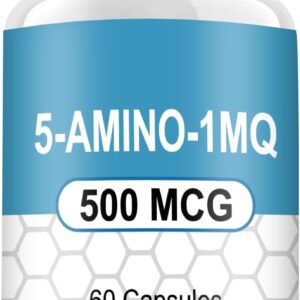
5-Amino-1MQ | Selective NNMT Inhibitor | Metabolic Research Standard

ENDURANCE & ENERGY PEPTIDES
Humanin (HN) 10mg | High-Purity Mitochondrial-Derived Peptide | $\geq$99% Purity

FAT LOSS & METABOLIC PEPTIDES
AOD-9604 | 5mg Stabilized Lipolytic Peptide | $\geq$99% Purity

Reviews
There are no reviews yet.