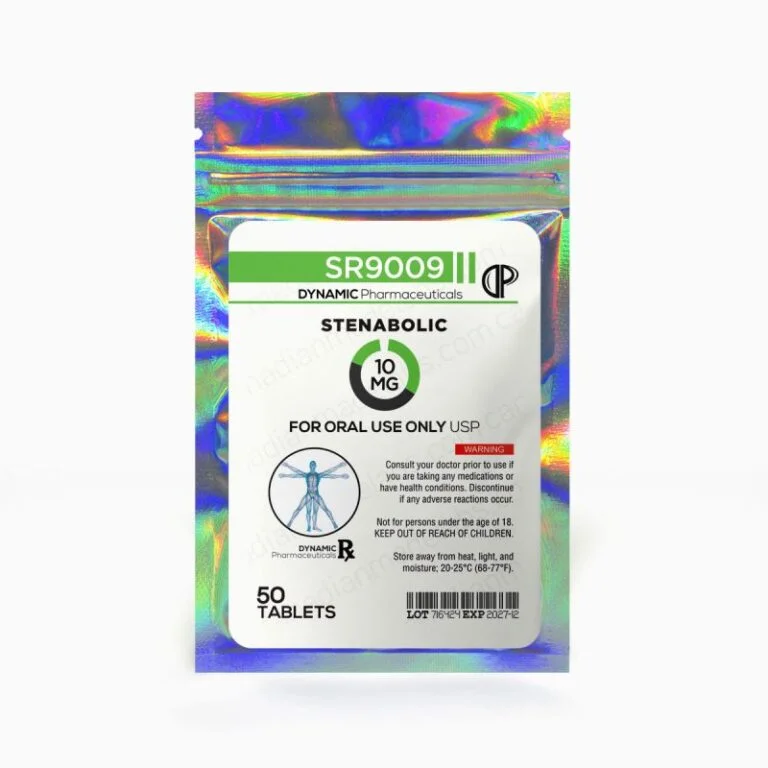
SR9009 (Stenabolic) | Advanced Rev-ErbA Agonist

$87.00
SR9009, commonly known as Stenabolic, is a synthetic Rev-ErbA agonist. While frequently grouped with SARMs due to its application in athletic research, it is technically a metabolic modulator that targets the Rev-ErbA protein. In laboratory settings, SR9009 is investigated for its profound influence over the body’s internal “circadian clock,” showing significant potential for enhancing mitochondrial activity, regulating lipid levels, and increasing endurance through the stabilization of metabolic rhythms.
SR9009: The Science of Circadian Rhythm and Metabolic Modulation
The Biochemistry of SR9009
SR9009 ($C_{20}H_{24}ClN_{3}O_{4}S$) acts as a potent agonist for Rev-ErbA, a nuclear receptor that plays a critical role in regulating the core molecular clock of the cell. By binding to these receptors, SR9009 influences a wide array of physiological processes, particularly those concentrated in the liver, skeletal muscle, and adipose tissue. Its primary value in research lies in its ability to synchronize metabolic functions with the 24-hour day-night cycle.
Mechanism of Action: Rev-ErbA Activation
In advanced metabolic and chronobiology research, SR9009 functions through several coordinated physiological pathways:
-
Mitochondrial Biogenesis: The compound is studied for its ability to increase mitochondrial count and efficiency in skeletal muscle, mimicking the cellular adaptations of intensive aerobic exercise.
-
Lipid Metabolism Regulation: Research focuses on the compound’s capacity to suppress the expression of genes involved in fat storage while promoting the oxidation of fatty acids and glucose.
-
Circadian Stabilization: SR9009 is investigated for its role in resetting the circadian rhythm, which can lead to improved sleep-wake patterns and metabolic stability in dysfunctional models.
-
Reduction of Inflammation: Emerging studies observe that Rev-ErbA activation may lower the production of pro-inflammatory cytokines, specifically targeting the NLRP3 inflammasome.
Primary Research Applications
-
Metabolic Syndrome and Obesity: Analyzing the reduction of plasma triglycerides and the stabilization of blood glucose levels in high-fat diet models.
-
Endurance and Physical Performance: Investigating the extension of running time and distance in laboratory aerobic models through enhanced mitochondrial function.
-
Circadian Rhythm Disorders: Studying the impact of Rev-ErbA agonism on shift-work models and jet lag recovery.
-
Sarcopenia and Muscle Health: Observing the impact of increased energy expenditure on the preservation of lean muscle tissue during aging.
4. Technical Specifications (E-E-A-T Data)
| Feature | Scientific Specification |
| Chemical Name | ethyl 3-({[4-chloro-2-({[({[(4-chlorophenyl)methyl]amino}carbonyl)amino]methyl})phenyl]sulfonyl}amino)propanoate |
| Molecular Formula | $C_{20}H_{24}ClN_{3}O_{4}S$ |
| Molecular Weight | 437.94 g/mol |
| CAS Number | 1379686-30-2 |
| Purity Grade | $\geq$99% (HPLC Verified) |
| Form | Research Grade Tablets (10mg Standardized) |
| Solubility | Soluble in DMSO and Ethanol |
5. Product FAQ
Q: Is SR9009 a hormone or a SARM?
A: Neither. SR9009 is a Rev-ErbA agonist. It does not interact with the androgen receptor or influence testosterone levels. It belongs to a class of compounds known as “exercise mimetics” because of its ability to stimulate metabolic pathways typically activated by exercise.
Q: Why is SR9009 studied for sleep and metabolism?
A: Because Rev-ErbA proteins regulate the molecular clock, SR9009 allows researchers to manipulate the timing of metabolic processes. This provides insight into how metabolic disorders are linked to disrupted sleep and circadian rhythms.
Related products

RESEARCH-GRADE COMPOUNDS
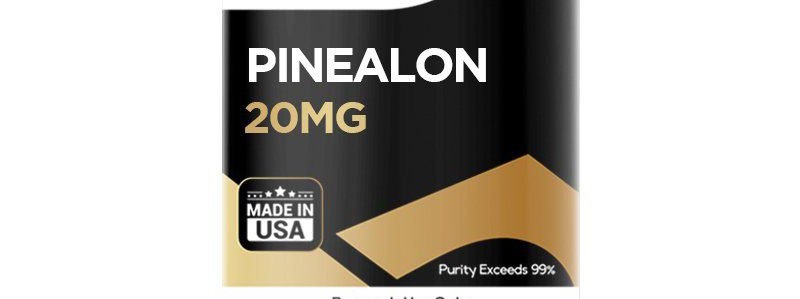
LONGEVITY & CELLULAR REPAIR PEPTIDES
Pinealon Peptide | 10mg High-Purity Brain Bioregulator | $\geq$99% Purity


WEIGHT MANAGEMENT & METABOLIC WELLNESS


PERFORMANCE STACKS
The Ultimate Performance Stack | Peak Physiological Research



SLEEP & CIRCADIAN RHYTHM PEPTIDES
